The wonder of Yu Garden lies not only in the condensation of natural landscapes among pavilions and terraces, but also in the historical and cultural heritage flowing behind every brick and tile.
Nature's creation - the vast universe within reach of mountain stacking and water management
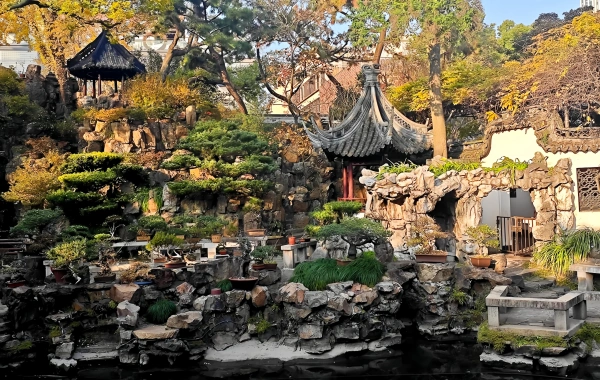
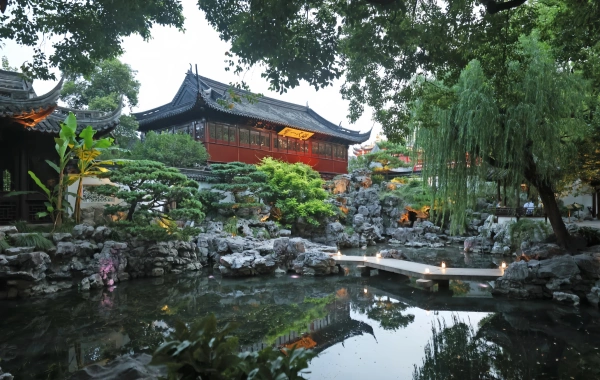
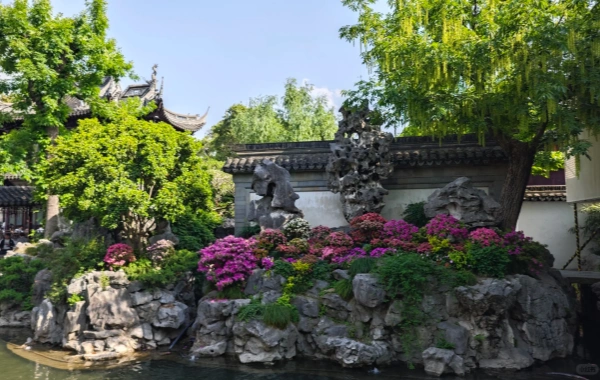
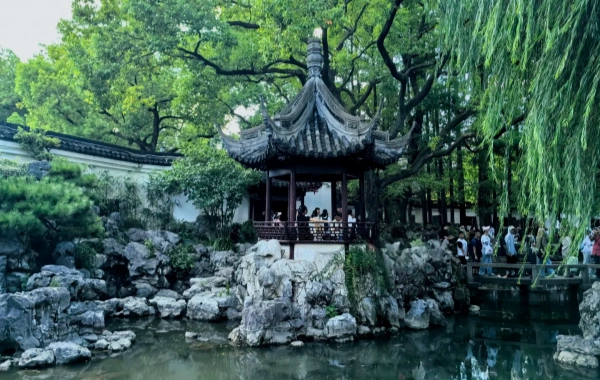
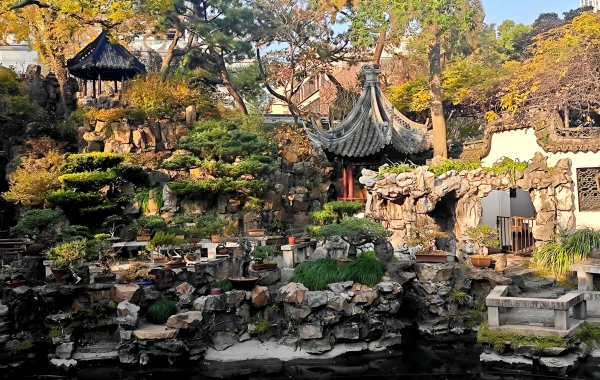
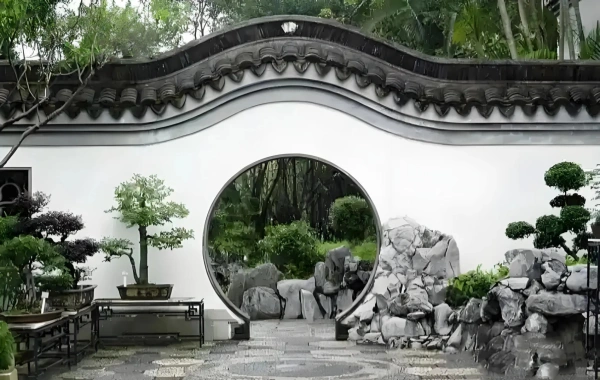
In the gardens of Jiangnan, there are no mountains, so they are made of stone. When there was no water, water was diverted to make a pool. Although Yuyuan Garden is located in a bustling city, it has created a myriad of scenes within a small space through its superb "mountain stacking and water management" skills.
The Grand Rockery: This is the highlight of the Yu Garden and also the oldest and most magnificent yellow stone rockery still existing in the Jiangnan region. The rockery was built by Zhang Nanyang, a master of mountain stacking in the Ming Dynasty. It is about 14 meters high, with layers of peaks and ridges, deep caves and gullies, and winding paths. Standing at the "Yangshan Hall" in front of the mountain or climbing up the rockery, one can appreciate its grandeur of "overlapping peaks and ridges", as if it were a miniature of the real mountain.
Yulinglong: Known as one of the "Three Famous Stones of Jiangnan", it is the "treasure of stones" in Yu Garden. This stone has a graceful posture and is porous throughout, embodying the beauty of Taihu stones characterized by "wrinkles, leaks, thinness and transparency". Legend has it that when incense is burned under a stone, smoke rises from every hole. A spring is poured from the top, flowing in every hole, fully demonstrating the ultimate taste of ancient scholars in appreciating stones.
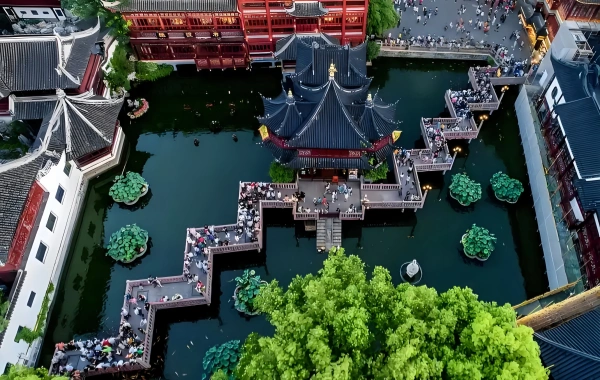
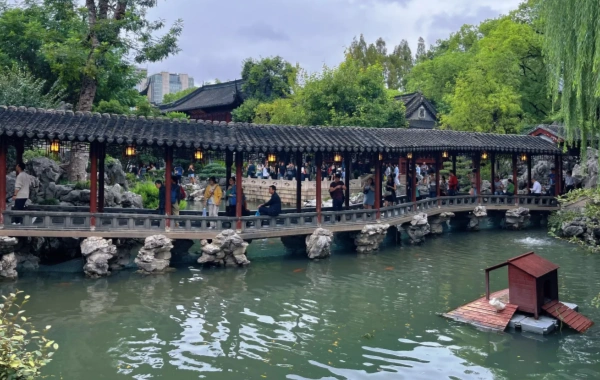
The Nine-Bend Bridge and the Pavilion in the middle of the Lake: Although located within the Yuyuan Shopping Mall outside the garden, they have become the hallmarks of the overall style of Yuyuan. The Nine-bend Bridge winds its way over the lotus pond and is said to ward off evil spirits. The Lake Center Pavilion teahouse in the middle of the pool has upturned eaves and corners. It is one of the earliest existing teahouses in Shanghai. Sipping tea here, one can quietly observe the fish in the pool and the passers-by, enjoying tranquility amid the hustle and bustle.
The Inner Garden: Known as the "Garden of Gardens", it was a temple garden built during the reign of Emperor Kangxi of the Qing Dynasty and later connected to the Yu Garden. With an area of only over two mu, the pavilions, terraces, flowers, trees, ponds, wood and stones are arranged extremely exquisitely. Especially the "Songcui Pavilion" and "Jiulong Pool" and other scenic spots demonstrate the refinement and tranquility of a small garden in the Qing Dynasty.
Humanistic craftsmanship - A Symphony of Architecture, history and the common people
The architecture of Yu Garden is not only a scenic spot but also a vessel of history and a stage for the daily life of the common people.
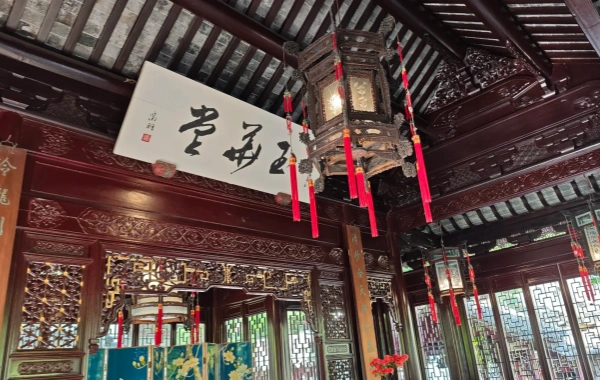
Dianchun Hall: This place was once the command post of the Shanghai Small Knife Society Uprising in 1853. This five-bay hall now displays related historical relics. Behind the peaceful building, there once stirred a tumultuous urban history.
- Ancient Stage: Located within the Yuyuan Mall, it is a resplendent stage from the Qing Dynasty with elaborately carved beams and painted pillars, enjoying the reputation of "the first stage in the southeast". The most exquisite part lies in the spiral-shaped "caisson" at the top, which is made by mortise and tenon joints of hundreds of carved panels. It is not only magnificent but also can converge sounds, creating a "lingering sound" effect.
Sansui Hall and Yangshan Hall: The core architectural complex at the entrance of the garden. The SAN Sui Hall is spacious and lofty. It was once the place where the government held celebrations and preached imperial edicts. The "Yangshan Hall" lives up to its name. It is a two-story pavilion specially set up for looking up at the large rockery. The name of the upper floor, "Juanyu Tower", is taken from a poem by Wang Bo, with a beautiful artistic conception.
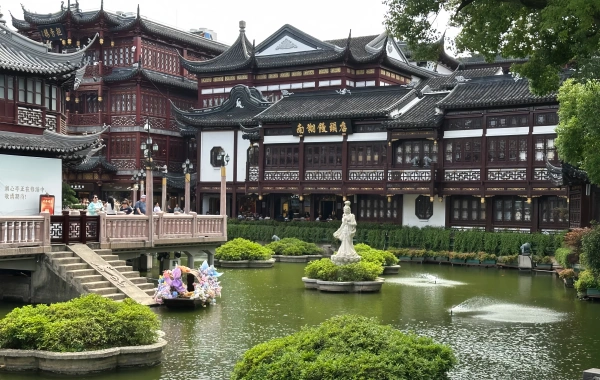
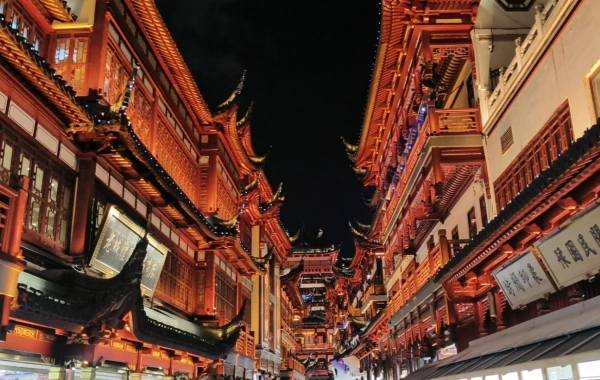
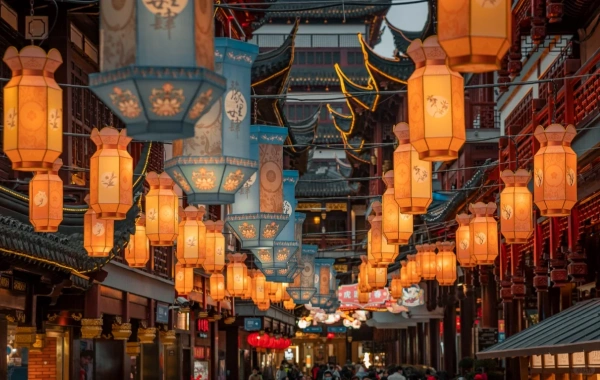
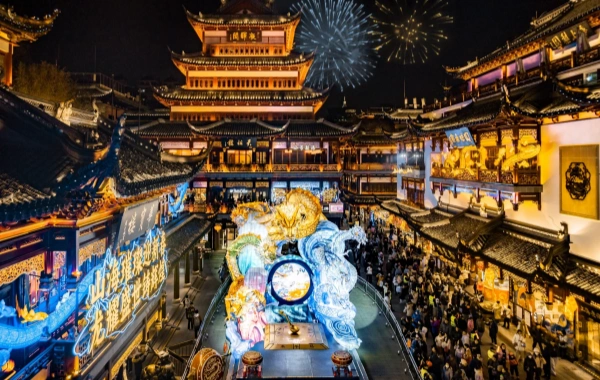
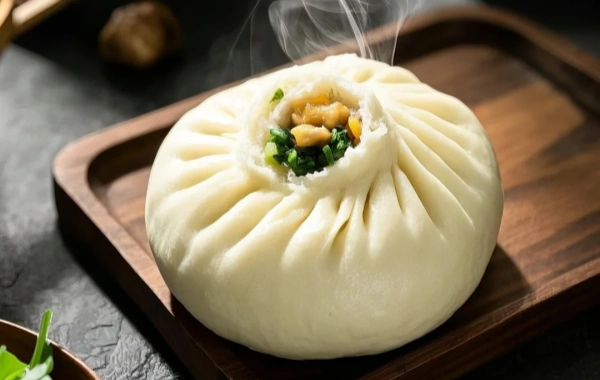
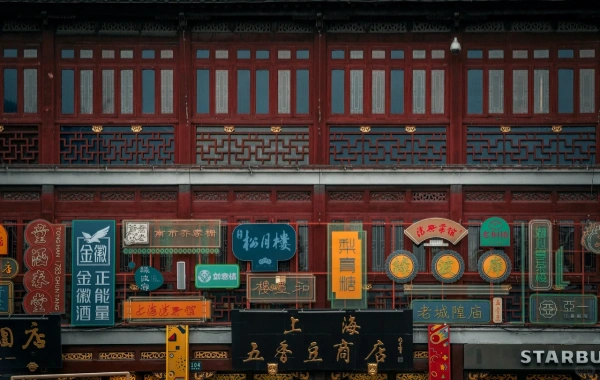
- Street Life (Yuyuan Mall and City God Temple) : The Yuyuan Mall and City God Temple area, adjacent to the garden, is a living museum of Shanghai-style culture. The century-old brands such as Nanxiang Steamed Bun Shop, Chunfeng Songyuelou and Ningbo Tangtuan Shop stand side by side, and intangible cultural heritage skills like Suzhou embroidery, paper-cutting and shadow puppetry are displayed on the spot. Here, the unique charm of Yu Garden, which is "appreciated by both the refined and the popular, and combines business, tourism and culture", is perfectly interpreted.
Photography Tips:
The best panoramic positions are at the "Huijing Building" or "Kuai Building", from where you can overlook the water features and buildings in the middle of the garden.
The Nine-Bend Bridge is a classic Angle for capturing the pavilion in the middle of the lake and its classical outline. It is especially brilliant when the lights come on at night.
"Yulinglong" is suitable for using foreground composition, combined with window lattices or plants, to capture the artistic conception of literati paintings.
The red lanterns and shop signs on the old street of the City God Temple make an excellent backdrop for capturing the rich urban atmosphere and portraits.