Natural Creation—A Living Painting Framed by Water
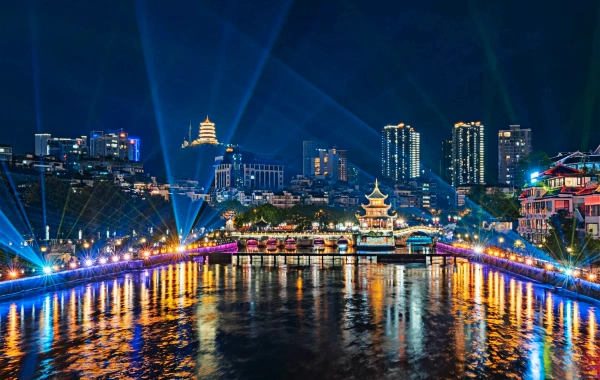
The tower’s magic lies in its perfect symbiosis with nature—rooted in rock, spanning water, and embraced by the city.
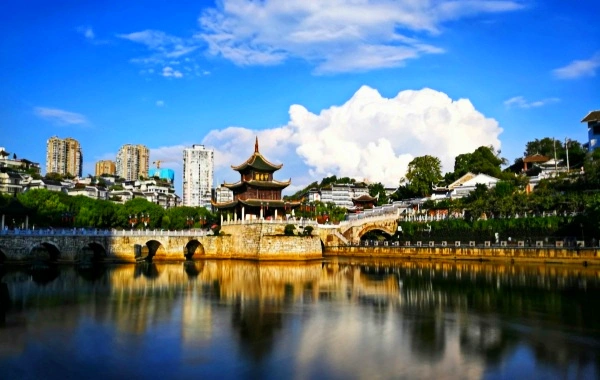
The Nanming River and Aoji Rock: The river flows like a jade belt through the city, widening here into a calm expanse. The natural Aoji Rock forms the very foundation, making the pavilion appear to grow from the stone itself—a symbol of solidity and endurance. In spring and summer, the river is full and vibrant; in autumn and winter, clear and reflective, granting the structure an ever-changing vitality.
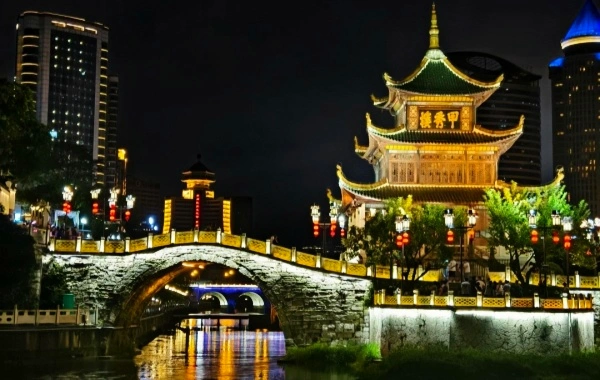
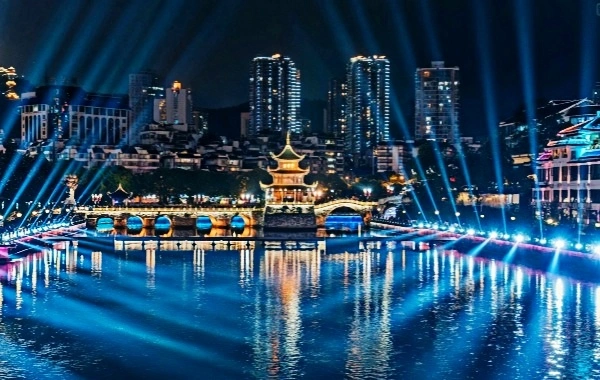
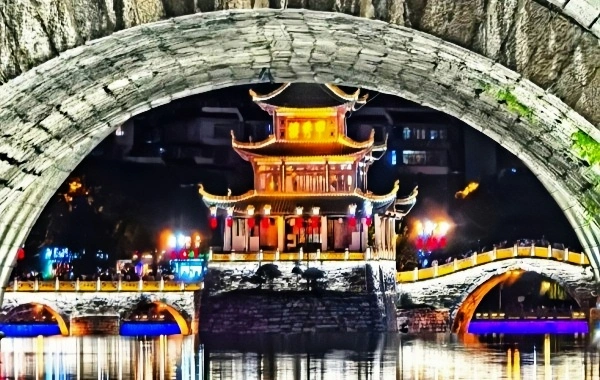
Fuyu Bridge and Hanbi Pavilion: This nine-arch white stone bridge is more than a passageway; it is a poetic extension. True to its name “Floating Jade,” it lies elegantly upon the water. Strolling across it feels like walking through a painting. The Hanbi Pavilion at its center is the perfect spot to pause, framing views of the tower upstream and down, seamlessly connecting water and architecture.
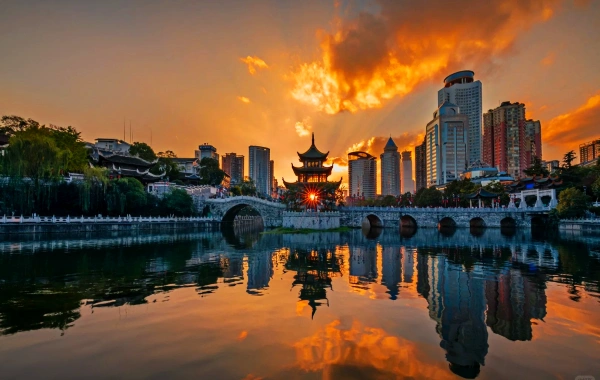
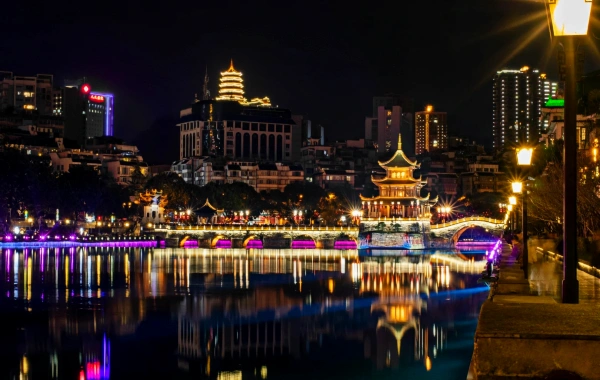
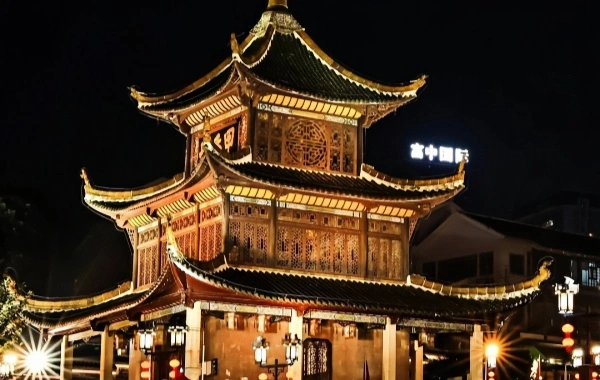
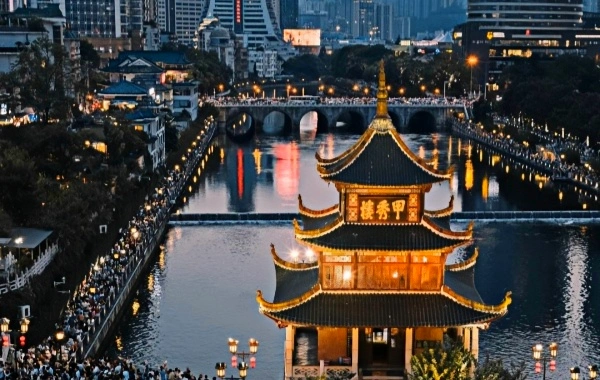
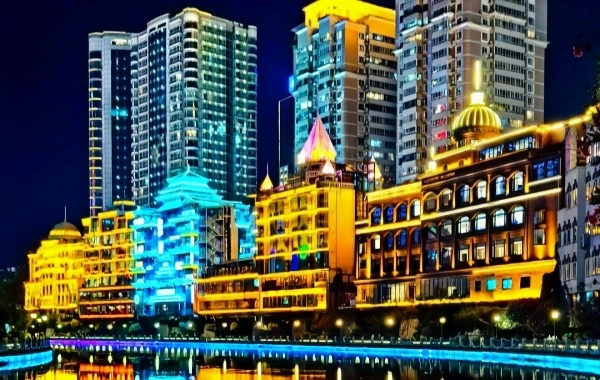
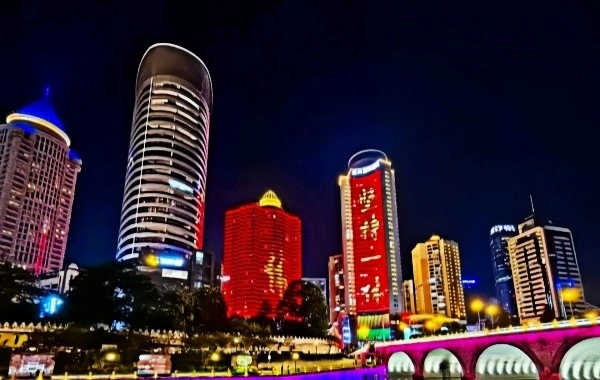
The Dance of Light and Season: The tower’s beauty transforms with the time of day and the turn of the seasons. At dawn, it emerges from mist like an ink-wash painting. Under the afternoon sun, every architectural detail stands clear. However, the most captivating moment is undeniably from dusk into night, when the setting sun gilds the eaves, and electric lights gradually illuminate the tower, bridge, and water, creating a dazzling reflection against the darkening sky.
Human Craftsmanship—History Etched in Wood and Stone
Every timber, tile, and inscribed couplet here carries the weight of history and the refinement of scholars.
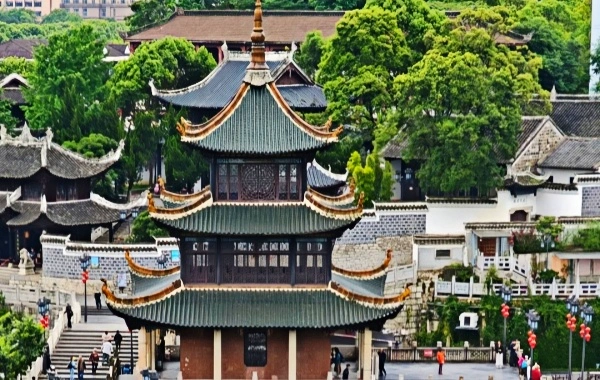
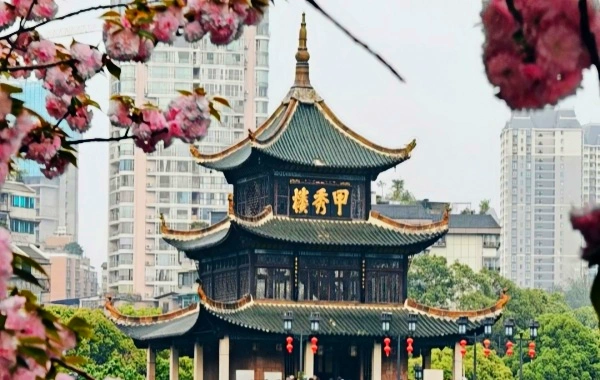
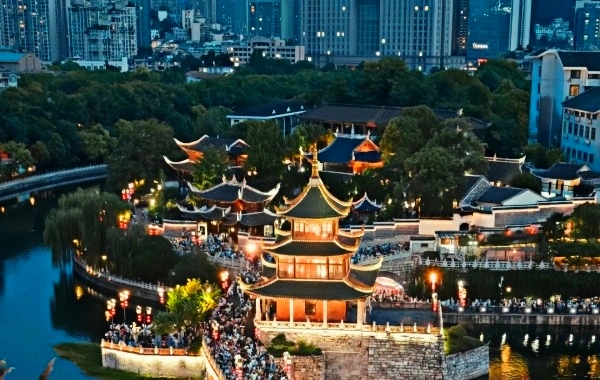
The Architecture of Jiaxiu Tower: Standing approximately 22.9 meters tall, its distinctive upturned eaves are supported by sturdy stone pillars. Ascending its three stories gradually reveals more of the world: the churning waters at the base, the elegant bridge from the middle, and a breathtaking 360-degree panorama of Guiyang’s cityscape and surrounding mountains from the top. Inside, genuine stone carvings and wooden plaques from the Qing Dynasty preserve an atmosphere of classical scholarship.
The Legendary Long Couplet: The tower’s most celebrated treasure is the 206-character couplet by Liu Yunliang, a Qing Dynasty scholar from Guiyang, as renowned as the one at Kunming's Daguan Tower. Its first scroll vividly describes the landscape (“For five hundred years holding fast to Aoji, alone propping up the heavens…”), while the second recounts local History and Culture (“Towering thousands of ren above Niudu, eternally guarding the frontier…”). Understanding this coupleet is key to understanding the tower’s profound significance.
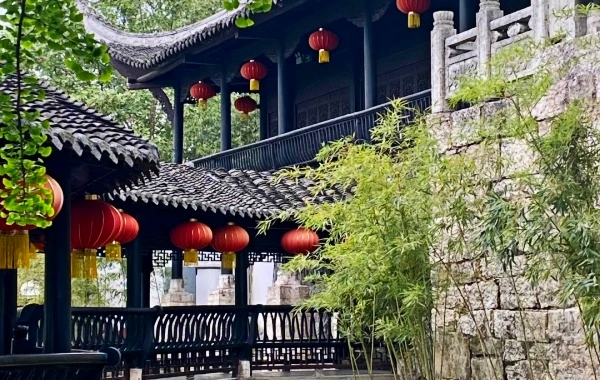
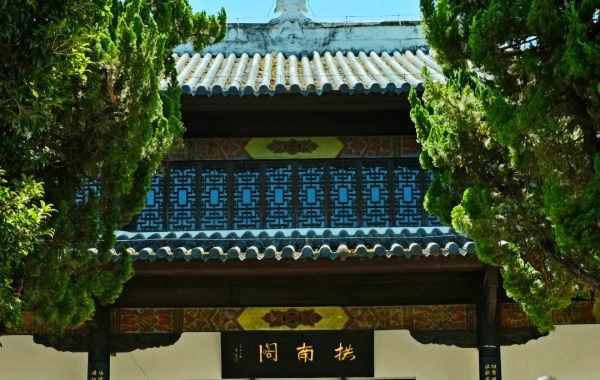
Cuiwei Garden: On the south bank lies the serene Cuiwei Garden, a Ming-Qing style complex encompassing the Gongnan Pavilion, Cuiwei Pavilion, and Longmen Academy. Its quiet corridors, lush gardens, and traditional teahouses offer a tranquil counterpoint to the tower’s grandeur, and a perfect place to enjoy a cup of tea while gazing back at the iconic view across the river.
Historical Narratives: Relief sculptures of notable Guizhou figures and informative exhibits on the tower’s history provide valuable context, enriching the visit beyond the visual spectacle.
Photography Guide:
Classic Panorama: The north bank of the Nanming River (Wenchang South Road side) captures the tower, bridge, pavilion, and their perfect reflections, especially for night shots.
Architectural Details: From Fuyu Bridge, low-angle shots emphasize the dynamic flying eaves and intricate carvings.
Framed Compositions: Use the arches of Hanbi Pavilion as a natural frame to photograph the tower, adding depth.
The High Vantage Point: The top floor offers unparalleled views. A telephoto lens can compress the urban skyline with the distant mountains