

2-Day Xining & Qinghai Lake Cultural Discovery Tour
No summary provided.
Route:
Xining-Haibei
- Tour Code: QT-XRQ-02
- Duration of the trip: 2 Days
- Hotel: 1 night (4+ stars Hotels)
From:
USD $
pp
Select Date & Book
Lowest Price Guarantee. Reserve Now and Pay Later.
Notes:Prices may vary depending on the season and promotional activities. Please consult your advisor for details.
Why Choose lnto Explore China Group Tour

Worry-Free Travel
With years of experience in group travel across China, we provide professional tour guides,
comfortable coaches, and well-paced itineraries for a smooth and enjoyable journey.
Itineraries with Great Value
Our tours cover China's most iconic sights and cultural highlights. All packages are clearly priced
with no hidden costs, offering a high-quality experience at a competitive rate.
No Shopping Stops
We guarantee a truly immersive journey with no shopping stop. Spend more time exploring scenic
spots, enjoying authentic food, and discovering local culture
Travel with Flexibility
Whether you're traveling solo, with friends, or as a family, you can easily join us. Enjoy better
value than private tours with small groups of 6-12 people and year-round departures.
Itinerary
Explore each day’s highlights, pace, routes, hotels, meals, and photos—so you know exactly what to expect along the way.
Route Map Full route
Dongguan Mosque--Ta'er Monastery--Mojia Street--Qinghai Provincial Museum
4+ stars Hotels
Breakfast & Lunch
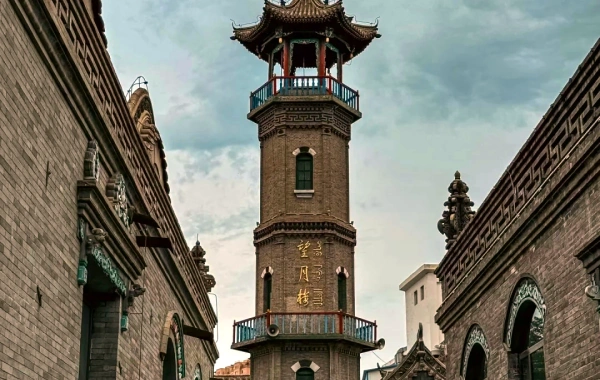
After breakfast, begin your journey with a visit to Dongguan Grand Mosque, the most significant Islamic site in Qinghai and the largest mosque in the province. With a traditional layout featuring front gates, five entrance arches, minarets, side halls, and the grand prayer hall, the mosque is a striking blend of Chinese temple architecture and Arabic dome structures. It can accommodate up to 12,000 worshippers at a time. The mosque’s construction was supported by donations from Han, Tibetan, and Tu communities, and even received a gilded prayer wheel from the famous Labrang and Ta'er monasteries. A calligraphy plaque inscribed by Mr. Yu Youren further symbolizes the rich cultural fusion embodied in the mosque.
Tips:
-
Dress modestly—shoulders and knees should be covered (robes are available at the entrance).
-
Photography is prohibited inside the prayer hall but allowed in the square.
-
Women should wear a headscarf (free to borrow at the mosque) as a sign of respect for local customs.
Non-Muslims may observe from the outer courtyard and are welcome to explore the exhibition hall, which includes a Yuan-dynasty handwritten Qur'an and other relics.
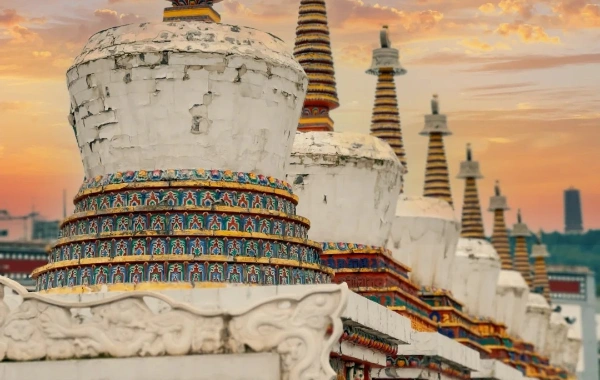
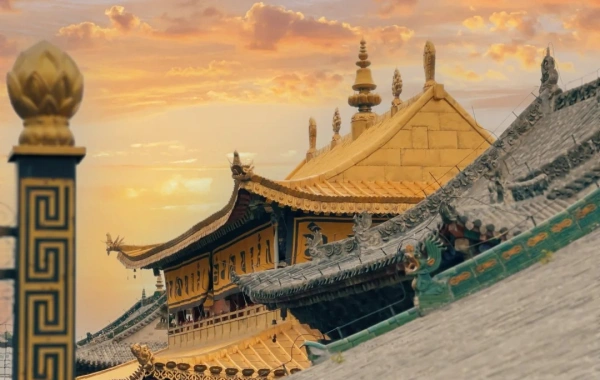
Next, visit Ta'er Monastery (Kumbum Monastery), one of the six great monasteries of Tibetan Buddhism and the birthplace of Tsongkhapa, founder of the Gelug (Yellow Hat) school. The monastery developed its own complete system of religious, political, and cultural organization over the centuries. Ta’er is renowned for its "Three Great Art Treasures"—butter sculptures (suyouhua), murals, and appliqué embroidery (duixiu). Annual religious events, especially the Four Great Buddhist Festivals, attract crowds of worshippers and visitors alike. The monastery also houses an extraordinary collection of golden Buddha statues, ancient scriptures, thangkas, and imperial plaques.
Afterwards, stroll through Mojia Street, a bustling local food street where you can sample authentic Qinghai flavors. Recommended local eats include: lamb intestine noodles, yak yogurt, grilled beef and lamb skewers, highland barley milk tea, and black goji berry products.
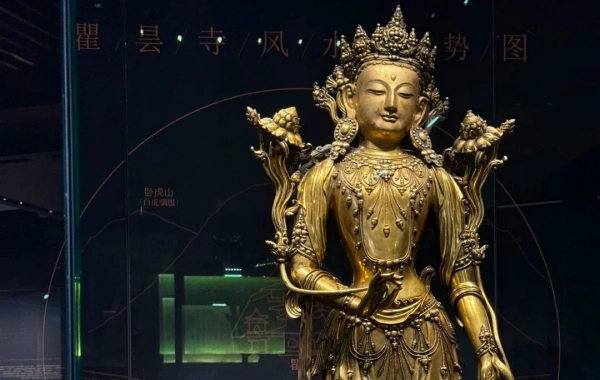
In the afternoon, head to the Qinghai Provincial Museum, the province’s first large-scale modern museum, designated a National First-Class Museum in 2017. The museum holds rich collections ranging from Neolithic painted pottery and bronze artifacts to stone inscriptions, religious relics, and ethnic cultural exhibits.
In the evening, feel free to explore the city on your own, or consult an Intotravelchina advisor for personalized recommendations to enrich your experience.
Xining--Riyue Mountain--Qinghai Lake--Return to Xining
4+ stars Hotels
Breakfast & Lunch
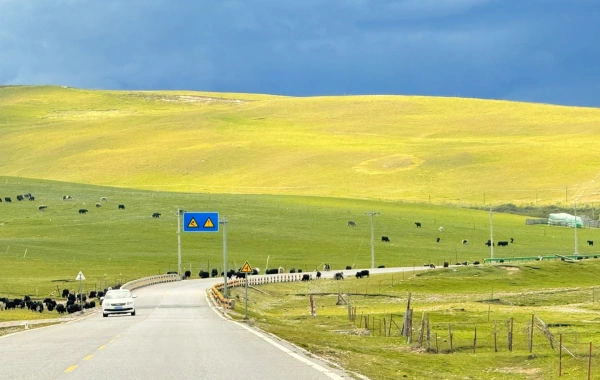
In the morning, your driver will pick you up in Xining, the capital city of Qinghai Province, and take you to Riyue Mountain. Historically, Riyue Mountain was a crucial pass along several important routes such as the “Qiangzhong Route,” the “Southern Silk Road,” and the “Ancient Tang-Tubo Road.” During the Northern and Southern Dynasties, when the Hexi Corridor became blocked, the Southern Silk Road—passing through Riyue Mountain, Qinghai Lake, and the Qaidam Basin—emerged as a major artery to the Western Regions. In the Tang Dynasty, the Ancient Tang-Tubo Road connected the northeast to Lhasa via the heart of Hainan Prefecture, becoming a significant cultural and strategic route.
Riyue Mountain has witnessed countless historic events, including alliances, royal marriages, wars, and trade between the Han and Tibetan peoples—particularly the famed tea-salt and tea-horse exchanges. As a strategic gateway to Tibet, the mountain served as a frontier outpost of the central Chinese dynasties from the Han and Wei to the Sui and Tang. Thus, it earned the titles “Barrier of the Western Sea” and “Gateway to the Grasslands.” In the 7th century, it also marked the boundary between the Tang Dynasty and the Tibetan Empire, which was founded by Songtsen Gampo after unifying the Yarlung tribes. The border was established at Chiling (now part of Riyue Mountain).
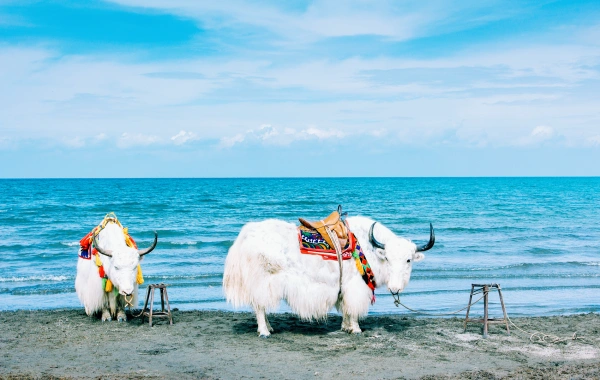
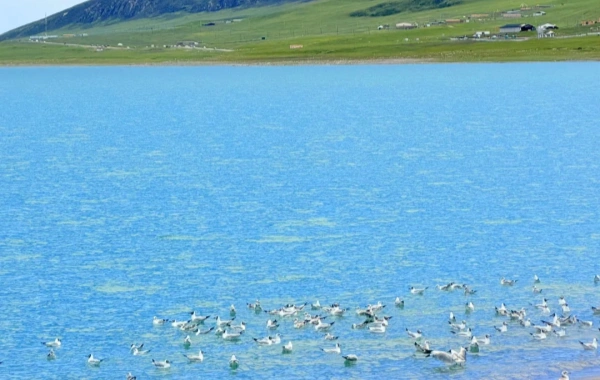
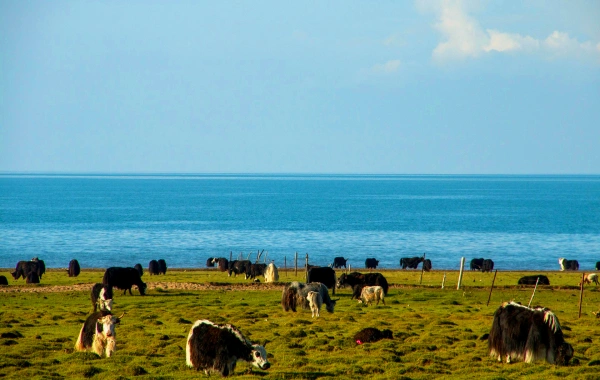
In the afternoon, you will head to Qinghai Lake, the largest inland saltwater lake in China and one of the highest-altitude lakes in the world. Often called the ‘Blue Jewel of the Plateau,’ it was named China’s most beautiful lake by National Geographic. The Qinghai Lake Scenic Area is divided into six sections: the lake itself, Erlangjian, Bird Island, Sand Island (Golden Beach Bay), Fairy Bay, and Riyue Mountain, with graded protection for each. Highlights include Bird Island, Sand Island, the ancient Silk Road routes, the Tang-Tubo Road, old city ruins, and the former torpedo testing base at Site 151.
According to legend, over a thousand years ago, Princess Wencheng was married off to Songtsen Gampo, ruler of the Tibetan Empire. Before her departure, the Tang Emperor gave her a magical mirror that could show images of her homeland. On her journey, overwhelmed with homesickness, she gazed into the mirror and saw her distant hometown, Chang’an. Moved to tears but reminded of her duty, she threw the mirror away. Where it landed, a golden light flashed—and the mirror turned into Qinghai Lake.
Optional Experiences (at your own expense):
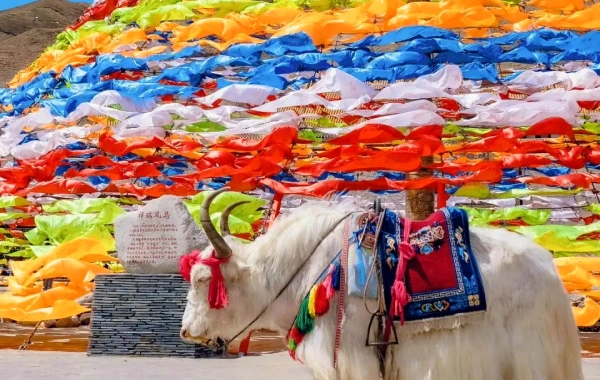
Horseback riding and archery, tasting butter tea, making tsampa, witnessing the Tibetan lake-blessing ceremony, throwing Lungta (colorful wind horse papers) for blessings, riding a traditional leather raft, taking a luxury cruise around the lake, or photographing the rapeseed flower fields (available in July). For more ideas, feel free to contact our consultants at IntoExplore.
Kind Reminder:
Qinghai Lake is located at a high altitude (3,196 meters). Please be cautious of altitude sickness and avoid intense physical activity such as running or long-distance hiking. To minimize risk, avoid bathing on Day 1. Also, bring sun and wind protection.
Included & Excluded
- The price is based on two people sharing a double room. If you prefer a single room, please contact us for a quote.
- Price may vary depending on exchange rates, travel dates, and hotel class.
- Prices may vary depending on the season and promotional activities. Please consult your advisor for details.
Price Includes:
- Comfortable hotel with daily breakfast (twin room)
- Professional English-speaking local tour guide
- Air-conditioned private coach throughout the tour
- Entrance tickets to all listed attractions and activities
- Lunches as specified in the itinerary
- Domestic flights and high-speed train tickets
- One travel accident insurance per person
Cancellation Policy
We understand that travel plans may change. Please review our cancellation policy below:
- Free cancellation if canceled 60 days or more before the tour starts
- 5% of total tour cost if canceled 45-59 days before departure
- 10% of total tour cost if canceled 30-44 days before departure
- 25% of total tour cost if canceled 15-29 days before departure
- 45% of total tour cost if canceled 7-14 days before departure
- 100% of total tour cost if canceled less than 7 days before departure
Q & A
What is the best season for this 2-day Qinghai tour?
We highly recommend July to September. During these months, Qinghai Lake is at its most stunning—the water is a brilliant turquoise blue, surrounded by golden rapeseed flower fields. The weather is mild and pleasant, with daytime temperatures around 20-25°C. July and August are peak season with vibrant scenery; September offers fewer crowds and a peaceful atmosphere.
Should I be worried about altitude sickness at Qinghai Lake?
Qinghai Lake sits at 3,200 meters above sea level, so some visitors may experience mild altitude symptoms. To prevent altitude sickness, we recommend spending your first day in Xining (2,200m) to acclimatize. Avoid strenuous activity, drink plenty of water, and refrain from heavy meals in the first few days. Our guide will be attentive to your condition throughout.
What should I prepare for the temperature changes on this trip?
Layering is essential! Qinghai has a large temperature difference between day and night—summer daytime can be warm (25°C), but mornings and evenings are chilly (5-10°C). We recommend packing short sleeves, a fleece, and a windbreaker. Sun protection is crucial at high altitude—bring sunscreen, a wide-brimmed hat, and sunglasses. Comfortable walking shoes are a must for temple visits and lake walks.
Are meals included? What local food should I try?
Meals are not included, giving you flexibility. In Xining, we highly recommend exploring Mojia Street Food Street, where you can taste hand-grabbed lamb, yak yogurt, lamb soup with bread, and tsampa (roasted barley flour). Your guide will point you to the most authentic food stalls. For a special experience, optional Tibetan family meals can be arranged upon request.
Is this tour suitable for elderly travelers or families with children?
Yes! The itinerary involves moderate walking, but we can adjust the pace and add extra rest breaks. Ta'er Monastery and Qinghai Lake's boat ride are accessible for seniors. For families, the lake scenery and optional Tibetan experiences are memorable for all ages. Just let us know your group's needs in advance—we'll tailor the experience for everyone's comfort.
Book Now
Verified travel notes