

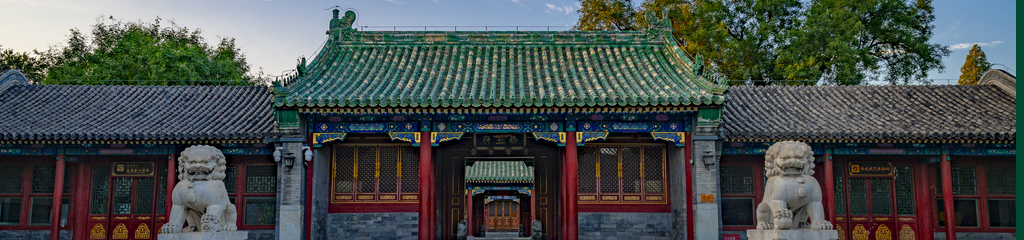
Prince Gong's Mansion
Historical Overview
Construction commenced in 1776, with Emperor Qianlong granting the land to He Shen, who spared no expense in crafting a luxurious retreat. After He Shen’s downfall in 1799, the estate was repurposed multiple times before Prince Gong, a key figure in the late Qing Dynasty, acquired it. The mansion witnessed pivotal events, including Prince Gong’s negotiations with foreign powers during the Second Opium War and his efforts to modernize China. In 1921, it became the property of the Roman Catholic Church, serving as a school and seminary. Restored in the 1980s, it opened to the public in 1988, preserving its legacy as a site of political intrigue and cultural fusion.
Structural Layout
The mansion is divided into three main sections:
Living Quarters (Fu Area): The residential core, featuring the Silver Ancestral Hall (Xiyin Hall), Great Hall of Joyful Longevity (Leshou Hall), and Hall of Heavenly Purity (Qianqing Hall), used for ceremonies and receptions.
Garden (Garden Area): A serene landscape with pavilions, lakes, and rockeries, including the Bat God Garden (Xianfu Garden) and the Fountain of Blessing (Fuxi Spring).
Rear Garden (Houhua Yuan): A secluded retreat with the Pavilion of Great Harmony (Datong Pavilion) and Waterfront Hall (Shuixi Ge), offering panoramic views of the estate.
Major Attractions
Silver Ancestral Hall: Noted for its "silver throne" (actually white marble) and intricate carvings, symbolizing He Shen’s opulence.
Great Hall of Joyful Longevity: A grand venue for banquets, adorned with 108 bat-shaped motifs (a symbol of good fortune).
Bat God Garden: A labyrinthine garden with 9,999 bat-shaped decorations, representing eternal happiness.
Fountain of Blessing: A bat-shaped spring believed to grant longevity, fed by an underground river.
Museum of Treasures: Displays Qing Dynasty artifacts, including jade seals, porcelain, and calligraphy from the Prince Gong collection.
Suggested Itineraries
Classic Route (1–1.5 hours):
Main Entrance → Silver Ancestral Hall → Great Hall of Joyful Longevity → Bat God Garden → Fountain of Blessing → Exit
Highlights: Core halls and garden symbolism.
Extended Route (2–3 hours):
Main Entrance → Silver Ancestral Hall → Great Hall of Joyful Longevity → Hall of Heavenly Purity → Bat God Garden → Museum of Treasures → Pavilion of Great Harmony → Exit
Highlights: Residential quarters, garden, and artifact displays.
Comprehensive Route (3–4 hours):
Main Entrance → Silver Ancestral Hall → Great Hall of Joyful Longevity → Hall of Heavenly Purity → Bat God Garden → Waterfront Hall → Museum of Treasures → Rear Garden → Exit
Highlights: Full exploration of gardens, pavilions, and cultural exhibits.
Ticket Purchase
Online: Book via the official website or WeChat mini-program (up to 10 days in advance).
On-Site: Limited tickets available; queues peak midday.
Prices:
Peak Season (April–October): ¥40 (adults), ¥20 (students/seniors).
Off-Season (November–March): ¥30 (adults), ¥15 (students/seniors).
Free: Children under 1.2m, disabled visitors.
Transportation
Subway: Line 6 to Beihai North Station (Exit B), 10-minute walk.
Bus: Routes 3, 13, 42, 107, 111, or 118 to Liuyin Street Stop.
Taxi: Direct to the main entrance (Xicheng District, Qianhai West Street).
Best Time & Tips
Peak Hours: Avoid 11 AM–2 PM; visit early (8:30 AM opening) or late (after 4 PM).
Crowds: Quieter on weekdays; weekends bustle with tourists.
Weather: Spring (March–May) and autumn (September–November) for mild temperatures and blooming flowers.
Essentials:
Wear comfortable shoes (10,000+ steps possible).
Bring water; snacks available on-site.
Photography allowed (no tripods inside buildings).
Prohibited items: Selfie sticks, drones, and large bags.




Contact Us
What Our Clients Say?






FAQ
What exactly are the "Three Uniquenesses and One Treasure"?
The "Three Uniquenesses" are the Western-style Gate, the Grand Theatre House, and the Back Tower with its 99 rooms. The "One Treasure" is Emperor Kangxi's "Fu" Stele hidden in a garden cave. These four highlights capture the mansion's finest architecture, artistry, and imperial symbolism—don't miss them.
Is the queue for the Fu Stele really worth the wait?
It usually is. The stele carries Emperor Kangxi's handwritten "Fu" character, symbolizing five blessings in one. The line moves fairly quickly, and touching the stone is a beloved tradition for good fortune. Our guides know the best times to visit when the wait is shortest.
How is this different from the Forbidden City?
The Forbidden City is grand and ceremonial; Prince Gong's Mansion is intimate and personal. Here you'll see how Qing nobility actually lived—family quarters, private gardens, and hidden treasures. It's smaller, more walkable, and the garden is especially lovely. Many guests say it gives them a warmer, more human connection to history.
Can I still enjoy the mansion without hiring a guide?
You can, but you'll miss the stories. The buildings are beautiful, yet many details—like why He Shen hid treasures behind different window designs—only come alive with context. We offer guided tours that turn a nice walk into a fascinating journey through half of Qing Dynasty history.
Any tips for taking good photos inside the garden?
The Western-style Gate and the garden pavilions make stunning backdrops, especially in soft morning or late-afternoon light. The Fu Stele area doesn't allow flash. Wear something with a touch of color to stand out against the grey stones and red walls. Our guides know the quiet corners where you can capture the best shots without the crowds.
Ask us before you decide.
Unsure about a route, departure date or room option? Tell us what is holding up your plans. You will get a clear answer from our China-based travel team—no booking required.