Nature's Masterpiece—The"White Waterfall"That Has Flowed for Millennia
The natural landscape of Baishuitai is an eternal dance involving water,calcium carbonate,and the passage of time.
Travertine Terraces:China's Largest"Fields Left by Immortals"
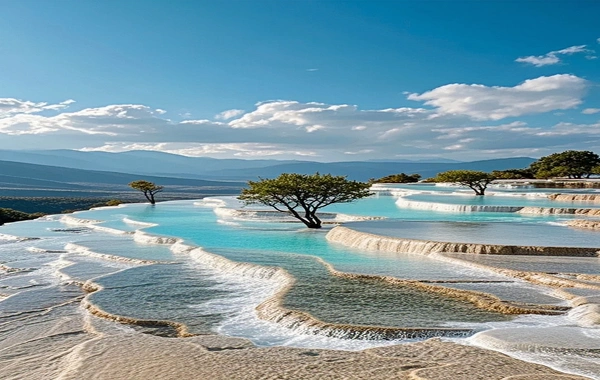
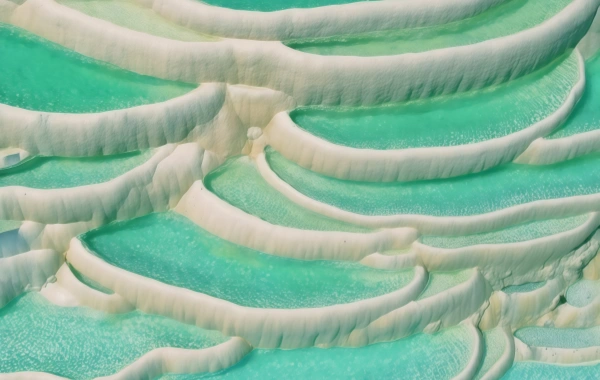
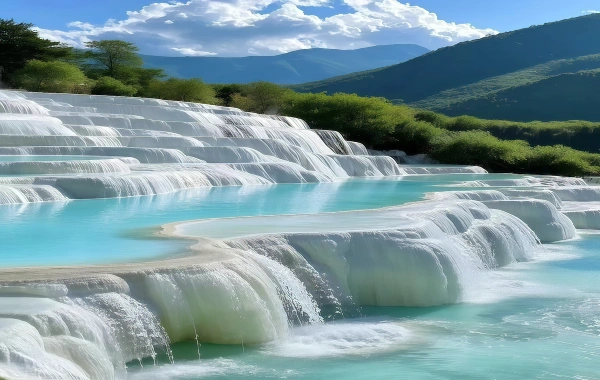
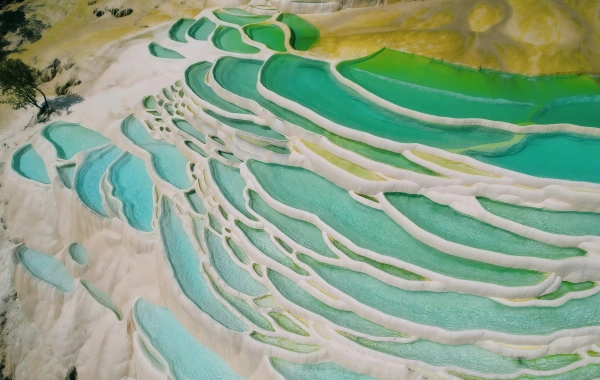
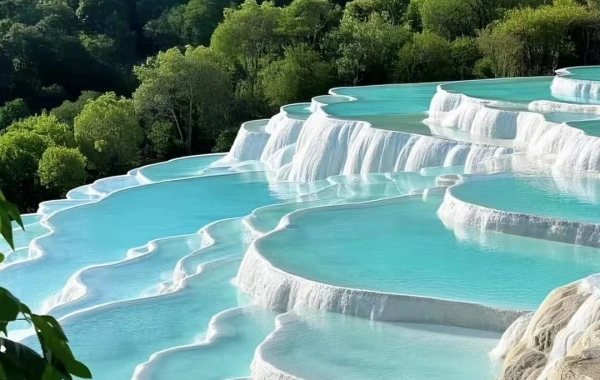
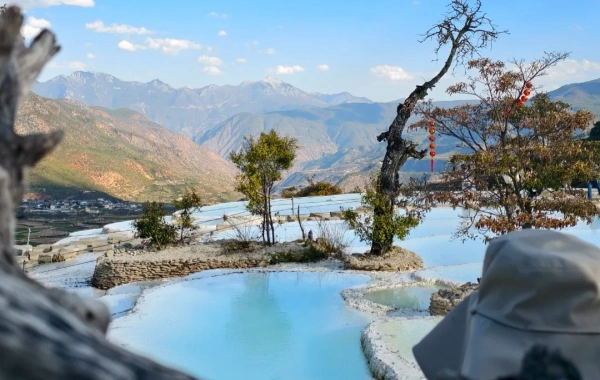
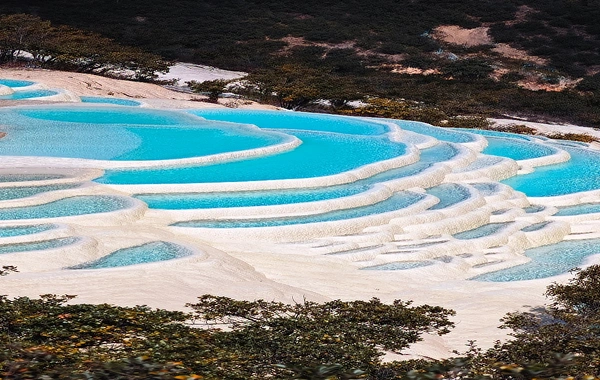
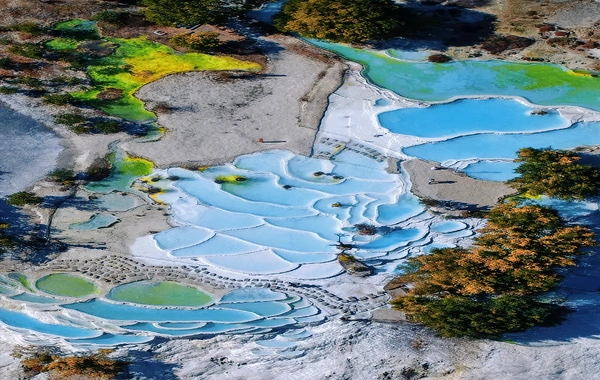
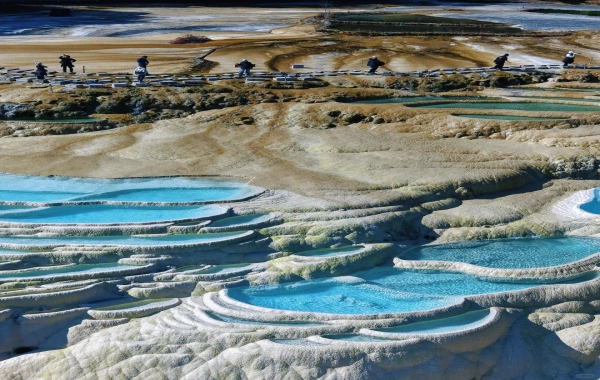
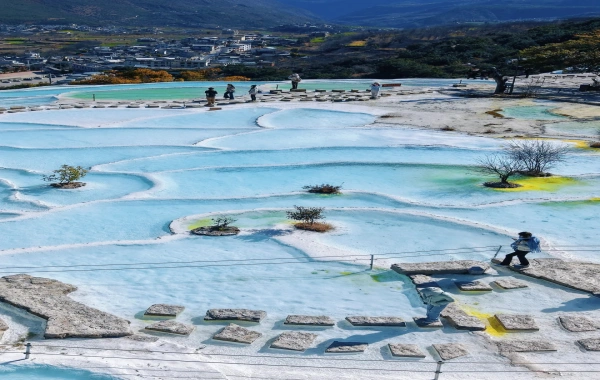
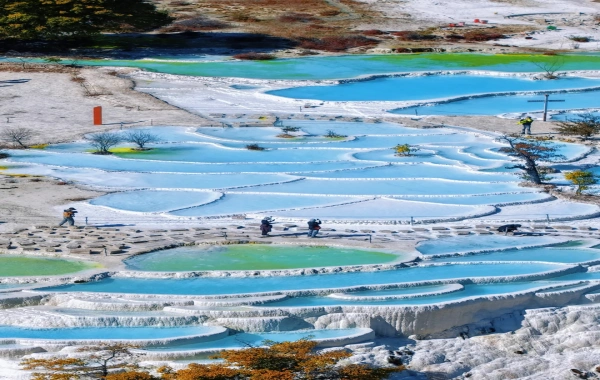
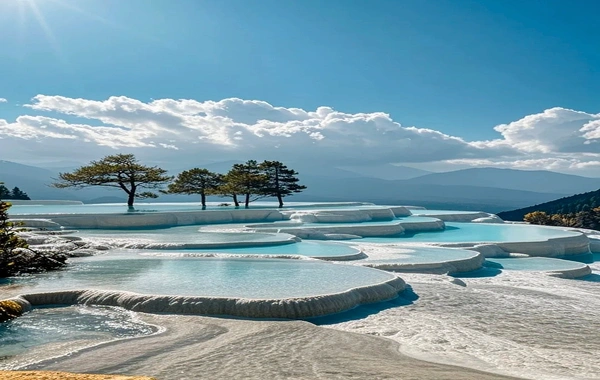
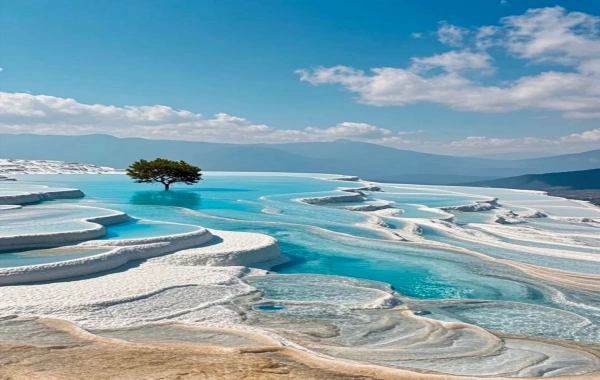
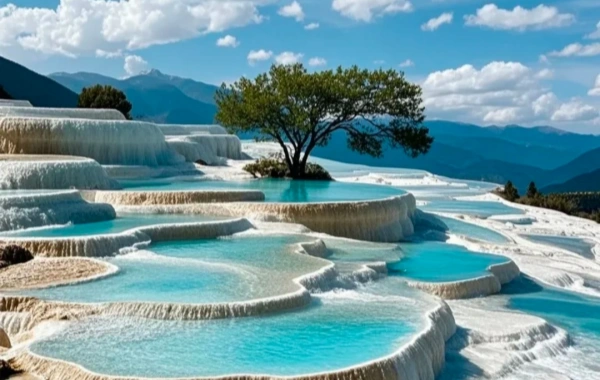
Baishuitai represents the largest cold-spring freshwater travertine terrace formation discovered in China to date.Its creation is the result of a geological magic that has unfolded over hundreds of millions of years.Springwater rich in calcium bicarbonate surges from deep within the rock strata of Haba Snow Mountain;as it flows across the surface,changes in pressure and temperature cause the dissolved carbon dioxide to escape,triggering the precipitation and deposition of calcium carbonate.Layer upon layer of calcium carbonate has accumulated over the millennia—much like the work of a patient sculptor—ultimately carving out this karst landscape of myriad shapes and forms.Baishuitai sits at an elevation of approximately 2,380 meters;its terraces cascade in layers,arranged with a natural,harmonious rhythm.Viewed from a distance—nestled amidst lush green hills—the formation of Baishuitai truly resembles a series of terraced fields.When bathed in sunlight,it takes on the appearance of a frozen waterfall,much like a captured moment in a photograph.Stepping onto the white stone terraces evokes an indescribably refreshing and exhilarating sensation.
>Photography Tips:The soft light of early morning or late evening is ideal for capturing both portraits and panoramic shots.Under direct sunlight,the calcified terraces shimmer with a multicolored luster;following a rain shower,the pools atop the terraces fill with water,creating stunning reflections.
The Divine Spring and Colorful Pools:A Dreamlike Interplay of Blue and White
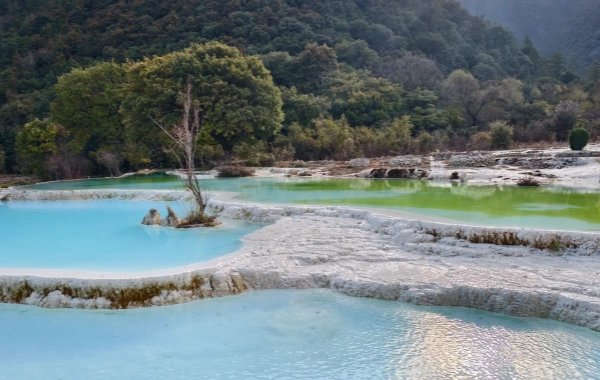
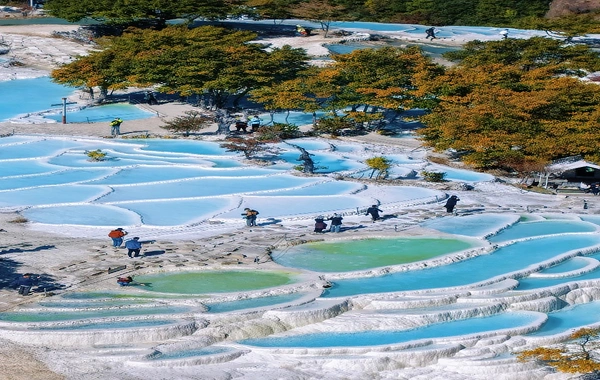
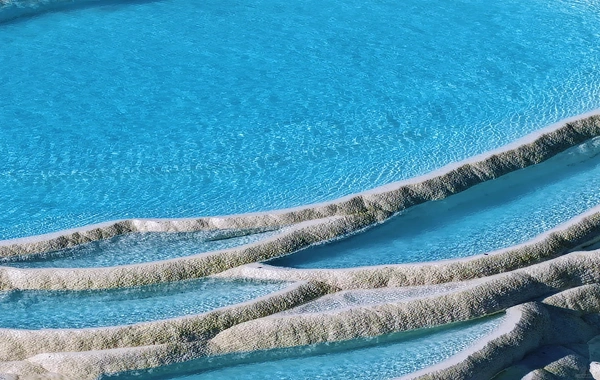
The water source for Baishuitai originates from a spring located halfway up the mountain—a site locals revere as the"Divine Spring"or"Holy Water."The spring water is crystal clear;as it fills the white travertine pools,it takes on varying shades of blue—ranging from the transparent,mint-candy hue of the shallows to the deep,sapphire-like intensity of the deeper sections.Within these cascading,crescent-shaped travertine pools,the water flows gently like silken ribbons,shimmering with a dazzling,rippling brilliance under the sunlight.
Key attractions within the scenic area include:
-The Sky-Piercing Pillar:Standing in the central plaza of the scenic area,the column is intricately carved with the"Eight Auspicious Symbols."
-The Human-Serpent Statue:Located at the very center of the plaza,this statue represents"Shu"—the nature deity revered by the Naxi people.
-The Fertility Cave:Situated directly opposite Observation Deck No.1,this large travertine formation bears a striking resemblance to a pregnant woman.
-Observation Deck No.2:Constructed atop a small hill to the left of the site,this vantage point offers a commanding,panoramic view of the cascading,crescent-shaped travertine pools—making it the premier spot for photography and sightseeing.
-The Divine Spring and Celestial Pool:The Divine Spring marks the very source of Baishuitai's waters—a place where legend holds that the deity"Shu"resides—while the Celestial Pool is said to be the place where"Shu"performs ritual cleansing and bathing.
Algal Terraces and Travertine Falls:Nature's Vibrant Accents
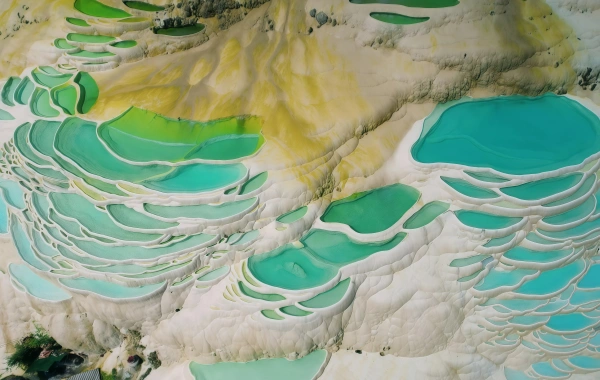
Upon the white travertine terraces,specific species of algae have taken root.These organisms tint portions of the terraces with soft shades of green or yellowish-brown,creating a striking and unique color contrast against the pristine white of the travertine formations.These tiny forms of life infuse this white world with vitality and a lively spirit.
Humanistic Ingenuity—The Living Heritage of Dongba Culture
The cultural landscape of Baishuitai serves as a concentrated embodiment of the profound depth and heritage of the Naxi people's Dongba culture.
A Sacred Site of Dongba Religion:A Thousand Years of Faith and Vigilance
Baishuitai holds a supreme and revered status in the hearts of the Naxi people.Legend has it that Dingba Shiluo—the first patriarch of the Dongba religion—once practiced asceticism,preached,and compiled the Dongba scriptures at this very site.Since then,Baishuitai has remained a sacred sanctuary for followers of the Dongba faith.During the Tang and Song dynasties,Baishuitai had already established itself as a renowned scenic destination in the western Yunnan region.Inscribed upon the stone cliff at the water's source,a poem composed during the Ming dynasty by Mu Gao—a Naxi chieftain and prefect—can still be found today:"Five hundred years ago,a solitary monk dwelt in this Buddhist realm,guarding its boundless power.Clouds of water and snowy waves ripple across three thousand ridges;jade-like embankments and silver mounds form tens of thousands of terraces.Winding and flowing together,the waters remain untainted by dust;rising layer upon layer like shimmering jade,the water seems eternally crystallized.May this'jade of the heart'flow forever like the mighty Yangtze—how I envy this exalted sage who has attained the highest spiritual realm."
The"Second Day of the Second Month"Festival:A Carnival of Celebration for the Naxi People
Every year on the eighth day of the second lunar month,the Naxi people celebrate their annual"Pilgrimage to Baishuitai"festival.On this day,Naxi people from all directions converge upon Baishuitai to pray to the deities for a bountiful harvest in the coming year.Clad in their finest traditional attire,they perform solemn sacrificial rituals before the terraces,followed by lively gatherings filled with singing,dancing,and picnicking.As the thick smoke from the sacrificial fires ascends,men and women—young and old alike—gather in a large circle to dance and sing in joyous celebration.This tradition has endured for centuries and remains one of the most significant traditional festivals for the Naxi people.
Preserving Dongba Culture:Guardians of an Ancient Script
In Baidi Village,nestled at the foot of Baishuitai,a few elderly Dongba priests continue to quietly and steadfastly safeguard their cultural heritage.They teach the Dongba script,craft traditional Dongba paper,and chant the ancient scriptures,striving to ensure that this ancient culture is passed down to future generations.Visitors are welcome to visit the Dongba Temple within the village and,with courtesy and respect,seek out these elderly priests to learn more about the Dongba script,the art of Dongba paper-making,and other elements of this invaluable intangible cultural heritage.>Photography Tip:At the Baishuitai Scenic Area,you can capture images of locals dressed in traditional Naxi ceremonial attire;during the"February 8th Festival,"this place becomes a true paradise for cultural photography.