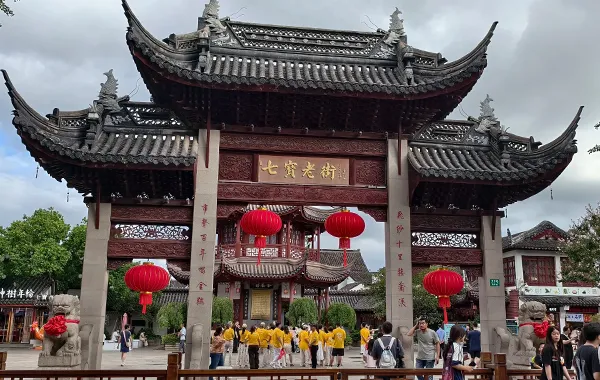
Qibao Ancient Town: A Journey through an urban ancient town that has emerged from a thousand-year-old legend
Qibao Ancient Town: A Journey through an urban ancient town that has emerged from a thousand-year-old legend

Overview: A specimen of Jiangnan floating deep in the bustling heart of Shanghai
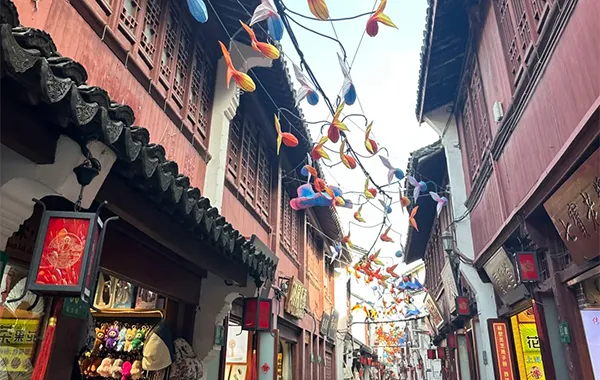
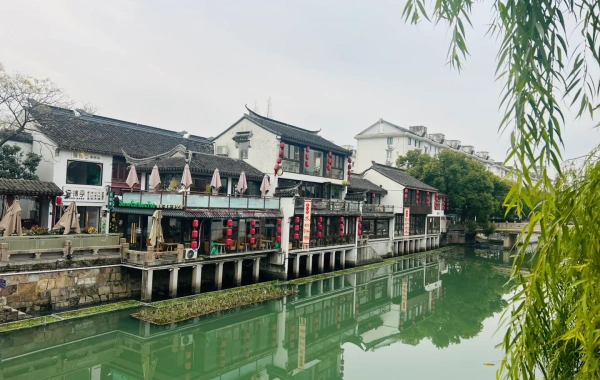
Qibao Ancient Town is the last ancient town left inside Shanghai's city limits. Built around the Puhuitang canal and its 1518 stone bridge, it tells a thousand-year-old legend of seven treasures, runs a snack street that locals call an encyclopedia of Shanghai food, and still works as a living neighborhood rather than a museum.

A quick overview of key highlights
Identity tags: The last urban ancient town of Shanghai · a thousand-year-old legend of seven treasures · encyclopedia of Shanghai snacks · water town on the Puhuitang canal.
Core experiences: Taste old-street snacks · cross the Puhuitang Bridge at dusk · visit the micro museums · take a canal boat tour.
Suggested tour: Half a day to one day.
Address: Qibao Old Street, Qibao Town, Minhang District, Shanghai, China

  • Qibao Ancient Town: A Journey through an urban ancient town that has emerged from a thousand-year-old legend-1
  • Qibao Ancient Town: A Journey through an urban ancient town that has emerged from a thousand-year-old legend-2
  • Qibao Ancient Town: A Journey through an urban ancient town that has emerged from a thousand-year-old legend-3
  • Qibao Ancient Town: A Journey through an urban ancient town that has emerged from a thousand-year-old legend-4

The Legend of the Seven Treasures: Why the Town Is Named That

The Qibao Ancient Town.webp Ancient Town.webp

Before you walk a single lane, it helps to know why this place is called "Qibao," which means "seven treasures" in Chinese. Two explanations compete. The more practical one points to Qibao Temple, founded in the Five Dynasties period (907–960), which gave the surrounding market its name. The story locals prefer is a hunt: somewhere in this small district are hidden an iron Buddha, a bronze bell, a gold-script Lotus Sutra, a catalpa tree, a jade axe, a gold cockerel, and a pair of jade chopsticks. The Shanghai government's official English profile retells both versions.

The legends carry real texture. The catalpa tree, says CGTN's travelogue, is said to have healed a wounded general when its leaves were pressed to his injury. The axe, according to the same story, was jammed into the base of a bridge that kept collapsing, and the bridge stayed upright from that day on. Historians note that only the scripture and the bell can actually be verified today, which is part of the charm: the town is old enough to be half myth.

Understanding the name changes how you visit. Qibao is not a monument to look at; it is a story to walk through. Treat the afternoon as a treasure hunt, and every snack stall and quiet corner becomes a clue.

> In-depth Understanding: Explore More Legends of Ancient Towns >> [Zhujiajiao Ancient Town] [Nanxun Ancient Town]

What the Old Street Really Is: A 360-Meter Story in Two Halves

2_副本.webp 3_副本.webp

The heart of Qibao is a single pedestrian street called Qibao Old Street, which runs about 360 meters along the Puhuitang canal. It has two distinct personalities. The Shanghai government's heritage page explains the history: the street was a Ming and Qing commercial route with more than 100 shops before the 1950s, was restored in 2002, and today holds roughly 143 shops.

The two halves are easy to tell apart. South Street is the "snack street," where the queues form and the frying pans never go quiet. North Street is the "small goods street," lined with craft shops, teahouses, and a few quiet alleys worth a detour. A useful trick for first-time visitors: walk the food half first while you are hungry, cross to the calmer north side afterward.

Beyond the main street, the old alleys have kept their older names, and each name is a tiny history lesson. One was once a pawnshop street from the cotton trade, another an antique alley, another a spinning-wheel street, and one even a bathhouse street. You do not need to know them to enjoy the town, but if you notice a sign, it usually means a hundred-year-old trade used to happen there.

Crossing the Puhuitang Bridge at Dusk

stone arch bridge.webp the stone arch bridge.webp

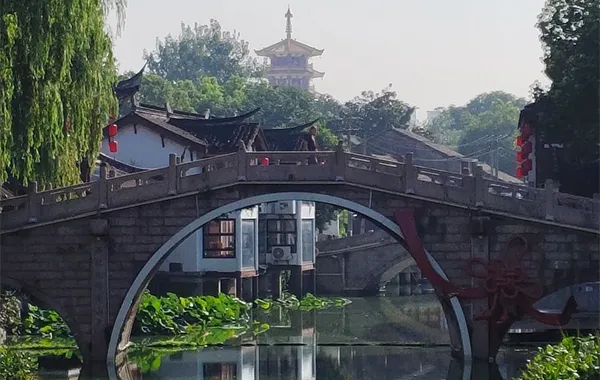
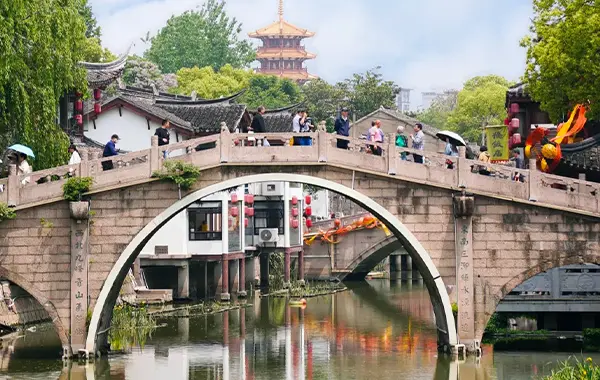
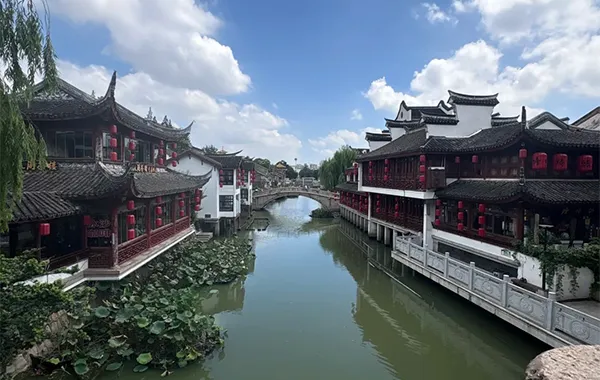
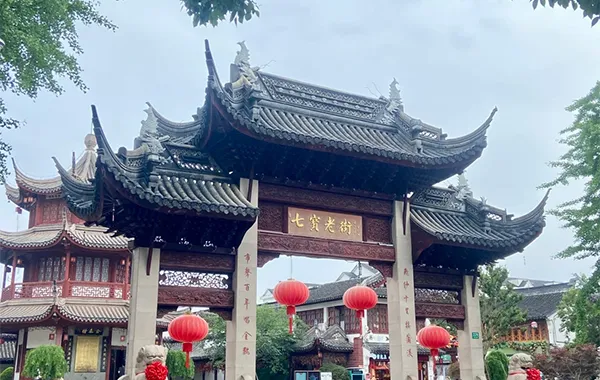
Every visit to Qibao passes over the Puhuitang Bridge, the stone arch bridge that connects the two banks of the canal and anchors the whole town. It is also the oldest thing you will see. The Shanghai government's City Tour page notes that in 1518 a local family leader named Xu Shou, together with a fellow villager, invested his entire family fortune to build the bridge, and he went on to oversee eight stone bridges along the north bank.

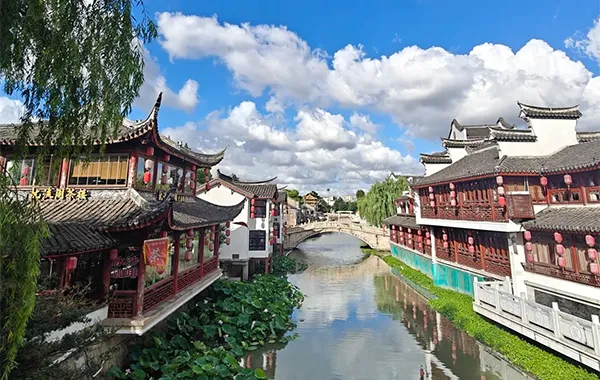
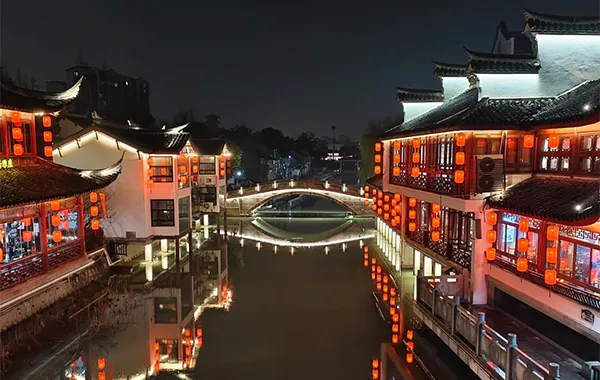
On the bridge, the whole point of Qibao becomes clear: small boats pass underneath, riverside houses stack up on both sides, and the town's two streets come together in a single frame. It is also the best photography spot in the district, and the one view locals and visitors agree on.

The official advice matches the one we give our guests: the bridge is at its best at dusk, when the lanterns and shop lights come on and the water turns into a dark mirror. If you take only one piece of timing advice from this guide, make it this: be on the Puhuitang Bridge as the light fades. Everything before that hour is the warm-up.

The Shanghai Snack Encyclopedia: What to Eat in Qibao

Tangtuan.webp white-cut lamb.webp

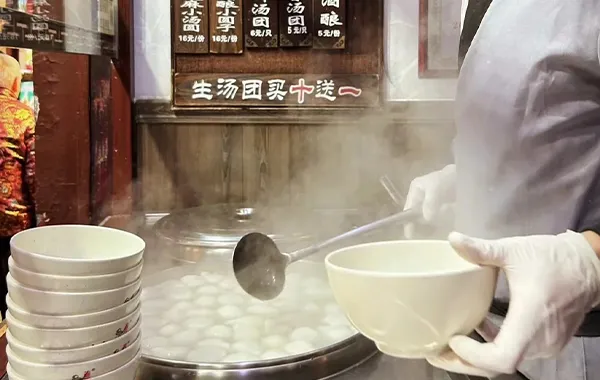
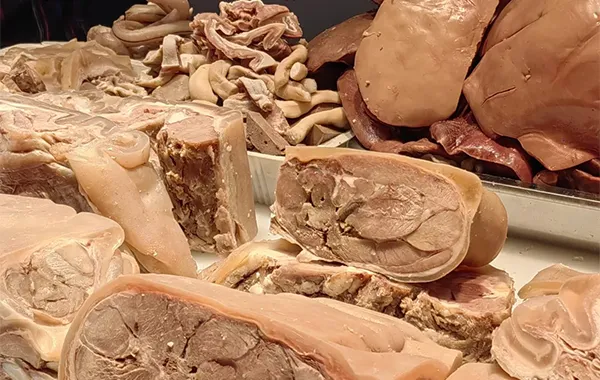
If Qibao has a second identity, it is food. Locals call the old street an encyclopedia of Shanghai snacks, and the nickname is not an exaggeration: nearly every famous Shanghai street food appears somewhere on the 360 meters. The Shanghai government's Minhang guide lists the signatures: tangtuan glutinous rice balls, rice cakes, crabapple cakes, white-cut lamb, crab roe soup dumplings, and scallion pancakes.

A practical eating strategy beats a long list. Arrive hungry, order small, and share. The queues tell the truth: a long line of locals is the most reliable sign of a good stall. Eat on the move, because most of the pleasure is in grazing, and save the teahouses for a pause when your feet start complaining.

Two things are worth calling out specifically. Tangtuan, the plump glutinous rice balls, are the dish Qibao is most famous for, and the shops that make them sell out by afternoon. The white-cut lamb is the more local specialty, less famous than the town's sweets but closer to what residents actually eat. Both are cheap, and both are best eaten hot.

Boats, Bridges and Water: A Water-Town Half Day

canal.webp museum.webp

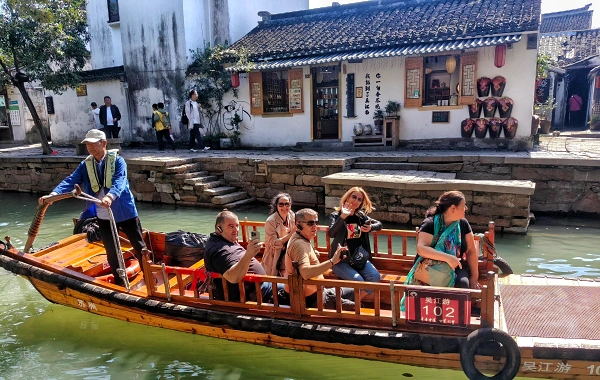
The streets are only half of Qibao; the canal is the other. A small wooden boat tour runs along the Puhuitang waterway, passing under the bridges and past the riverside houses, and it is the closest thing to a traditional water-town experience you will find inside Shanghai. Last verified: 2026-08-27.

The practical details are simple. The boat ride costs around CNY 40 per person and takes roughly 20 to 30 minutes. The town itself is free to enter, and the paid sites are the small museums, which cost CNY 5 to 10 each or about CNY 30 for a combined ticket. Opening hours are flexible because the streets never close; the museums and temple generally run from about 9 am to 5 or 6 pm. There is no reservation required for the town itself.

Because Qibao is compact, a half day is enough. The standard rhythm we recommend is an early afternoon arrival, a slow lap of the snack street, the boat ride, a museum or two if they interest you, and the bridge at dusk to close the day. If you have a full day, add a teahouse pause and let the pace slow down instead of adding distance.

First-Hand Experience: The Evening That Changes Your Mind

qibao street.webp canal night.webp

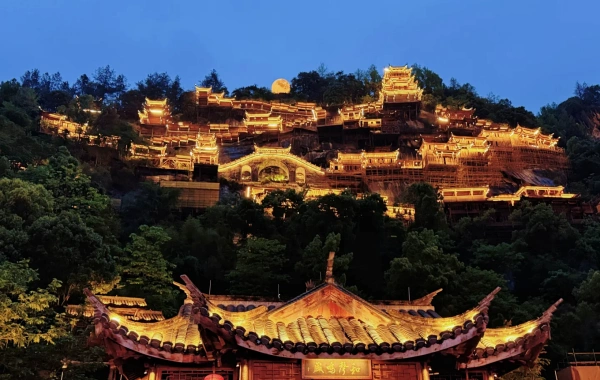
We have taken travelers to Qibao many times over the years, and the visit almost always splits into two parts. The first part is the daytime street: lively, delicious, and busy. The second part is the hour after the tour buses leave, and it is the one we always push guests to stay for. A guest from Australia nearly skipped the evening because she was tired; she called the lantern-lit canal her best memory of the whole trip.

There are honest downsides worth knowing. Qibao is not the most authentic water town in the region, and the main street can be shoulder-to-shoulder on weekends. Parts of the old architecture have been restored rather than left untouched. If you want perfectly preserved Ming-dynasty streets, towns like Zhujiajiao or Suzhou have more, but they cost you a full day. Qibao gives you a genuine taste of Jiangnan water-town life in an afternoon, with the best street food in Shanghai attached.

Our standing advice from years of guiding: keep your expectations small, arrive with an empty stomach, cross the bridge at golden hour, and do not leave before the lights come on. The evening is not an add-on; it is the actual experience. Our Shanghai itineraries build this evening in for you, so the timing is handled before you arrive. >> [Consult for Customization Now]

Recommended Tours

Top 3 tours chosen by most customers to explore in the best way. Check the detailed itinerary, or tailor your own trip now with us.

The Bund
6-Day China Water Town Tour

6-Day China Water Town Tour

6 Days  |  Shanghai - Suzhou - Wuzhen

Forbidden City
China Classic Group Tour

8-day tour for a group of 12 people. Experience this most popular itinerary in China with friends from all over the world.

8 Days  |  Beijing-Xi'an-Shanghai

企业微信截图_17827986155448_副本.webp
12-Day Private China Odyssey:From Lingnan Flavors to Fantasy Valleys & Skyline Glamour

No tourist traps: tribes, cliffs, Shanghai. Works – but not luxury.

12 Days  |  Guangzhou-Guiyang-Shangrao-Shanghai

2999

Explore Qibao with a Local Guide

Qibao Old Street.webp Qibao.webp cruise ship.webp

The charm of Qibao is that it feels like a secret the city keeps: an old water-town China, twenty minutes from the modern skyline. What a guide adds is the layer you cannot see. As Kevin, our water-route advisor, puts it: 

expert avatar
Kevin

Exploring Qibao Ancient Town

Qibao rewards the traveler who does not rush. The seven-treasures story, the carved details above the shopfronts, why the bridge faces the way it does, these are easy to walk past. Slow down, and the town opens up.

Our Shanghai team can take the planning off your hands. We will meet you at your hotel, arrange private transport, walk the old streets with you in English, book the boat tour and the small museums, and time your afternoon so you reach the Puhuitang Bridge as the lanterns light up. On multi-day routes, a 4-star hotel with meals is included, and the itinerary is customizable around your pace.

If Qibao is part of a longer Shanghai trip,

Our 6-Day Shanghai, Suzhou and Hangzhou Tour pairs the city with the classic water towns and gardens of the region,

And the Shanghai Zhangjiajie Guiyang Chongqing 10-Day Tour takes you from the water town all the way to the far southwest.

Send us your dates and we will tailor an itinerary around you. Get in touch to confirm availability. >> [Consult for Customization Now]

Join hands with IntoTravelChina and embark on your exclusive journey through civilization

Qibao Ancient Town.webp

A thousand-year-old legend, a street full of snacks, and a stone bridge at dusk, all hidden inside one of the world's most modern cities, is the kind of surprise that makes a China trip memorable, and you do not have to piece the day together yourself. IntoTravelChina is a locally operated China travel company, and our English-speaking guides, private transport, and real-time support exist for exactly this kind of visit: relaxed, well-timed, and full of the small details most travelers miss. Tell us when you are coming and how you like to travel, and we will shape a Shanghai itinerary around you, from a single afternoon in Qibao to a longer route across the country.

Start planning your journey right away

Welcome to contact our professional travel consultants. We will provide you with a customized itinerary plan and quotation within 24 hours.>>[Click to contact IntoTravelChina Travel Consultant]


Last verified: 2026-08-27 | Written by Kevin, China Travel Specialist | Reviewed by our Shanghai local guide team | Last updated: August 2026
What Our Clients Say?

Based on 10,000+ traveler reviews
...
Daniel Dorothea
Canada
Reviewed on April 29,2025
Shopping on Nanjing Road in Shanghai was just amazing! It's truly the "First Commercial Street of China", where tradition and modernity blend perfectly. You can find awesome souvenirs and experience the trendy vibes in cool stores. The neon lights at night are just spectacular, shining bright like Times Square in New York. The food here is incredible too. I had a feast for my taste buds. Shanghai, I'll definitely be back!
Destination(s): Shanghai
Date of Experience: May 08,2024
...
...
Elvis Eva
Canada
Reviewed on June 20,2025
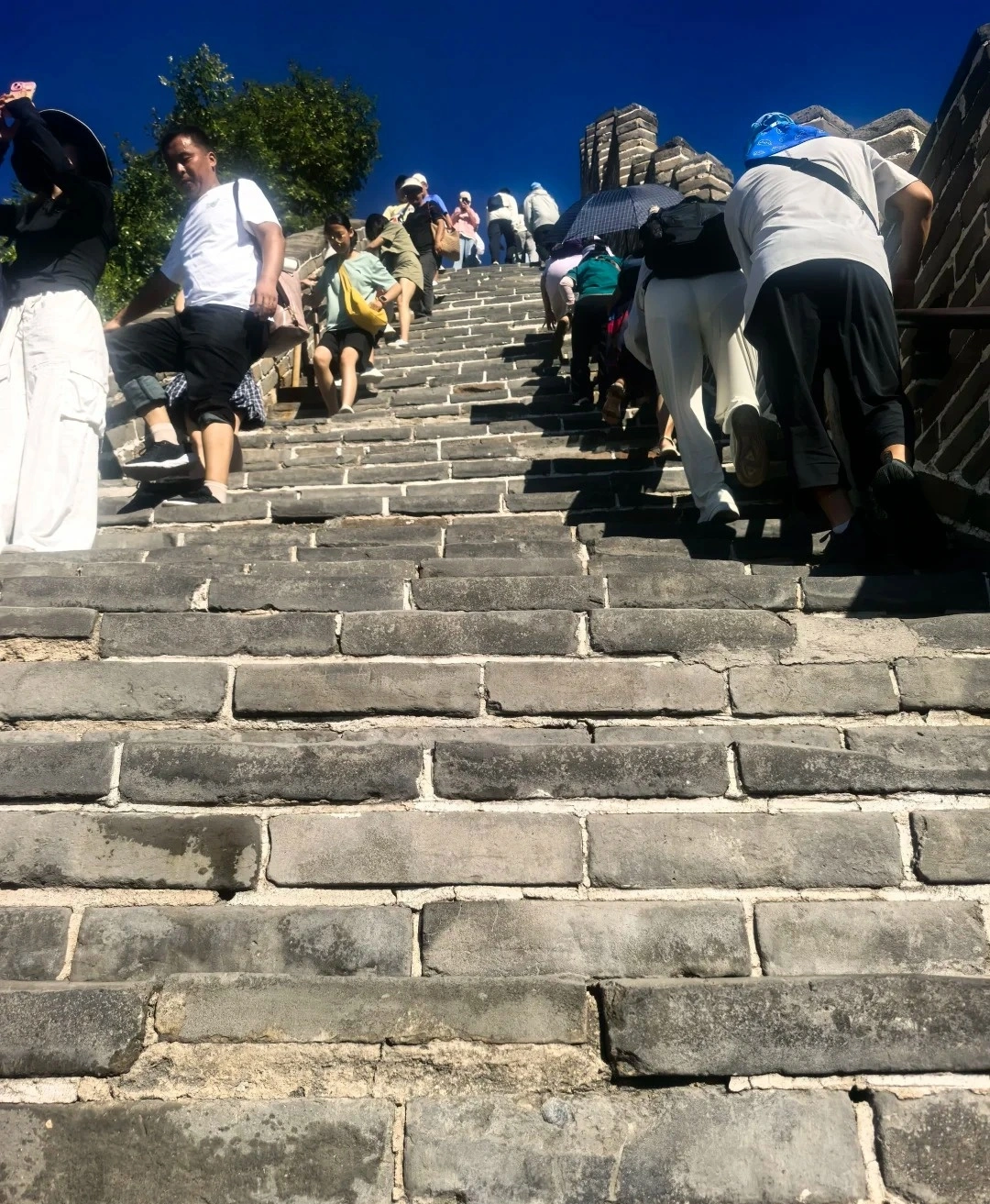
As a solo traveler from Canada, I was nervous about navigating China alone—but this 11-day tour was PERFECT! From hiking the Great Wall at sunrise (Day 3) to gasping at the Terracotta Army (Day 5), every day delivered ‘pinch-me’ moments. The real showstopper? Zhangjiajie’s Avatar Mountains (Day 7)! Our guide made the stone pillars come alive with stories. Massive thanks for handling all logistics—bullet train tickets, entry passes, car! And the 4-star hotels surprised me.
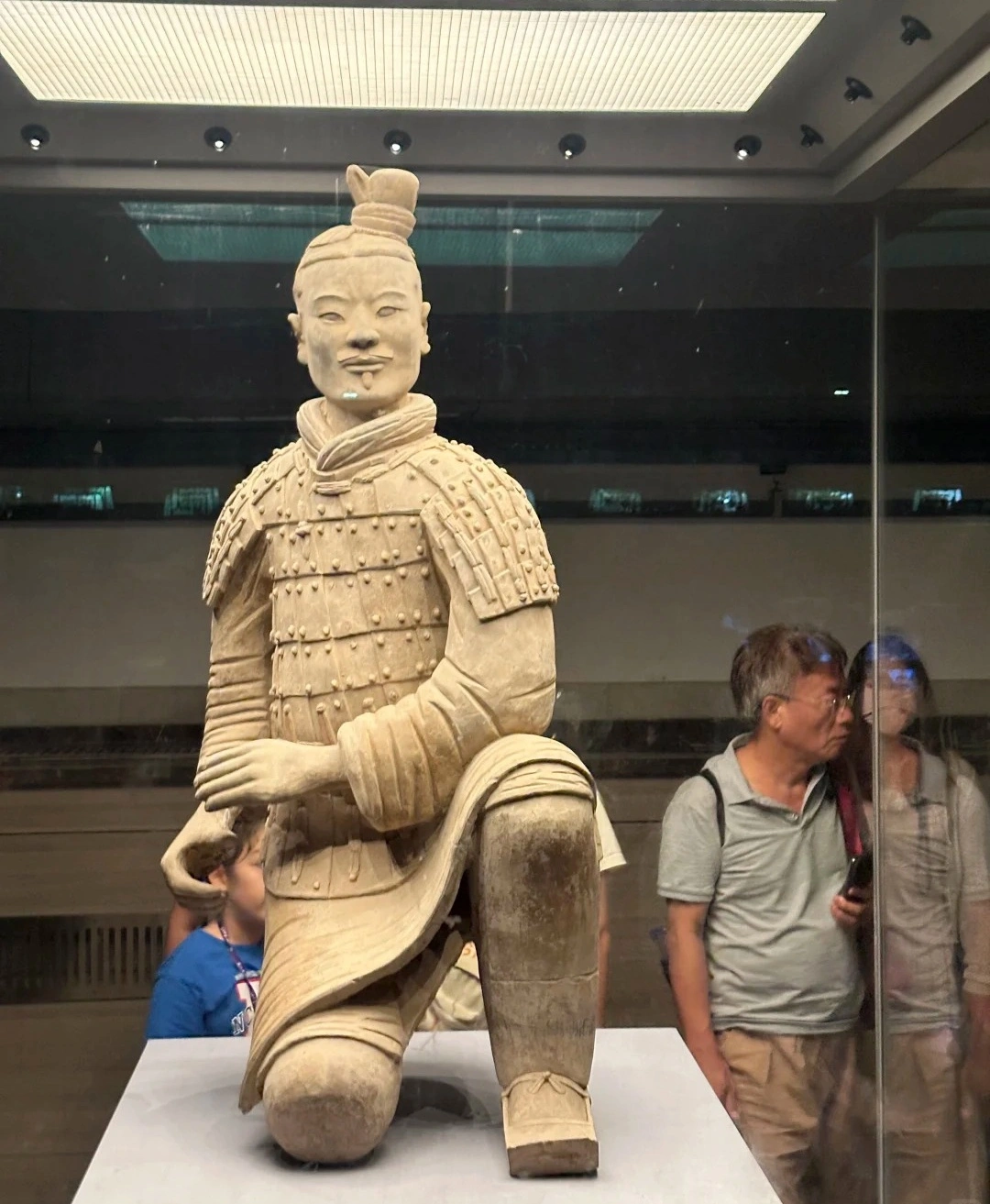

Destination(s): Beijing Xian Zhangjiajie Shanghai
Date of Experience: June 02,2025
... ... ...
...
Simon
America
Reviewed on May 29,2025
Our 2-day Zhangjiajie tour was beyond spectacular! As someone who’s visited Beijing and Shanghai for work, this trip revealed China’s wild, magical heart. Day 1 in Zhangjiajie National Forest Park felt like stepping onto Pandora—I’m a huge Avatar fan, and Yuanjiajie’s floating peaks left me breathless. The misty pillars and lush valleys like pure movie magic! Then came Fenghuang Ancient Town, we eat dinner beside the thundering waterfall. It seems Unreal! The night views of stilt houses glowing over the river were straight from a fairy tale. For fellow Avatar lovers and adventure seekers: Don’t miss this bucket-list experience! 10/10 would return. A Well-Traveled Film Buff, May 2025
Destination(s): Zhangjiajie
Date of Experience: May 08,2025
... ...

FAQ

Is Qibao Ancient Town worth visiting?

Yes, for the combination you rarely find in one place: a real water town, the city's best street food, and a location still inside Shanghai. It is smaller and more tourist-focused than Zhujiajiao or Suzhou, but the streets are free, the afternoon is enough, and the evening is genuinely beautiful. It is one of the best-value outings in the city.

How long do I need at Qibao?

Two to three hours covers the old street, the bridge, and a snack run. Give it a half day if you add the boat ride and a museum, and stretch to a full day only if you want to sit in a teahouse and stay for the evening lights. The town is compact, so more time mostly means a slower pace rather than more ground.

Is the boat ride at Qibao worth it?

Yes, for the different perspective. A small wooden boat takes about 20 to 30 minutes along the canal for around CNY 40 per person, passing under the stone bridges and past the riverside houses. It is short, so manage expectations, but it is the closest thing to a traditional water-town experience inside Shanghai.

What is the best time of day to visit Qibao?

The afternoon into the evening is the sweet spot. Arrive mid-afternoon, walk the snack street, cross the Puhuitang Bridge as the light softens, and stay until the lanterns come on. The town looks its best after dark, with the waterways and shopfronts glowing. If you prefer quiet over atmosphere, a weekday morning works well instead.

Is Qibao too crowded?

Weekends are genuinely busy, especially weekend afternoons on the main street. Weekday mornings before 11 am are noticeably quieter and give a calmer, more pleasant experience. If you can only go on a weekend, arrive early and you will still beat most of the crowd and see the town at its most relaxed.

Is Qibao free to visit?

The streets, the canal banks, and the general atmosphere are completely free. The paid attractions, including the small museums, cost about CNY 5 to 10 each or around CNY 30 for a combined ticket, and the boat ride is extra. You can enjoy the town very well without paying for any of them.

What should I try to eat in Qibao?

Start with the local signatures: tangtuan glutinous rice balls, rice cakes, crabapple cakes, white-cut lamb, crab roe soup dumplings, and scallion pancakes. Follow the queues of local visitors, which is the most reliable signal of a good stall. Order small amounts, share, and graze, which is how the street is meant to be eaten.

Can you help arrange the boat ride and museums?

Yes. Our Shanghai team can book the canal boat tour and the small museums for you, check the daily schedule, and confirm the details before you arrive. Since the town itself needs no reservation, our help mainly saves you time and makes sure you do not miss what you wanted to see on the day.

Ask us before you decide.

Unsure about a route, departure date or room option? Tell us what is holding up your plans. You will get a clear answer from our China-based travel team—no booking required.

Real people, practical answers.A travel advisor replies within 24 hours.

Thanks—this preview has captured your question.