
Must-try Food in Lijiang,Yunnan
An Honest Food Guide by IntoTravelChina
I have led dozens of tours through Lijiang over the past ten years, and the food always becomes the highlight faster than I expect. Lijiang sits at the crossroads of Naxi, Tibetan, and Han Chinese culinary traditions, creating a food scene that you simply cannot replicate anywhere else in China. After eating my way through the Old Town markets, the night stalls on Qiyi Street, and the home kitchens of local Naxi families I have come to know, I have narrowed down the five dishes that every first-time visitor must try. These are not the tourist-trap versions. These are the real thing.
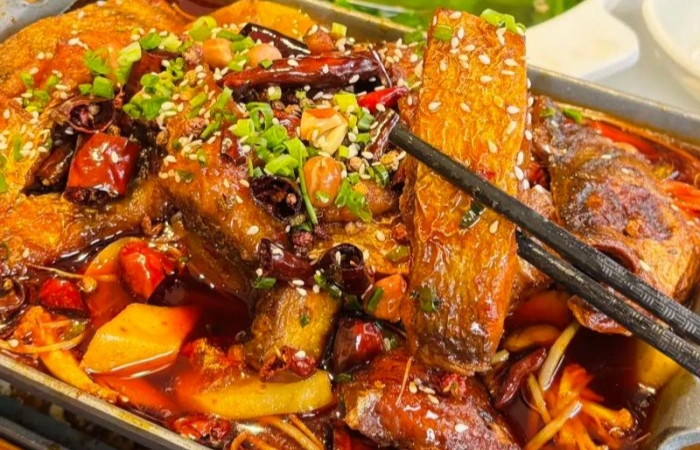
1. Naxi Grilled Fish
This is the dish I order first every time I return to Lijiang. Fresh river fish is marinated in a paste of local chilies, fermented broad beans, and Sichuan peppercorns, then grilled over charcoal until the skin is crisp and the flesh is flaky. The best version I have found is at a small family-run restaurant near the Sifang Street square, where the owner has been making it for 18 years. I brought a group of travelers here in April 2026 and one guest from Mexico said it reminded her of the grilled fish from her hometown, but with a Yunnan twist she had never tasted before. The price is around 68 RMB per fish.
2. Crossing the Bridge Noodles
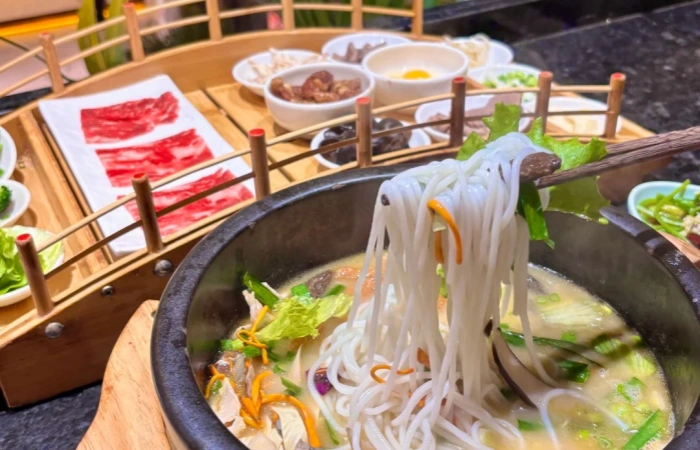
Crossing the Bridge Noodles originated in nearby Kunming but Lijiang has its own take on this Yunnan classic. A boiling bowl of chicken broth arrives at your table with a tray of raw ingredients: slices of chicken, pork, mushrooms, vegetables, and rice noodles. You slide everything into the broth and watch it cook in seconds. I have eaten this dish in over 20 restaurants across Yunnan, and the version at a restaurant called Yunnan Impression on Guangyi Street is the most consistent. The key is the broth, which needs to be simmered for at least four hours to develop its depth. Ask for extra pickled vegetables on the side, they cut through the richness perfectly.
3. Lijiang Baba
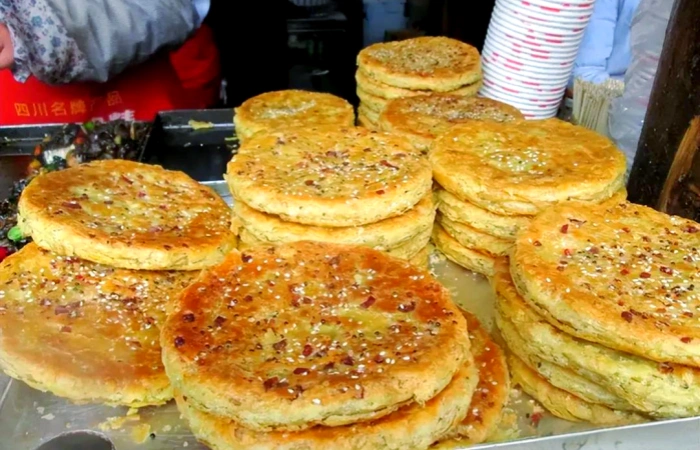
Lijiang Baba is a thick flatbread that has been a Naxi staple for generations. There are two varieties: the sweet version filled with brown sugar and sesame, and the savory version stuffed with scallions and ham. I prefer the savory one, especially when it is fresh off the griddle and still crispy on the outside. The best baba I have eaten comes from a street stall at the northern end of Wuyi Street that has been operating since 2002. I stopped there for breakfast so often during my early guiding years that the owner started recognizing me and saving the first batch of the morning. A baba costs about 8 RMB.
4. Chicken Bean Jelly
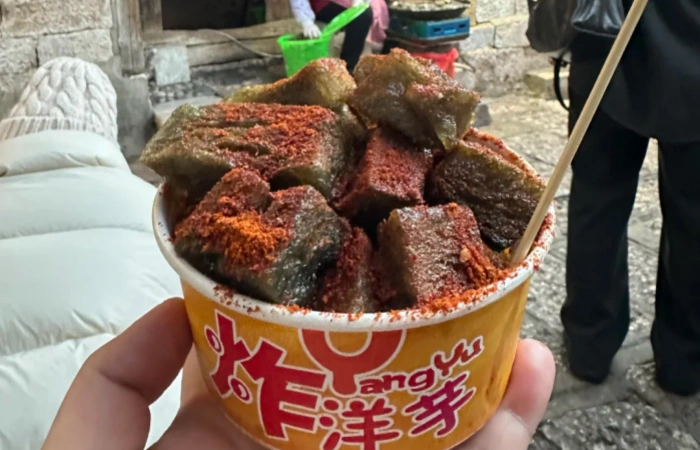
Chicken bean jelly is a humble staple of Lijiang’s old town, made from local chicken peas (a small, earthy legume) that are soaked, ground, and boiled into a silky, grayish gel. It has a subtly nutty flavor and a firm, quivering texture—far more substantial than mung bean jelly, with a faint smoky aftertaste from the traditional copper-pot cooking. I was put off by its dull color when I first spotted it at a street stall in 2018, but now I crave it almost every afternoon as a cooling snack. The best spot is the small family-run cart near the entrance of Wuyi Street, where an elderly Bai couple slices it fresh to order—served either cold with a sharp vinegar-chili dressing, or pan-fried until crispy on the outside. I strongly recommend the fried version, paired with a dollop of their homemade roasted garlic sauce; they charge an extra 3 RMB for that. The jelly itself is only 8 RMB per portion.
5. Pork Ribs Hot Pot
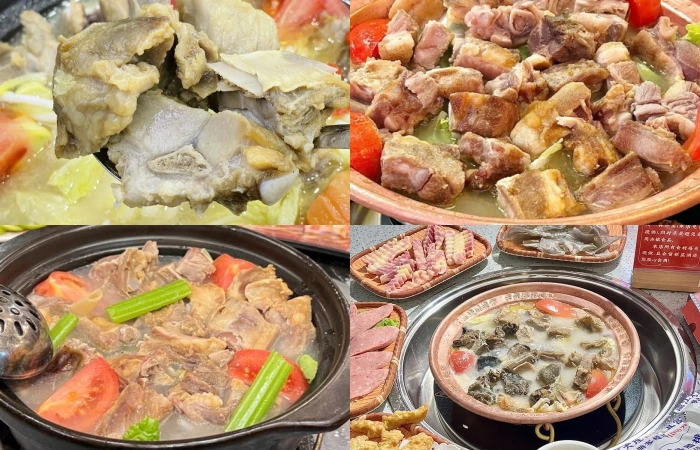
Pork ribs hot pot is a hearty staple of the old town eateries in Lijiang. Simmered for hours with local herbs and wild mushrooms, the broth is rich and savory, while the ribs turn fall-off-the-bone tender—much more intensely flavored than the clear-broth versions found elsewhere. I was hesitant to order it on a rainy night in 2018, but it has since become my must-have dinner after a day of hiking. The best place to get it is at the small courtyard restaurant at No. 47 Wuyi Street, just off the Square Street, where the owner uses free-range black pork from the nearby Naxi villages. I recommend dipping the ribs in the house-made spicy chili oil with a sprinkle of Sichuan peppercorns—the restaurant offers it at no extra charge. The hot pot itself costs around 68 RMB per small pot (serves 1–2), and includes a basket of seasonal greens and tofu.
Where to Eat in Lijiang Like a Local
The key to eating well in Lijiang is avoiding the main tourist strips around Sifang Street, where restaurants pay commissions to tour guides and the food quality suffers as a result. I tell every traveler I work with to head to the side streets. Qiyi Street, Zhongyi Lane, and the northern section of Wuyi Street are where local families and off-duty hospitality workers eat. The prices are lower, the portions are larger, and the ingredients are fresher. I have been eating on Qiyi Street for a decade and I still find new places every year.
What Most Food Guides Leave Out
Here is the honest part. Lijiang food can be challenging for some travelers. The heavy use of Sichuan peppercorns and fermented bean paste is an acquired taste, and the local drinking water is hard, which affects the flavor of teas and broths. I always carry bottled water for cooking and drinking when I stay in Lijiang. Also, the street food hygiene varies significantly. I only eat from stalls that have a steady stream of local customers, not tourists. If the stall is busy with locals, the food is safe and fresh.
Plan Your Trip with Confidence
At IntoTravelChina, I design custom private tours that include genuine food experiences, not the standardized meals that group tours offer. Whether you want a guided walk through Lijiang food stalls, a home-cooked meal with a Naxi family, or a full Yunnan itinerary built around culinary exploration, I can make it happen. No commission-driven restaurant stops, no pre-set menus. Just real food, real people, and real flavors.
IntoTravelChina -- Founded 2015. Custom private tours across China. No shopping stops. No shortcuts. Just authentic experiences.


Contact Us
What Our Clients Say?







Ask us before you decide.
Unsure about a route, departure date or room option? Tell us what is holding up your plans. You will get a clear answer from our China-based travel team—no booking required.