
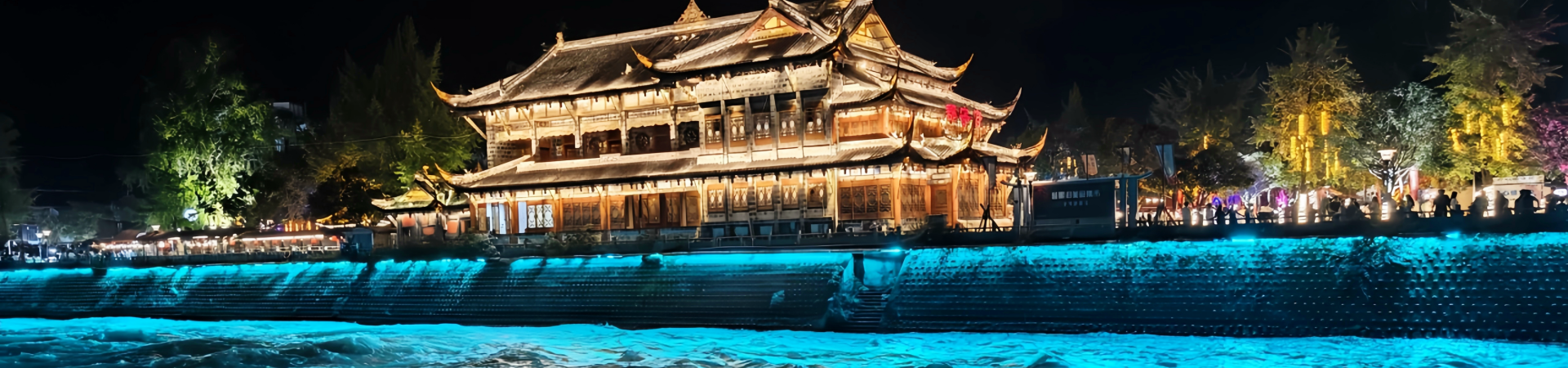
Dujiangyan Blue Tears: A Visual Guide to the South Bridge's Neon Night View
An Honest Guide to Dujiangyan by IntoTravelChina
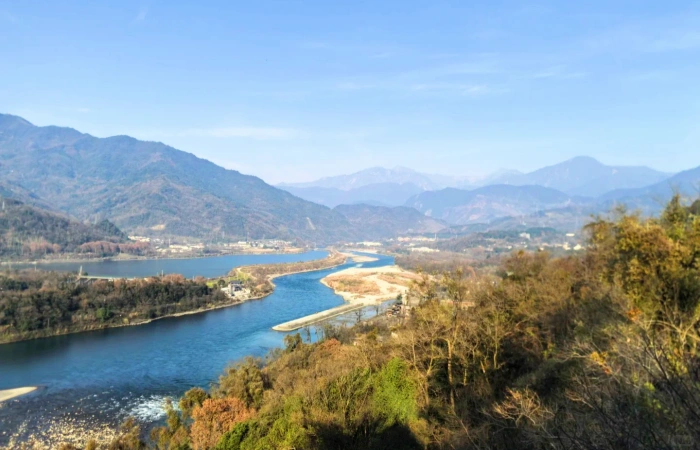
I first saw the Dujiangyan Blue Tears in March 2025, and I will be honest: I did not believe the photos before I went. The electric blue glow spilling across the Min River under the South Bridge looks like something from a sci-fi film. But it is real, and it is one of the most visually striking night scenes I have encountered anywhere in China. After seven return visits over the past year, I have learned exactly when the lights are at their best, where to stand for the perfect view, and how to combine this spectacle with a visit to the 2,200-year-old Dujiangyan irrigation system that makes this place historically significant.
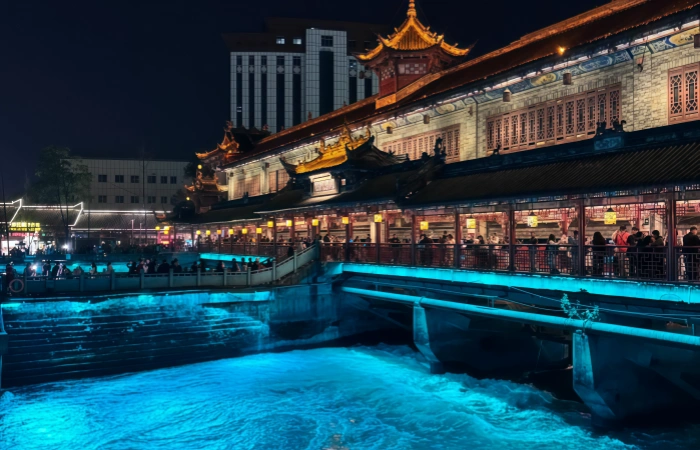
What Are the Dujiangyan Blue Tears?
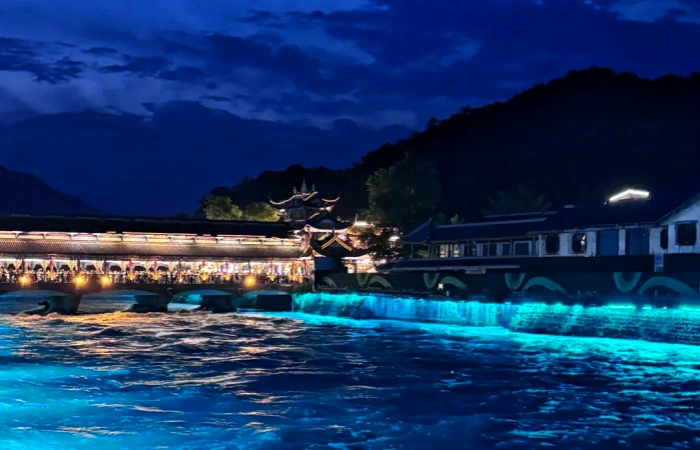
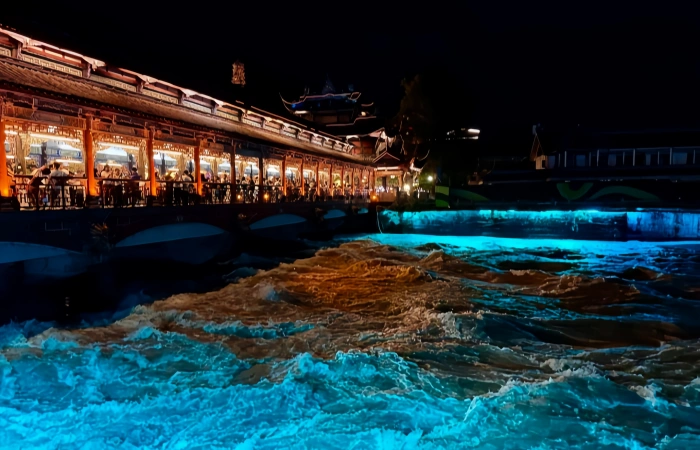
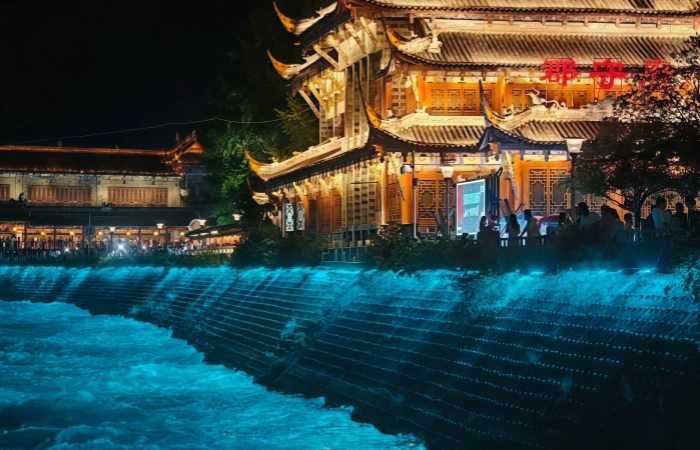
The Blue Tears are not a natural phenomenon. They are the result of carefully placed LED light installations along the Min River, reflecting off the water surface to create a luminous blue glow that makes the river appear to glow from within. The effect is strongest around the South Bridge, a traditional wooden covered bridge that has become the centerpiece of the night view. The lighting system was upgraded in late 2024 as part of Dujiangyan's broader tourism development plan, and by 2026 the installation has been refined with synchronized color sequences that shift between deep blue, cyan, and occasional purple tones.
Best Time to See the Blue Tears
The lights are turned on every evening from dusk until 10 PM year-round. For the best experience, I recommend arriving at the South Bridge at least 20 minutes before sunset. This allows you to watch the sky darken while the blue lights gradually become visible. In summer, aim for 7:30 PM. In winter, 5:30 PM is your mark. I have visited during every season, and the clearest conditions occur between October and December when the humidity is low and the water is calm. Avoid visiting after heavy rain, which churns up sediment and reduces the reflection quality.
Where to Stand: The Best Viewing Spots
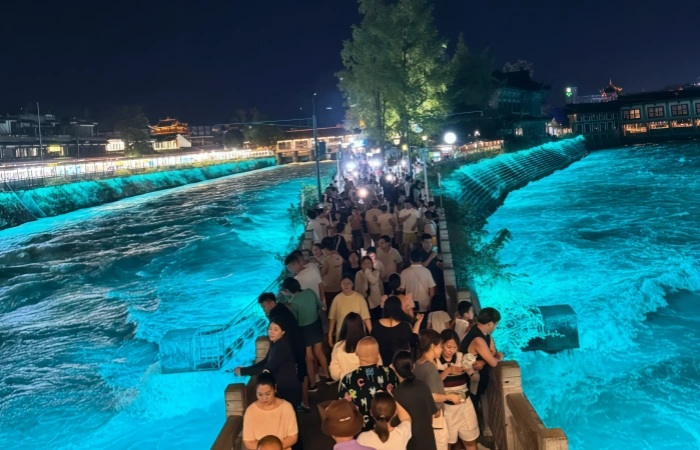
There are three spots I rotate through depending on the crowd. The South Bridge itself offers a central elevated view looking down both sides of the river. Midway across the bridge, facing upstream, is where I take every first-time visitor. The riverside walking path on the northern bank, about 100 meters east of the bridge, gives you the classic long-exposure photography angle with the bridge reflected in the water. The southern bank footpath, near the ancient irrigation channel entrance, is less crowded and offers a wider perspective that includes both the bridge and the distant mountains.
Photography Tips for the Blue Tears
Capturing the Blue Tears properly requires some preparation. A tripod is non-negotiable. The light levels are low, and handheld shots will produce motion blur. I recommend an aperture of f/8 with a shutter speed between 3 and 8 seconds, using an ISO of 100 to keep noise minimal. For smartphone photographers, use a mini tripod for phones and activate the night mode with a 3-second timer to avoid shake from tapping the shutter. I learned this the hard way: my first set of photos from March 2025 was unusable because I relied on a railing instead of a tripod.
How to Get There from Chengdu
Dujiangyan is about 70 kilometers northwest of Chengdu, making it an easy day trip. The Chengdu-Dujiangyan high-speed train runs from Xi Pu station and takes approximately 25 minutes to reach the Dujiangyan station, with tickets costing around 10 RMB. From there, it is a 15-minute taxi ride to the South Bridge area. I have made this trip over 20 times, and I always recommend the train arriving before 4 PM so you have time to visit the irrigation system park before it closes at 6 PM, then watch the sunset and the Blue Tears afterward. Returning trains run until around 9 PM, so plan accordingly if you want to stay for the full light show.
Combining the Blue Tears with the Ancient Irrigation System
The Dujiangyan irrigation system, built in 256 BC during the Qin Dynasty by Li Bing and his son, is a UNESCO World Heritage site and one of the oldest functioning water management projects in the world. It is what makes this area historically significant beyond the night lights. I always guide my guests through the irrigation park during the late afternoon, explaining how the fish mouth levee and flying sand weir have controlled flooding on the Min River for over two millennia. The contrast between this 2,200-year-old engineering and the neon blue river at night is something I have not seen anywhere else in China.
What No One Tells You About the Blue Tears
Here is the honest part: the Blue Tears are beautiful, but they are also crowded. On weekends and public holidays, the South Bridge can be packed shoulder-to-shoulder with visitors. I made the mistake of going on a Saturday evening in April 2025 and could barely find space to set up my tripod. A Tuesday or Wednesday evening visit will give you a far better experience. Also, the tea houses directly on the bridge charge premium prices for river-view seating. I suggest buying a drink from a convenience store down the street and walking along the bank instead.
Why I Keep Coming Back to Dujiangyan
I have visited Dujiangyan over 20 times in the past decade, and the Blue Tears have given it a new dimension at night. What was once a purely historical day trip has become a destination that blends ancient Chinese engineering with modern visual art. The moment when the blue lights first flicker on as the sun sets behind the mountains is a sight I genuinely look forward to sharing with every new group of travelers I bring here.
Plan Your Trip with Confidence
At IntoTravelChina, I design custom private tours that help you experience destinations like Dujiangyan in a way that standard group tours cannot offer. Whether you need transport, a local guide, or a full Chengdu itinerary that includes the pandas, the irrigation system, and the Blue Tears, I can arrange it. No rushed timetables, no hidden costs. Just thoughtful travel, on your terms.
IntoTravelChina — Founded 2015. Custom private tours across China. No shopping stops. No shortcuts. Just authentic experiences.
Contact Us
What Our Clients Say?



Ask us before you decide.
Unsure about a route, departure date or room option? Tell us what is holding up your plans. You will get a clear answer from our China-based travel team—no booking required.