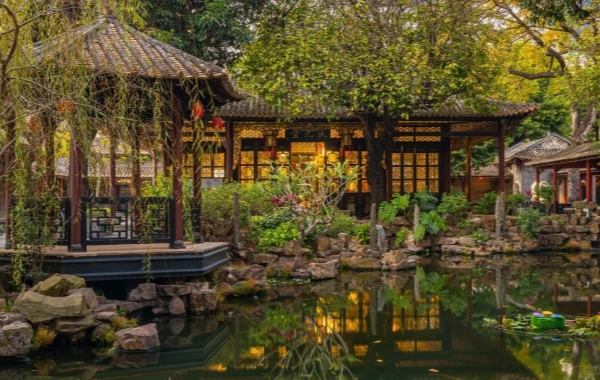
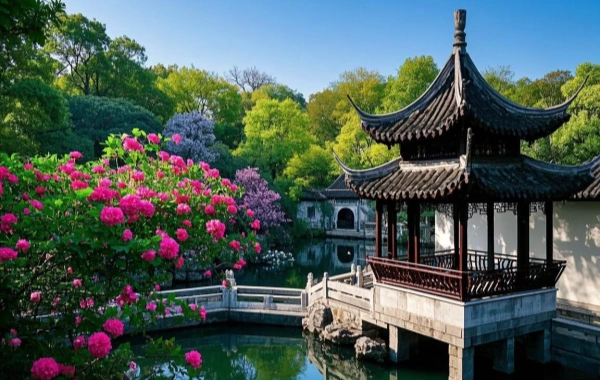
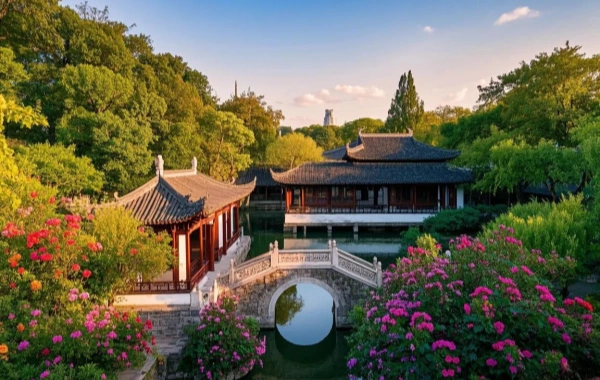
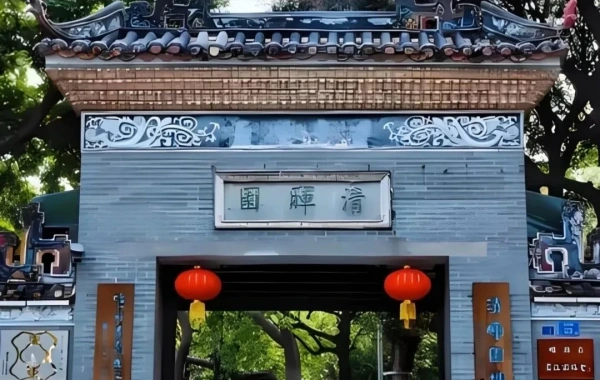
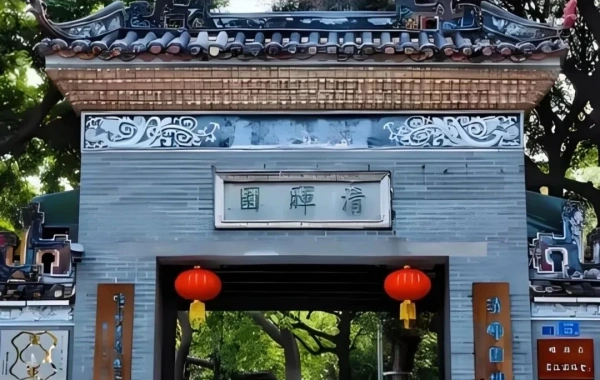
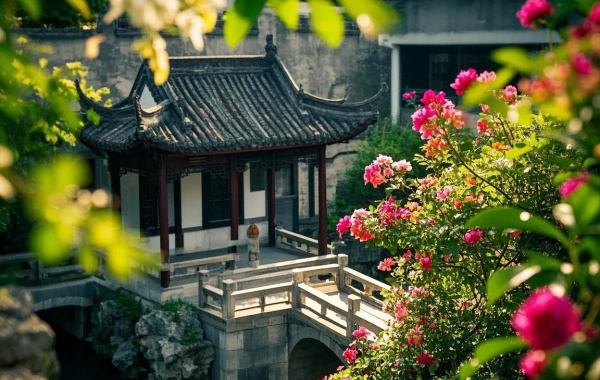
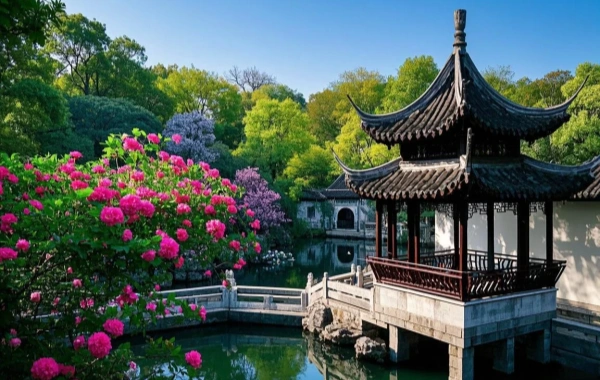
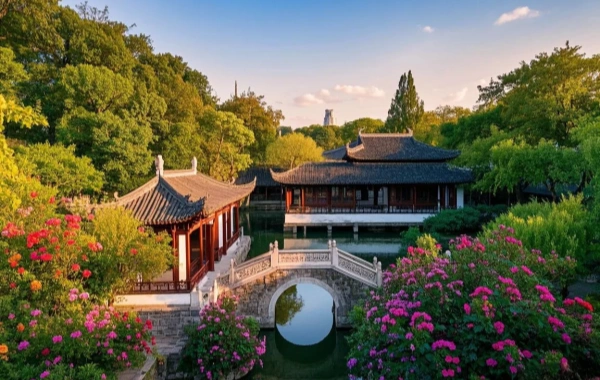
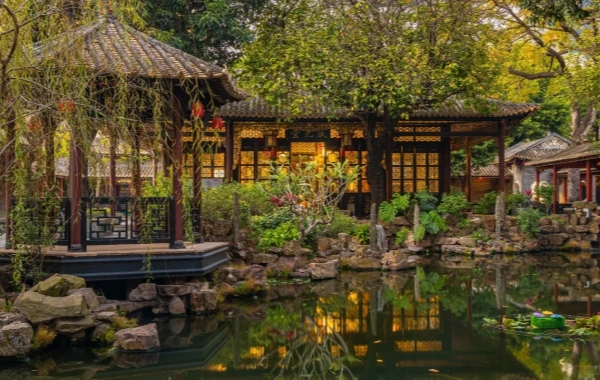
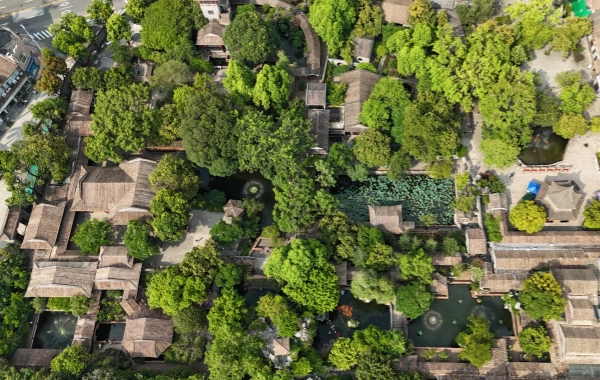
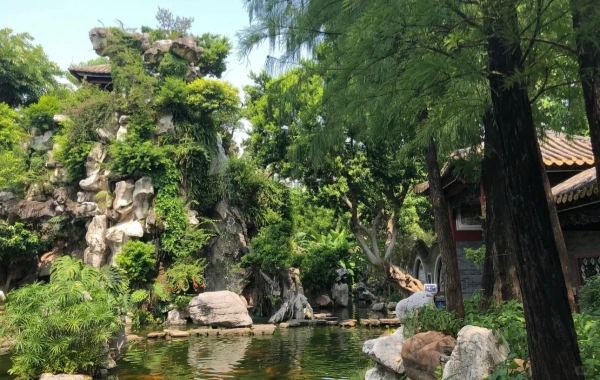
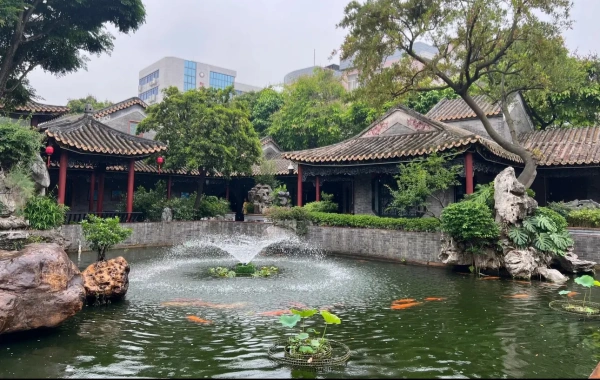
The wonder of Qinghui Garden lies in its ingenious layout of "sparse in the front and dense in the back, with ever-changing scenery with every step," as well as its ubiquitous and exquisite decorative craftsmanship, which fully demonstrates the pragmatism, ingenuity, and pursuit of a better life of the people of Lingnan.
Nature's Creation - The courtyard is deep and secluded, with a compact and layered layout of mountains and water, creating infinite interest within a limited space.
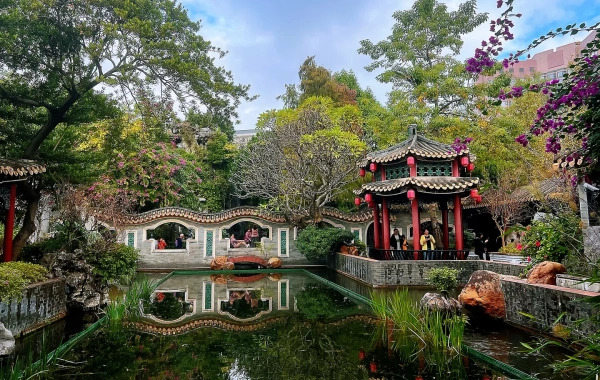
The central water garden—the paired view between Chengyi Pavilion and the Hexagonal Pavilion: Centered on a spacious pond, Chengyi Pavilion spans the water to the northwest, while the Hexagonal Pavilion is nestled among green trees to the southeast, connected by the long covered bridge Bixi Caotang, forming a classic scene of paired and borrowed scenery. Schools of koi and swaying lotus flowers in the pond create the most vibrant and expansive scene in the garden.
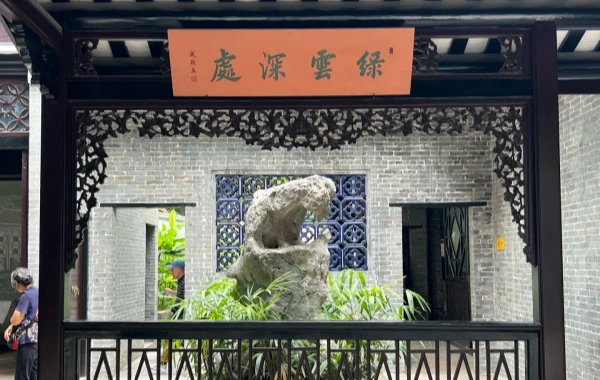
The Ship Hall and "Green Clouds": Revered as the "essence of Lingnan architectural art," the Ship Hall is a two-story pavilion modeled after the Zidong boat on the Pearl River. Its most exquisite feature is a century-old sand willow tree planted in front of the hall, shaped like a giant umbrella and named "Green Clouds." Looking out from the second-floor cabin, it seems as if a giant ship is sailing on green clouds and blue waves, creating an extraordinary artistic conception.
The plants add a finishing touch: The arrangement of plants in the garden is highly consistent with the architecture and landscape theme. The sand willows (green cloud) next to the boat hall, the bamboo clumps in the bamboo garden, the vines in Muyingjian, the various fruit trees (longan, star fruit) and flowers (orchid, frangipani) not only provide beautiful scenery in all four seasons, but also embody the owner's character and sentiments.
Humanistic Ingenuity – An Expo of Architectural Decoration: The decorative art of Qinghui Garden is its soul, embodying the pinnacle of craftsmanship of Lingnan artisans in the late Qing Dynasty.
A visual feast of "three carvings and three sculptures":
Wood carvings: The wood carvings on doors, windows, hanging ornaments, and screens are intricate and exquisite, with themes mostly featuring Lingnan fruits (bananas and lychees) and auspicious patterns.
Brick and stone carvings: The brick carvings on the plinths and lintels, and the stone carvings on the column bases and railings, are characterized by their delicate carving techniques and vivid imagery.
Gray plaster and ceramic sculpture: The gray plaster figures and story scenes on the roof ridges and gables are brightly colored and still lifelike after weathering the elements; the ceramic tile ridges come from the famous Shiwan kilns and are precious works of art.
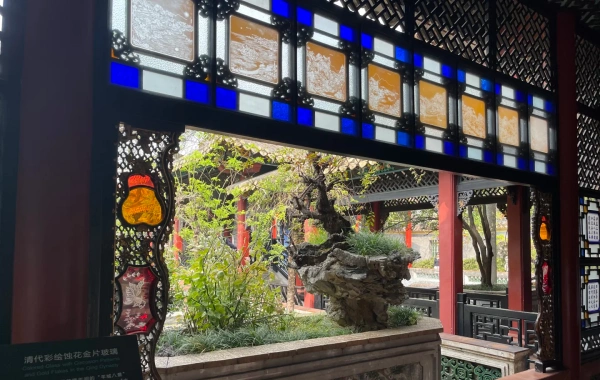
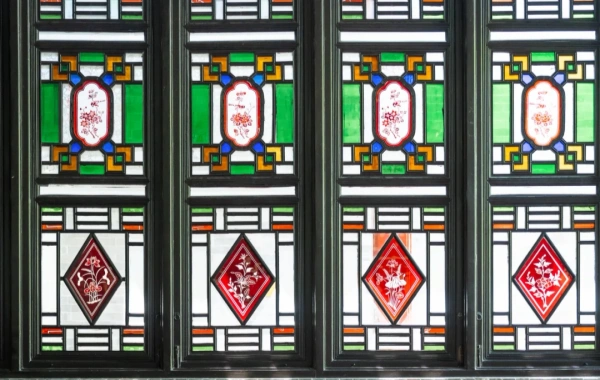
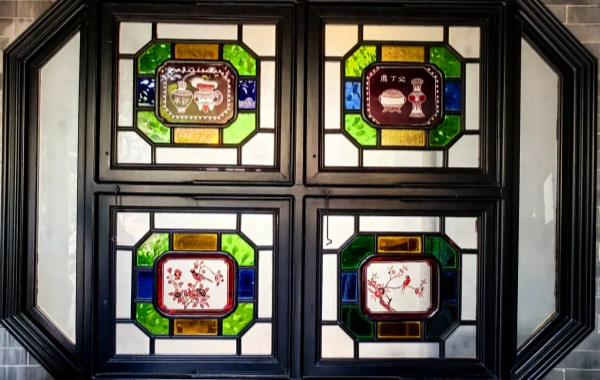
The swan song of glass art—Manchurian windows and etched glass: these are the most unique hallmarks of Qinghui Garden. The garden extensively utilizes stained glass imported from Europe ("Manchurian windows") and etched glass made using etching techniques. These windows are painted with traditional Chinese landscapes, flowers, birds, and poems. When sunlight shines through, the interior floors and walls reflect a dazzling array of light and shadow, known as "Zeng's Glass Paintings," a precious testament to the fusion of Chinese and Western cultures.
The Immersion in Study Culture—Xiyin Study and Bishenghua Pavilion: As gardens of official families, the function of reading was of paramount importance. "Xiyin Study" symbolizes cherishing time, while "Bishenghua Pavilion" embodies the flow of literary inspiration. These studies, with their tranquil environment and elegant furnishings, reflect the profound cultural heritage and the family's philosophy of passing down the tradition of combining farming and scholarship.
The finishing touch of plaques and couplets: Almost every building has a name and couplet with profound meaning. For example, the couplet of "Boat Hall" "The pavilion is bathed in the bright moonlight, and the lamplight shines with clear radiance" is both realistic and poetic, and is the key to interpreting the artistic conception of the garden.
> Travel Tips:
The best time to see the light and shadow is on a sunny morning or afternoon, when sunlight shines through the stained glass and casts dreamlike patterns of light and shadow inside the building. Be sure to go inside the building to see it.
The best angle to photograph the boat hall and "Green Cloud" is from the opposite bank of the pond, so that its reflection can be included in the picture as well;
Upon closer inspection of the roof, the gray-plastered ceramic sculptures depicting stories (such as "Romance of the Three Kingdoms" and "The Eight Immortals Crossing the Sea") on the roof ridge are quite remarkable.
Bring a telescope or telephoto lens to see the details of the decorations high up.