Jinshan Temple:A Zen Journey from an Ancient Millennium-Old Monastery to the Legend of the White Snake

Jinshan Temple:A Zen Journey from an Ancient Millennium-Old Monastery to the Legend of the White Snake

Overview:A Riverside Buddhist Realm Steeped in a Thousand Years of Chanting and the Misty Rains of Jiangnan
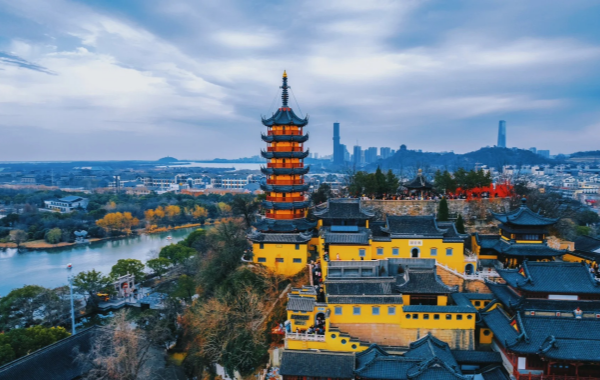
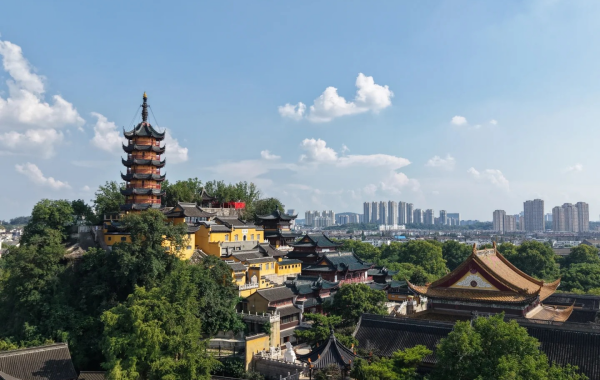
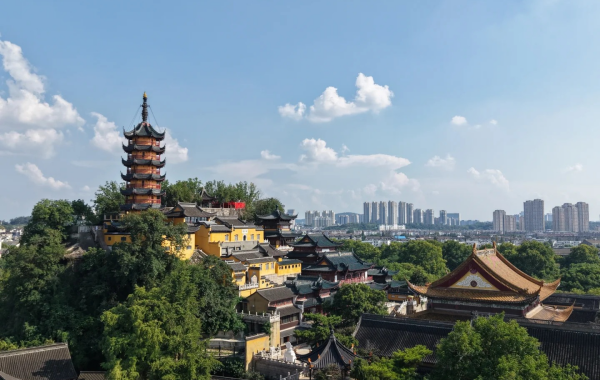
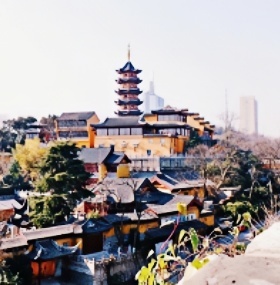
Jinshan Temple in Zhenjiang,Jiangsu,is famous for its"Temple Enveloping the Mountain"design–the buildings seem to cover the entire hill.Built over 1,600 years ago,it's the legendary setting of the"Flooding of Jinshan"from The Legend of the White Snake.A blend of Buddhist heritage,literary lore,and classic Jiangnan charm.

Key Highlights at a Glance
Defining Tags:"Flooding of Jinshan"Legend/Temple Enveloping the Mountain/Jiangnan Zen Monastery
Core Experiences:Climbing Cishou Pagoda for river views,visiting Fahai Cave,tasting water from the"World's First Spring,"strolling by Furong Tower
Recommended Duration:2–3 hours(combine with Xijindu and other Zhenjiang sights for 1–2 days)
Location:No.62 Jinshan Road,Runzhou District,Zhenjiang City,Jiangsu Province

  • Jinshan Temple:A Zen Journey from an Ancient Millennium-Old Monastery to the Legend of the White Snake-1
  • Jinshan Temple:A Zen Journey from an Ancient Millennium-Old Monastery to the Legend of the White Snake-2
  • Jinshan Temple:A Zen Journey from an Ancient Millennium-Old Monastery to the Legend of the White Snake-3
  • Jinshan Temple:A Zen Journey from an Ancient Millennium-Old Monastery to the Legend of the White Snake-4

Origins:A Millennium of Chanting and Mythological Codes

Furong Ancient Town

The Name"Jinshan"—From Ancient Zexin Temple to Jiangtian Zen Monastery
The name"Jinshan"(Golden Mountain)originates from a legend dating back to the Tang Dynasty.In the 8th century AD,the eminent monk Fahai arrived here during his travels;finding the temple buildings in ruins and the grounds overgrown with thorns,he vowed to undertake their restoration.One day,while clearing away the thorns and brush on the mountain,he unearthed a cache of gold.Upon receiving a report from local officials,the Emperor issued an imperial decree granting the gold to Fahai to fund the temple's restoration,and bestowed upon the mountain the official name"Jinshan."This anecdote—of"striking the mountain to unearth gold"—adds a touch of destiny to the ancient temple's history.Throughout subsequent dynasties,the temple underwent various name changes—known as"Longyou Temple"during the Song Dynasty,and officially bestowed the name"Jiangtian Zen Temple"by Emperor Kangxi during his Southern Tour in the 25th year of his reign(1686)—yet people still habitually refer to it as"Jinshan Temple."

The Allure of Myth:The Birth of the Legend of the White Snake
Jinshan Temple is inextricably linked to China's most renowned folktale:The Legend of the White Snake.The dramatic episode of"Flooding Jinshan Temple"originates here,lending an enchanting and captivating aura to this celebrated mountain site.The popular television series The Legend of Madame White Snake was filmed on location here;the iconic scene—in which Bai Suzhen battles the monk Fahai to save her beloved Xu Xian—remains a powerful spiritual draw,inspiring countless visitors to make a pilgrimage to this site to this day.However,the historical figure of Zen Master Fahai differs vastly from his fictional portrayal:originally named Pei Tuotuo,he was the son of Pei Xiu—a Tang Dynasty Chancellor—and was a highly revered high monk who devoted his entire life and energy to the restoration of Jinshan Temple.

Deep Dive:Explore More Classic Chinese Cultural Landmarks >> [Leifeng Pagoda] | [West Lake]

Must-See Wonders:A Zen Symphony of Temple and Sky

Furong Ancient Town Furong Ancient Town Furong Ancient Town Furong Ancient Town Furong Ancient Town Furong Ancient Town

Human Ingenuity:The Architectural Miracle of a Temple Enveloping a Mountain
The architecture of Jinshan Temple embodies a spatial philosophy defined by"conforming to the terrain and achieving perfect organic unity."

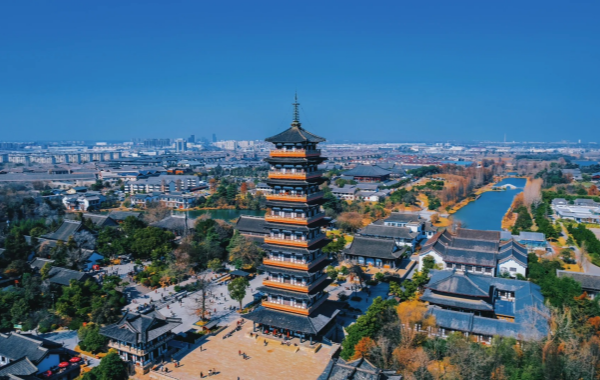
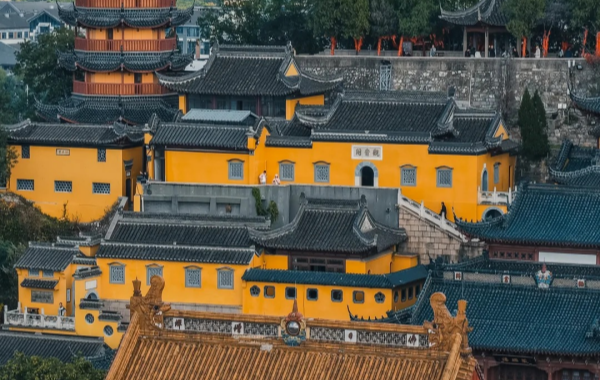
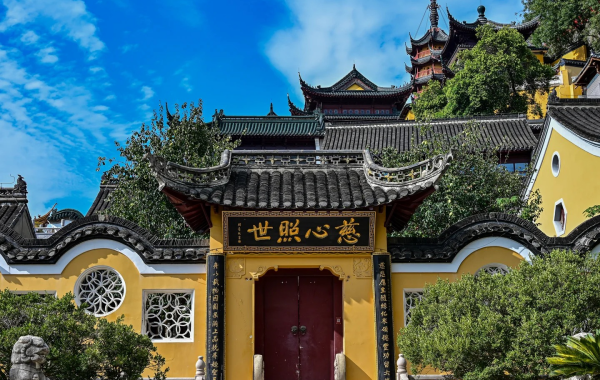
A Temple Enveloping the Mountain:Unlike the traditional layout of most Chinese temples—which typically face south and are organized along a central axis—Jinshan Temple defies convention.Its main gate faces west,and every hall,pavilion,and tower is built directly into the mountainside.Rising in layers from the foot to the summit,the various halls,pavilions,and covered corridors interconnect to form a dense network that completely envelops the entire mountain.From a distance,one sees only the resplendent temple complex—gilded halls and towering structures—and the sky-piercing Cishou Pagoda;the underlying mountain body itself remains hidden from view.This creates the unique spectacle known as"Jinshan Temple Enveloping the Mountain."Since the Song Dynasty,a popular adage has circulated to describe this phenomenon:"At Jinshan,the temple envelops the mountain;at Jiaoshan,the mountain envelops the temple."

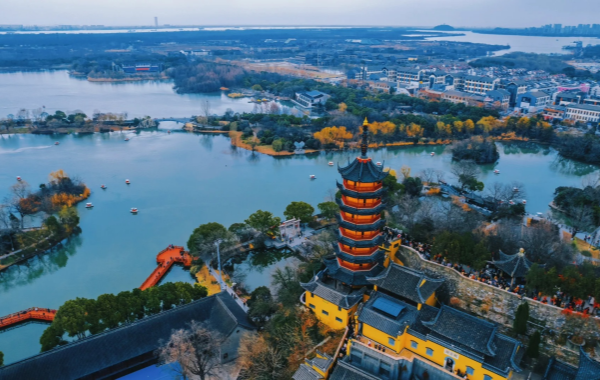
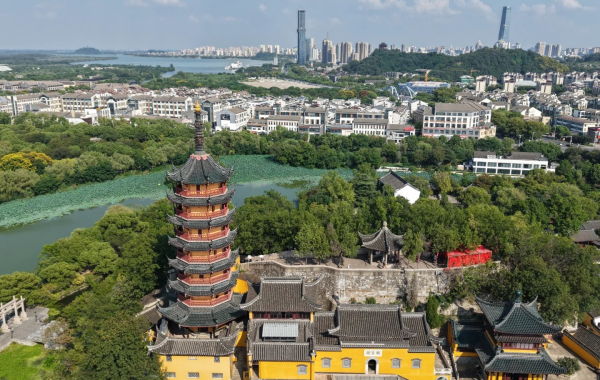
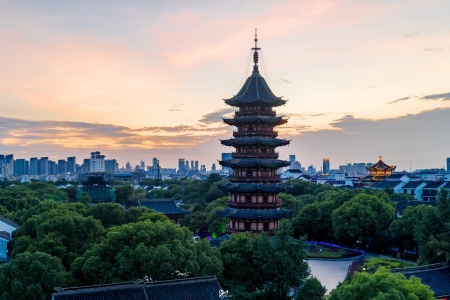
Cishou Pagoda:Perched atop the summit of Jinshan Mountain,the Cishou Pagoda stands as the most prominent and unmistakable landmark of this ancient temple complex.Standing approximately 30 meters tall,the pagoda features an octagonal,seven-story brick-and-timber structure.Originally built during the Qi and Liang dynasties of the Southern Dynasties period,the current structure is a reconstruction dating back to the 26th year of the Guangxu reign(1900)of the Qing Dynasty.With its gracefully upturned eaves soaring between river and sky,the pagoda is visible from tens of kilometers away.Ascending the tower to lean against the railing,one beholds a magnificent panorama:to the east,Jiao Mountain appears like a piece of jade floating upon the river;to the west,the Runyang Bridge spans the natural chasm;and to the north,the waters of Jinshan Lake shimmer with rippling light—evoking faint echoes of the legendary scene where Lady White Snake"flooded Jinshan Mountain"in times past.
Photography Tip:At dusk,try shooting upward from the banks of Tower Reflection Lake(Taying Hu)to capture the pagoda's reflection,or use a telephoto lens from the tower's summit to frame the harmonious interplay between the Yangtze River and Beigu Mountain.

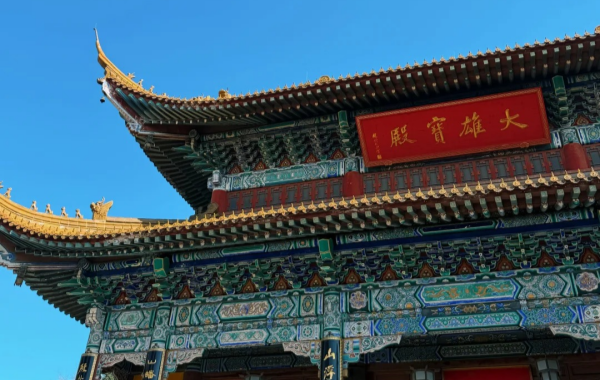
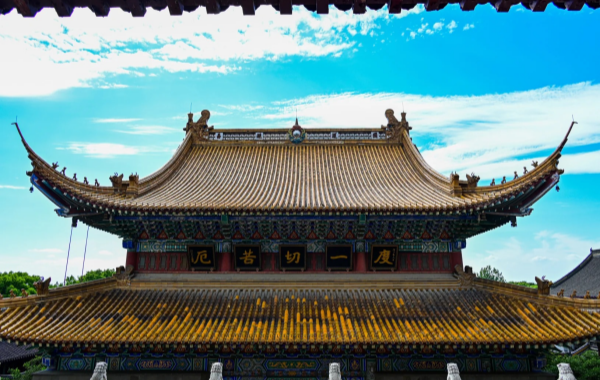
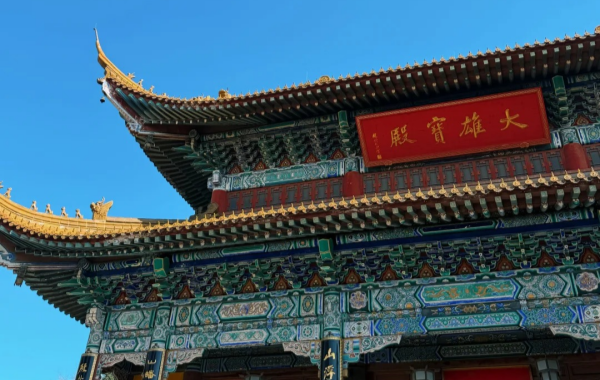
The Hall of the Great Hero(Daxiong Baodian):The central sanctuary of Jinshan Temple,this hall features a double-eaved xieshan(hip-and-gable)roofline,presenting a majestic and magnificent appearance.Inside,the hall enshrines three golden Buddha statues:Shakyamuni Buddha,the Medicine Buddha,and Amitabha Buddha.The western wall is adorned with images of the Eighteen Arhats,while the galleries to the left and right house statues of the Fifty-Six Heavenly Venerables;amidst the dazzling gold and vibrant colors,an atmosphere of supreme solemnity prevails.The hall is crowned with a roof of golden glazed tiles,standing out brilliantly amidst the surrounding roofs of black and azure.

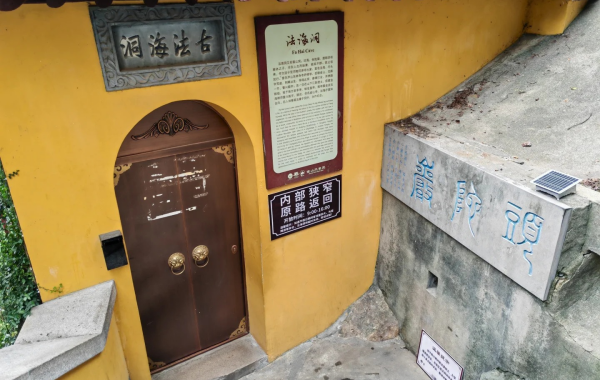
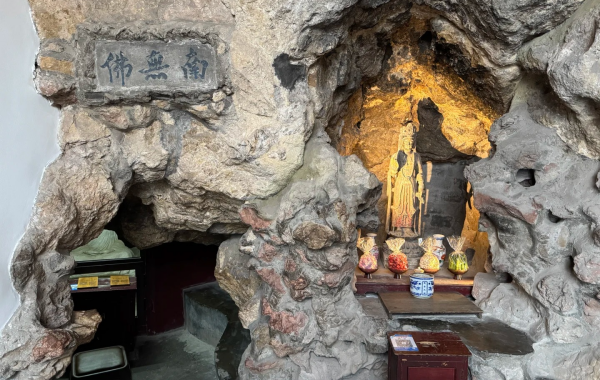
Fahai Cave(Pei Gong Cave):Situated on the cliffside just below and to the west of Cishou Pagoda,this is a naturally formed stone grotto.The historical Zen Master Fahai(also known as Pei Toutuo)—the real-life figure behind the legend—once engaged in rigorous ascetic practice and Zen meditation within this very cave upon his arrival at Jinshan.A stone statue of Fahai is now enshrined inside.This narrow,deep grotto holds the true story of a revered high monk—a figure vastly different from the villainous caricature he became in The Legend of the White Snake;in reality,he was the"Patriarch Pei,"the founding master of Jinshan Temple.Visitors exploring this site often linger before the cave for extended periods,contemplating the steadfast Zen devotion that has endured across a millennium.

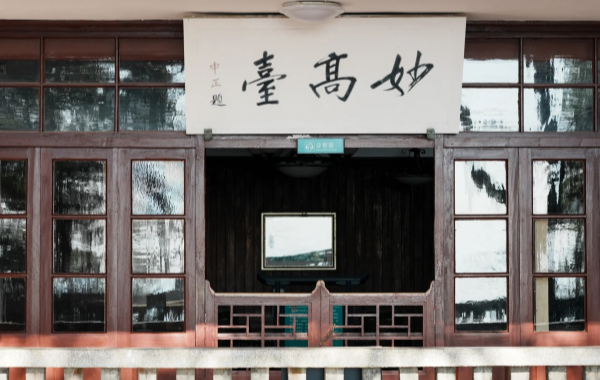
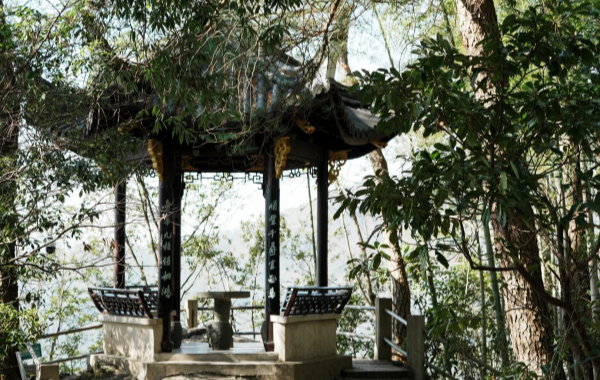
Miaogao Terrace and Liuyun Pavilion:Miaogao Terrace was once a refined retreat where the renowned poet Su Dongpo would admire the moon and compose poetry;it also served as the celebratory venue where Han Shizhong—a celebrated general of the Southern Song Dynasty—gathered with his troops to celebrate their victory after repelling the invading Jin forces.At the mountain's highest point stands the Liuyun Pavilion.Within it rises a stone stele bearing the inscription"Jiang Tian Yi Lan"(A Panoramic View of River and Sky)—personally penned by Emperor Kangxi.These four characters,bold and vigorous,fully embody the majestic bearing of an emperor.

Photography Tips:
The best vantage point for a panoramic shot is across Jinshan Lake;from here,you can capture the Cishou Pagoda,the temple complex,and their reflections in the water all at once.
When framing a shot looking inward from the entrance of Fahai Cave,the natural stone opening serves as a perfect compositional frame.
For shots taken from the top of the Cishou Pagoda,an ultra-wide-angle lens is recommended to capture the entire sweep of the Yangtze River,Jiao Mountain,and the Runyang Bridge.
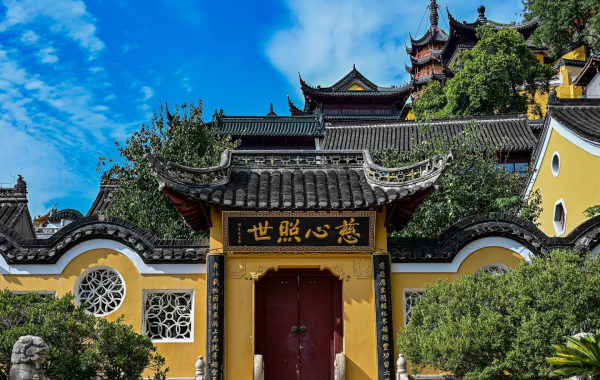
The light is softest and most beautiful during the early morning and at dusk;at these times,the temple's yellow walls look particularly stunning bathed in the warm,golden glow.

Nature's Creations—The Lake Scenery and Spring Sounds at the Mountain's Foot
Although Jinshan Temple is renowned primarily for its cultural architecture,the natural landscapes at the foot of the mountain are equally worthy of lingering appreciation.

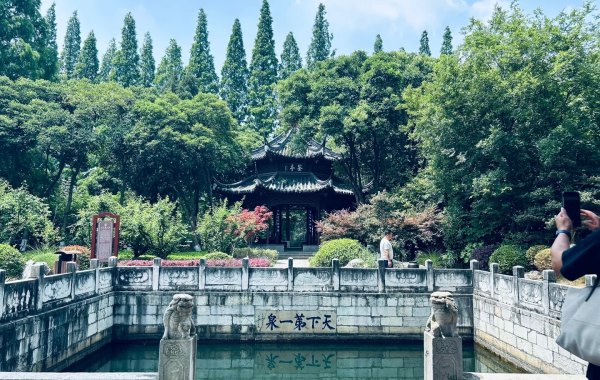
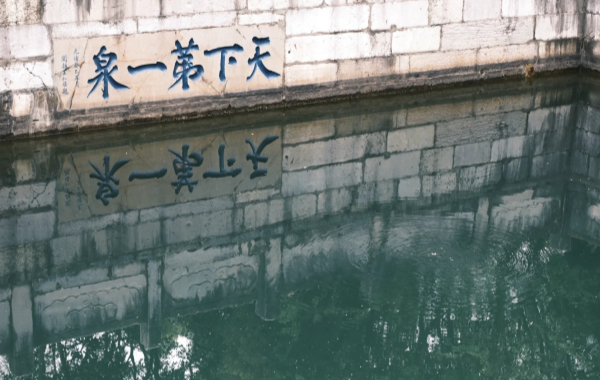
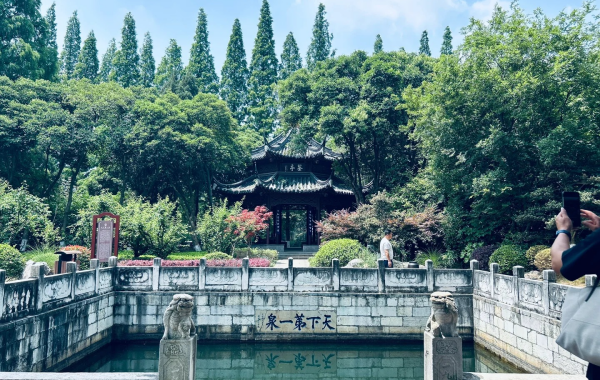
The"Foremost Spring Under Heaven"(Zhongling Spring):Located approximately 500 meters west of Jinshan Temple.Originally situated amidst the surging waves in the middle of the Yangtze River,this spring is a unique phenomenon along the entire length of the mighty river.Lu Yu—the"Sage of Tea"from the Tang Dynasty—once included it in his authoritative rankings of famous springs,while another renowned connoisseur,Liu Bochu,went so far as to declare it the"Foremost Spring Under Heaven."The spring water surges up from the bottom of the pool like a playful white dragon;its quality is crystal-clear and sweet to the taste.Carved into the southern wall of the stone railing are the five characters"Foremost Spring Under Heaven,"inscribed by Wang Renkan—the Zhuangyuan(top scholar)of the late Qing Dynasty and the Prefect of Zhenjiang.Lingering here,one can almost hear the echoes of the refined pleasure that ancient literati and scholars once found in drawing water from this spring to brew their tea.

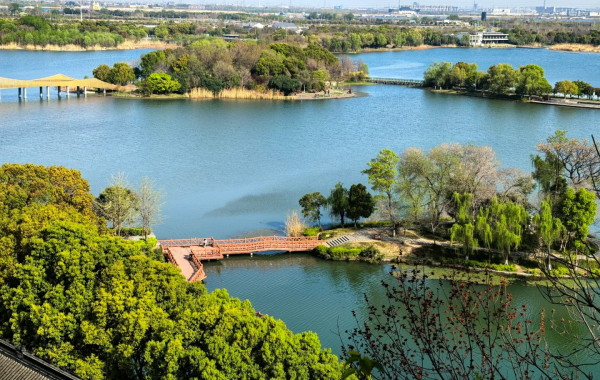
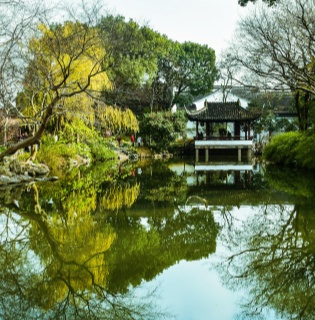
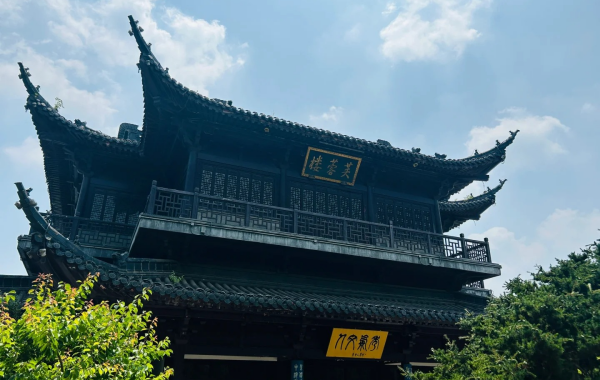
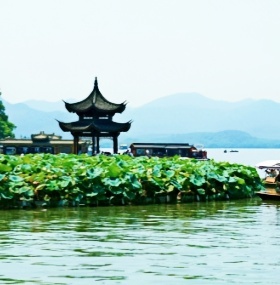
Taying Lake and Furong Tower:The azure waters of Taying Lake ripple gently,reflecting the image of the Cishou Pagoda as it sways with the waves.Together with the weeping willows lining the banks and the blooming lotuses,they form a living,moving tableau of the Jiangnan region.The Furong Tower,situated on the lakeshore,gained worldwide fame thanks to a timeless masterpiece by the Tang Dynasty poet Wang Changling:"If friends and kin in Luoyang ask of me,tell them my heart remains a piece of pure ice within a jade flask."The current Furong Tower is a reconstruction dating back to 1992;it is connected to the Bingxin Xie(Ice-Heart Pavilion),the Juyue Ting(Moon-Scooping Pavilion),and three stone pagodas in the lake by a winding covered walkway.Strolling through this complex,one is effortlessly transported into the poetic realm of the Tang Dynasty.

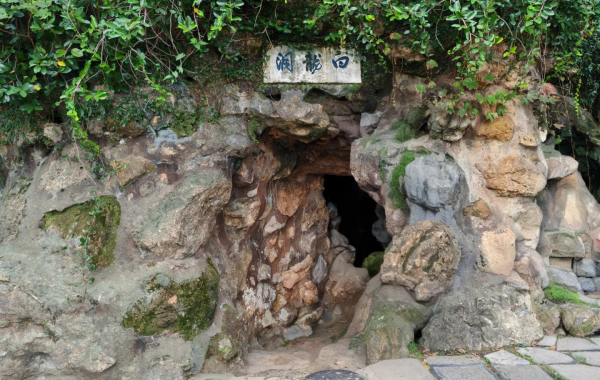
White Dragon Cave:Located at the northern foot of Jinshan Mountain,adjacent to the Jade Belt Bridge.Statues of Lady White and Xiaoqing stand near the cave entrance,while deep within lies an extremely narrow,elongated fissure in the rock—too tight for a human to pass through.Local legend claims this fissure extends all the way to Hangzhou's West Lake—the very route Lady White took when she transformed back into a serpent to make her escape.This imaginative geological marvel creates a wondrous convergence of mythology and nature.

Core Experience:An Immersive Zen Journey through Jiangnan

Furong Ancient Town Furong Ancient Town Furong Ancient Town Furong Ancient Town Furong Ancient Town

Five Must-Do Activities to Unlock the Complete Jinshan Experience
1.Ascend Cishou Pagoda:Gaze out over the River and Sky

Best Time to Visit:9:00–10:00 AM for crisp,clear lighting,or after 4:00 PM to watch the sunset paint the river's surface.

Location:At the very summit of Jinshan Mountain.The ascent takes you past the Sunset Pavilion,Guanyin Pavilion,Lengjia Terrace,and Foyin Hermitage;every turn along the path offers a picturesque view.

The View:To the east,Jiao Mountain appears like a piece of jade floating upon the river;to the west,the Runyang Bridge spans the vast expanse of the waterway;and to the north,Jinshan Lake stretches out in a misty,shimmering panorama.

2.Visit Fahai Cave:Discover the True History

This offers perhaps the most striking"contrast"experience within Jinshan Temple.Stepping into the narrow,dimly lit stone cave and standing before the statue of Fahai,you will discover that—contrary to his negative portrayal in The Legend of the White Snake—this eminent monk was,in actual history,a highly revered Grand Master of the Zen school.

Tip:We recommend reading the introductory plaque outside the cave beforehand,or joining a guided tour to hear the historical anecdotes.

3.Savor a Pot of Tea Brewed with the"World's Foremost Spring Water"(or Enjoy a Bowl of Vegetarian Fare)

Although the water from the Middle Cold Spring(Zhongling Quan)is no longer safe for direct consumption,this thousand-year-old spring—lauded by renowned tea masters Lu Yu and Liu Bochu—remains an exceptional destination for those seeking to explore the heritage of ancient tea culture.

Located next to the temple's main gate,the Foyin Ju Vegetarian Restaurant offers authentic,Zen-inspired vegetarian cuisine.The dishes feature fresh seasonal vegetables and are characterized by their light,elegant flavors.

4.Snap a Photo at the Iconic"Flooding of Jinshan"Spot

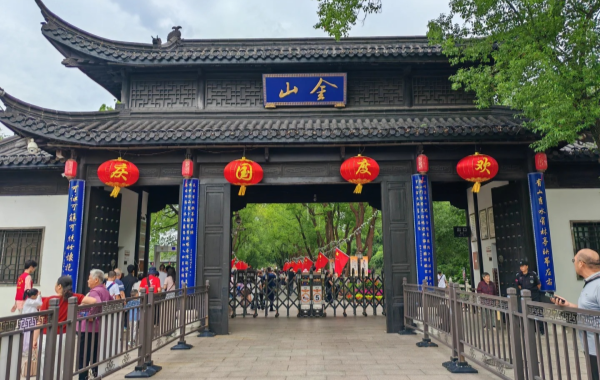
The classic TV series The Legend of the White Snake was filmed on location here;the Jiangtian Chansi Archway,situated just in front of the temple,serves as the quintessential photo spot for fans looking to capture the exact same scene.Attire Suggestion:A light-colored,elegant long dress or traditional Hanfu attire would complement the temple's color palette of yellow walls and grey tiles perfectly.

5.Stroll by the Shores of Jinshan Lake—An Appointment with Tang Poetry

Recite Wang Changling's famous verse—"If friends and kin in Luoyang ask of me,tell them my heart remains as pure as ice within a jade flask"—while standing before Furong Tower.Then,by the banks of Taying Lake,quietly observe the swans gliding across the water and the shimmering reflection of Cishou Pagoda.This is the moment when Jinshan Temple reveals its most quintessential"Jiangnan"charm—a blend of grace and poetic beauty.

Suggested Itinerary
Exploring the core area of​​Jinshan Temple typically takes 2 to 3 hours.The following itinerary covers the major highlights while prioritizing a smooth and comfortable sightseeing experience.

One-Day"Highlights Tour"(Recommended for most visitors):
Enter the park in the morning(or afternoon)→Take photos in front of the Jiangtian Zen Temple Archway→Walk through the Hall of Heavenly Kings and the Hall of the Great Hero to offer prayers(20 minutes)→Ascend the mountain via the path on the right,passing Xizhao Pavilion and Guanyin Pavilion on the way to Cishou Pagoda(30 minutes)→Locate Fahai Cave,then climb up to Liuyun Pavilion for a panoramic view of the river and sky(20 minutes)→Descend the mountain via the path on the left,passing Miaogao Terrace and Qifeng Pavilion→Upon reaching the foot of the mountain,loop around to the northern slope to explore Bailong Cave(15 minutes)→Walk to the"First Spring Under Heaven"and Furong Tower,then stroll along the shores of Taying Lake(30 minutes)→If time and interest permit,visit Wenzong Pavilion and the Jinshan Cultural Expo Park(20 minutes).

IntoTravelChina Tip:During the summer lotus blossom season(June–August),you may wish to extend your time strolling by the lake.We recommend purchasing tickets in advance through official channels to avoid waiting in line.

Two-Day"Three Mountains&One Crossing"Immersive Tour(Highly Recommended):
Day 1:Morning visit to Jinshan Temple(2.5–3 hours)→Lunch near Jinshan Temple to savor authentic Guogai Mian(Lid Noodles)—such as at"Lao Zhao Noodle Shop"or"Shao Shunxing Guogai Mian"(approx.¥20 per person;best enjoyed with Yaorou[crystal meat]and Zhenjiang aromatic vinegar)→Afternoon walk to Xijindu Ancient Street(just 2 km away);stroll along the thousand-year-old bluestone paths,visit the Zhenjiang Museum and the former British Consulate site,and in the evening,ascend Yuntai Pavilion to overlook the ancient street at sunset and admire the night views→Dinner at Xijindu to sample local delicacies(such as the cuisine at"Zhou Family's Second Daughter's Kitchen")→Overnight stay at a hotel near Xijindu or in Zhenjiang city center.

Day 2:Early morning trip to Beigu Mountain(approx.4 km away)to experience the grandeur of the"Beigu Tower—a vista filling the eye,"and to seek out the historical sites of Ganlu Temple associated with Liu Bei's marriage proposal(approx.1.5 hours)→Afterward,proceed to Jiaoshan Mountain(approx.5 km away)to experience the serenity of Dinghui Temple—where the"temple is embraced by the mountain"—and to explore the largest stele forest in the Jiangnan region as well as the cliffside stone carvings(approx.2 hours)→In the afternoon,depart for your return journey,bringing back a wealth of memories and souvenirs such as Hengshun aromatic vinegar.

IntoTravelChina Advantage:We can book the perfect accommodation to suit your needs,seamlessly coordinate all your activities,and provide detailed walking route maps and safety guidelines.

Professional Guides:IntoTravelChina offers fully customized itineraries,including a dedicated private guide,transportation,and activity arrangements,ensuring a worry-free and deeply immersive travel experience.>> [Consult for Customization Now]

Comprehensive Travel Guide:Transport,Accommodation,and Seasons

Furong Ancient Town Furong Ancient Town Furong Ancient Town Furong Ancient Town

How to Get There:A Seamless Connection Guide
Jinshan Temple is situated in the northwest of Zhenjiang city center and boasts extremely convenient transportation,located just 3 kilometers from the heart of the city.

For travelers arriving from across the country,taking the High-Speed​​Rail(G-train)to Zhenjiang Station is highly recommended(it is only about 3 km from Jinshan Temple—a taxi ride takes approximately 10 minutes and costs around 10 RMB).Travel Tip:We recommend prioritizing Zhenjiang Station over Zhenjiang South Station,as the former is closer to both Jinshan Temple and Xijindu.

From Zhenjiang Station,we recommend taking public bus routes 2,40,or 216 directly to the"Jinshan Park"stop.

For those traveling by car,navigate to the"Jinshan Park Parking Lot."Parking spaces are plentiful,and the fee is approximately 5 RMB per visit.

Best Time to Visit
Jinshan Temple is a delightful destination in every season,each offering its own unique charm;however,the optimal seasons for a visit are spring(March–May)and autumn(September–November).

Spring&Autumn:The Golden Seasons(March–May;September–November):The climate is mild and pleasant.In spring,the banks of Jinshan Lake come alive with blooming peach blossoms and lush green willows;in autumn,the ground is carpeted in golden ginkgo leaves,and the Cishou Pagoda stands out brilliantly against the blue sky.These are the most comfortable seasons for sightseeing and photography.

Summer:The Lotus Season(June–August):The lotus flowers at Taying Lake and Baihuazhou are in full bloom,offering a breathtaking panorama where"lotus leaves stretch endlessly to meet the sky."However,visitors should take precautions against sunburn and heatstroke;it is recommended to visit the park during the cooler hours of early morning or late evening.

Winter:The Season of Serenity(December–February):Crowds are sparse during this time.If you are lucky enough to encounter a snowfall,the scene—with white snow dusting the temple's yellow walls and red plum blossoms framing the ancient pagoda—is profoundly serene and evocative of Zen tranquility.Additionally,a grand bell-ringing ceremony for good fortune is held every year on December 31st,allowing visitors to make wishes for a peaceful and prosperous New Year as the clock strikes midnight.

Accommodation Options
Near Xijindu(Highly Recommended):
Experience:Stroll through the ancient streets during an evening tour to soak up the enchanting lamplit atmosphere of this"Millennium-Old Ferry Crossing,"and enjoy the solitude of the empty bluestone lanes in the quiet early morning hours.
Ideal For:Travelers seeking cultural immersion,those who prefer a leisurely pace,and visitors who desire a relaxing environment to enjoy both in the morning and evening.

Hotels in Zhenjiang City Center:
Experience:A wide range of options is available,spanning everything from budget-friendly inns to high-star luxury hotels.These accommodations feature excellent dining facilities and are located just a short drive away from all major attractions.
Ideal for:Travelers who prioritize accommodation quality or those planning to visit multiple attractions within the Zhenjiang city center.

IntoTravelChina Accommodation Booking Tips:
Although Zhenjiang is a relatively small city,we still recommend booking popular accommodations 1–2 weeks in advance,especially for stays during weekends and public holidays.By booking through us,you gain access to real-time room availability and the ability to bundle your accommodation,attraction tickets,and transportation into a single cohesive plan.This often results in package discounts and ensures a seamless,hassle-free itinerary.Simply tell us your budget and preferences,and we will match you with the perfect"Riverside Zen Retreat.">>[Click to contact IntoTravelChina Travel Consultant]
Extending Your Journey:A Classic Loop Tour of Southern Jiangsu

Furong Ancient Town

Jinshan Temple is not merely a standalone cultural landmark;it serves as the perfect starting point for exploring the vibrant region of Zhenjiang in Southern Jiangsu.

Classic 2-Day"Three Mountains&One Ferry"Cultural Pilgrimage:Zhenjiang(Jinshan Temple)→Xijindu(The Millennium Ancient Ferry Crossing)→Beigushan(Beigu Mountain&Ganlu Temple of the Three Kingdoms Era)→Jiaoshan(The Mountain of Calligraphy&Stone Tablet Forest).This compact journey seamlessly blends Zen meditation,mythology,Three Kingdoms history,and the art of calligraphy.

Cross-River 3-Day Zhenjiang&Yangzhou Combo Tour:Zhenjiang(Jinshan Temple,Xijindu,Beigushan)→Cross the Yangtze River via the Zhenjiang-Yangzhou Ferry→Yangzhou(Slender West Lake,Daming Temple,Dongguan Street).From the legendary"Flooding of Jinshan Temple"to the poetic imagery of"fireworks blooming in Yangzhou during the third lunar month,"this route connects two historic and culturally rich cities across the river.

Southern Jiangsu 4-Day Classic Loop:Nanjing(Sun Yat-sen Mausoleum,Confucius Temple)→Zhenjiang(Jinshan Temple,Jiaoshan,Xijindu)→Yangzhou(Slender West Lake,Ge Garden)→Suzhou(Humble Administrator's Garden,Pingjiang Road).Journey from the ancient capital of the Six Dynasties to the exquisite gardens of Jiangnan,embarking on a cultural exploration that spans a thousand years of history.

Partner with IntoTravelChina to Embark on Your Exclusive Zen Journey Through Jiangnan

Furong Ancient Town Furong Ancient Town

The story of Jinshan Temple is one of echoing millennia-old Buddhist chants,the intertwining of myth and history,and the masterful architectural legacy of the"Temple-Wrapped Mountain"—a true engineering marvel.IntoTravelChina specializes in crafting in-depth,personalized,and hassle-free travel experiences across China.Our travel experts are here to provide you with:

Tailor-Made Itineraries:We design the perfect route—featuring Jinshan Temple and other iconic nearby attractions—customized to fit your specific interests and schedule.

One-Stop Service:We handle all the details,including attraction tickets,unique accommodations,transportation transfers,local guides,and activity bookings.

Exclusive Experiences:We arrange unique activities such as tasting vegetarian cuisine at Foyinju,climbing the Cishou Pagoda,and receiving in-depth historical commentary at Fahai Cave.

Let your visit to Jinshan Temple be more than just sightseeing;let it be an immersive exploration of a thousand years of Zen culture.

Start Planning Your Journey Now
We invite you to contact our professional travel consultants;we will provide you with a personalized itinerary proposal and price quote within 24 hours.
>>[Click to contact IntoTravelChina Travel Consultant]

What Our Clients Say?

Based on 10,000+ traveler reviews

...
Daniel Dorothea
Canada
Reviewed on April 29,2025
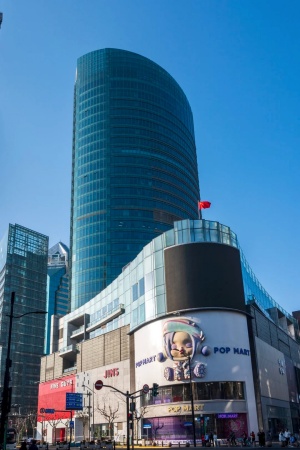
Shopping on Nanjing Road in Shanghai was just amazing! It's truly the "First Commercial Street of China", where tradition and modernity blend perfectly. You can find awesome souvenirs and experience the trendy vibes in cool stores. The neon lights at night are just spectacular, shining bright like Times Square in New York. The food here is incredible too. I had a feast for my taste buds. Shanghai, I'll definitely be back!
Destination(s): Shanghai
Date of Experience: May 08,2024
...
...
Elvis Eva
Canada
Reviewed on June 20,2025
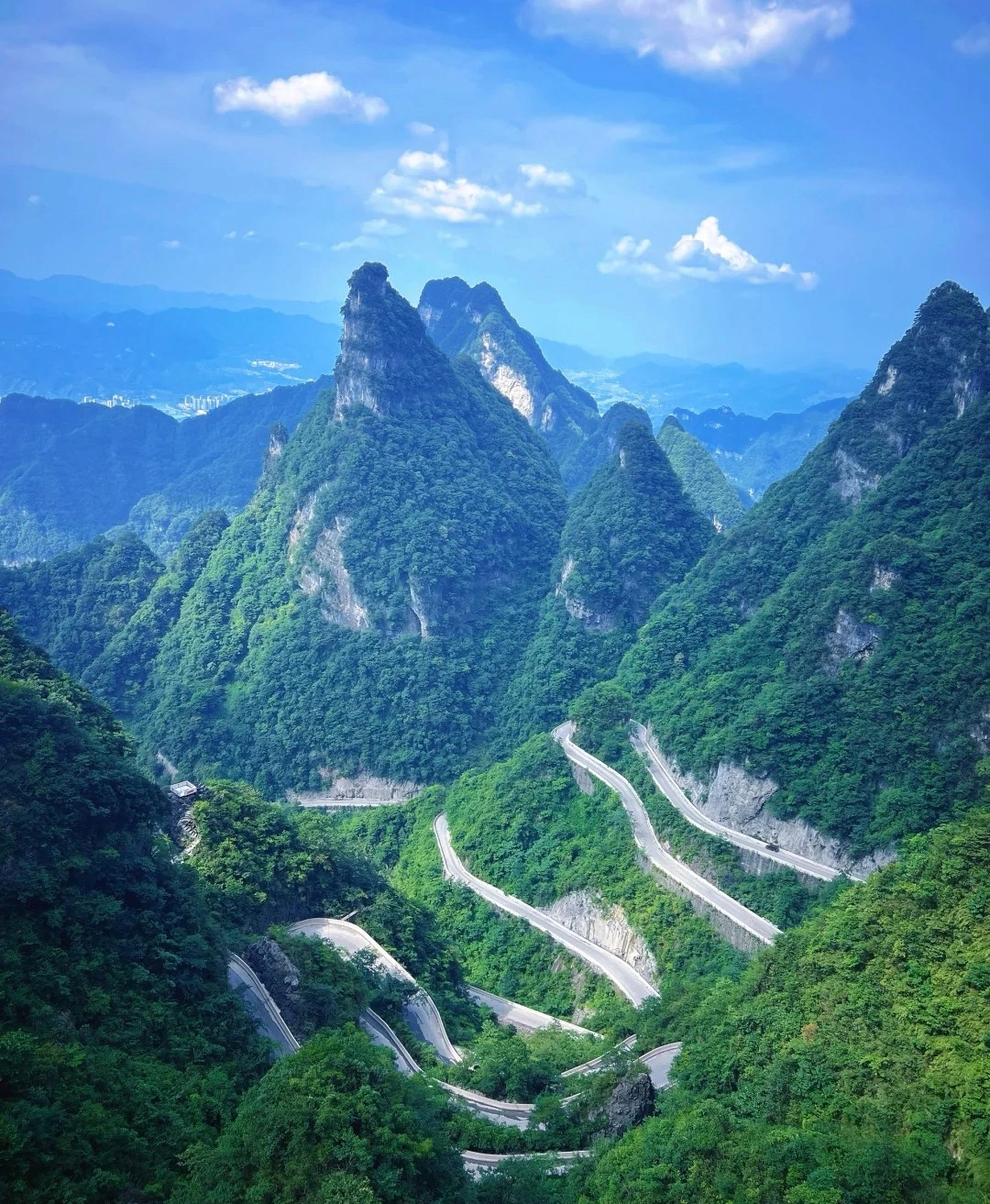
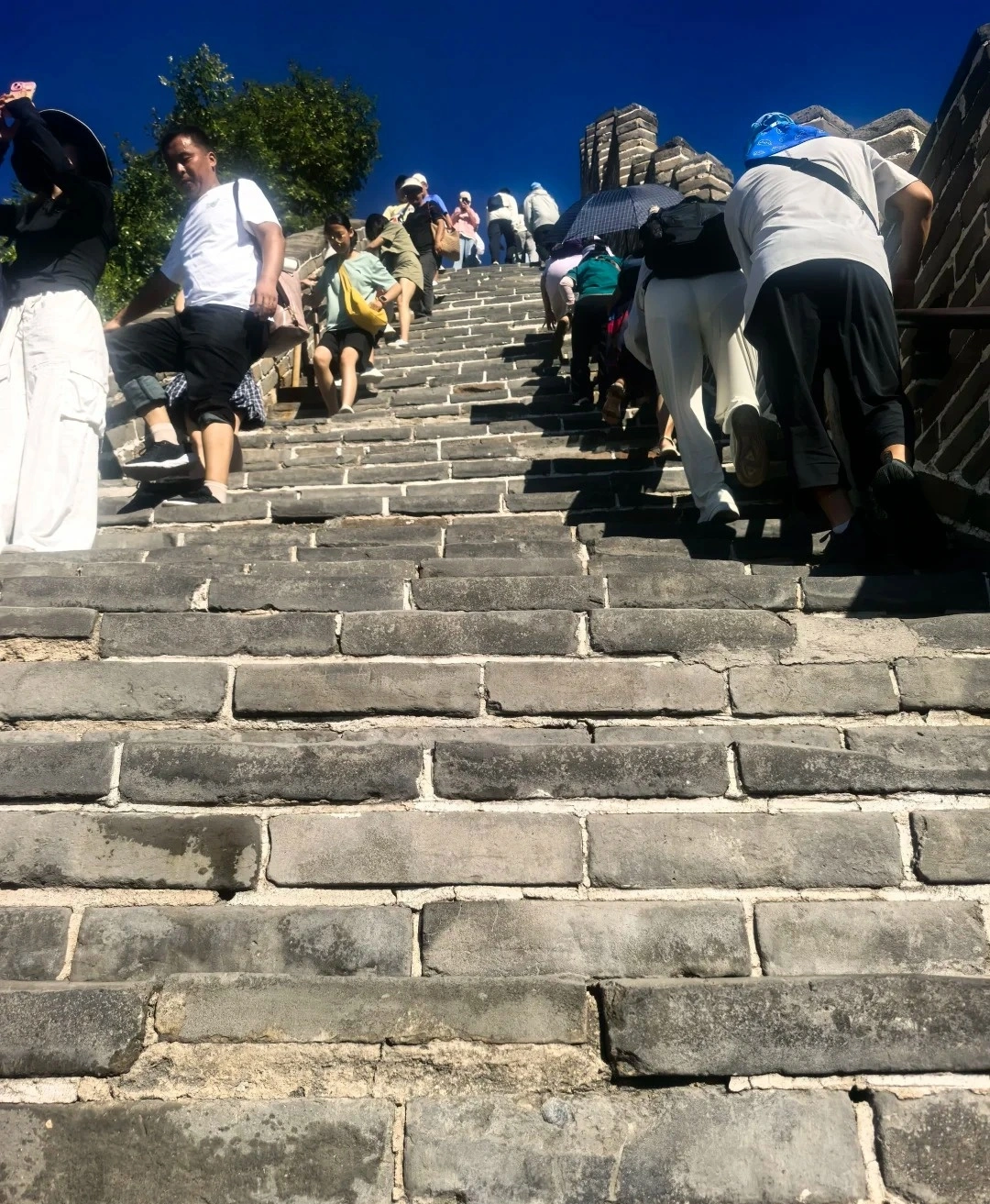
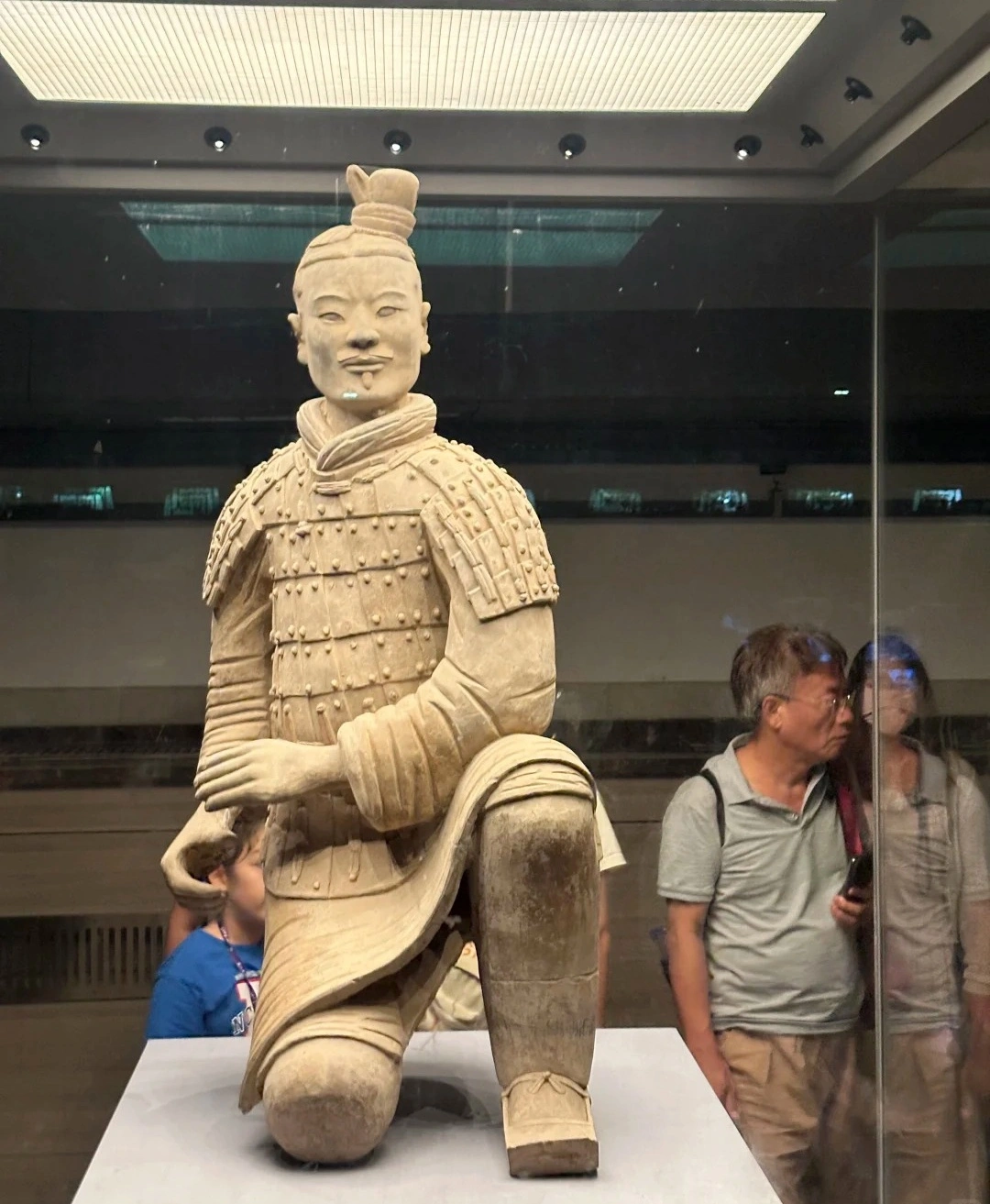
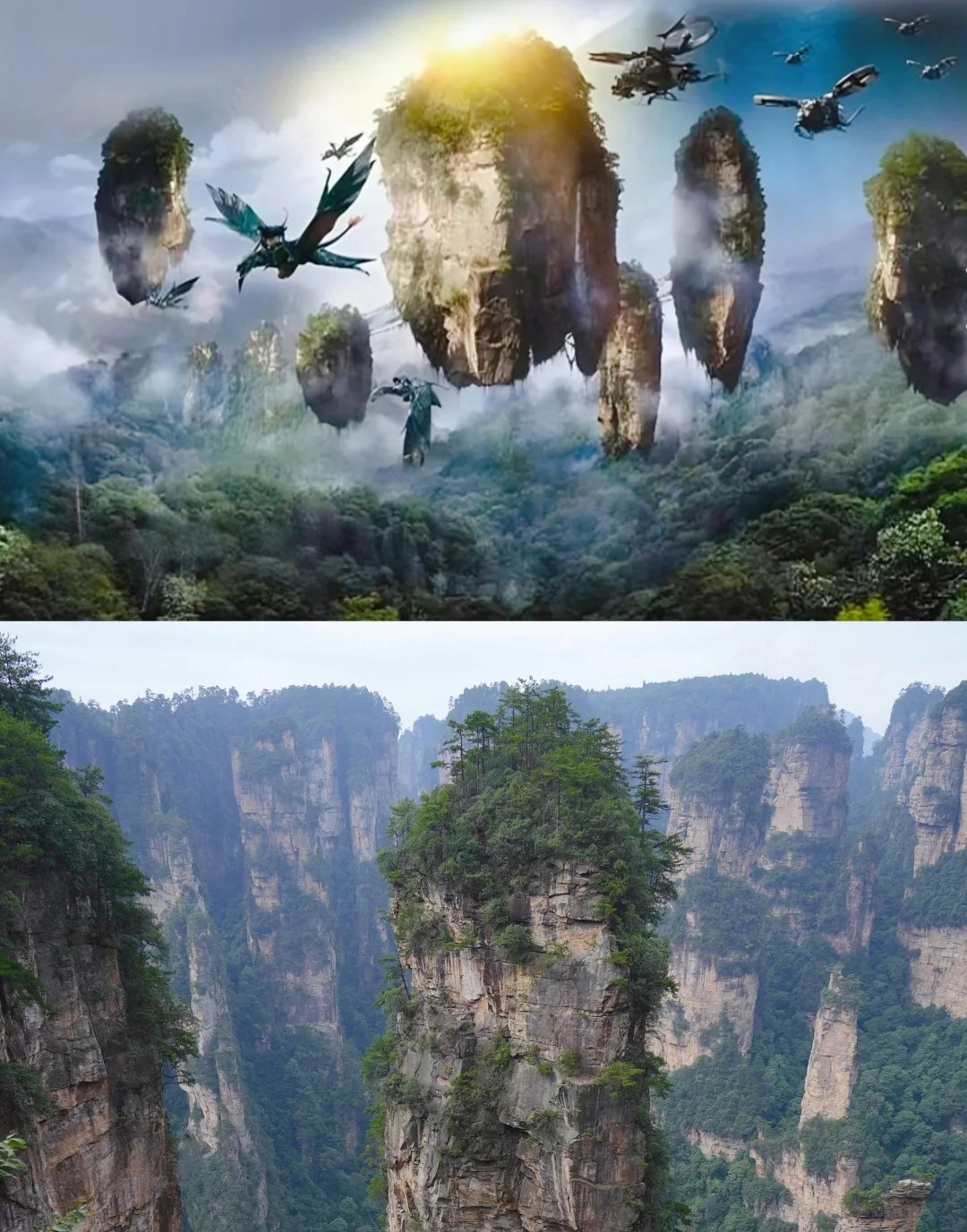
As a solo traveler from Canada, I was nervous about navigating China alone—but this 11-day tour was PERFECT! From hiking the Great Wall at sunrise (Day 3) to gasping at the Terracotta Army (Day 5), every day delivered ‘pinch-me’ moments. The real showstopper? Zhangjiajie’s Avatar Mountains (Day 7)! Our guide made the stone pillars come alive with stories. Massive thanks for handling all logistics—bullet train tickets, entry passes, car! And the 4-star hotels surprised me.
Destination(s): Beijing Xian Zhangjiajie Shanghai
Date of Experience: June 02,2025
... ... ...
...
Simon
America
Reviewed on May 29,2025
Our 2-day Zhangjiajie tour was beyond spectacular! As someone who’s visited Beijing and Shanghai for work, this trip revealed China’s wild, magical heart. Day 1 in Zhangjiajie National Forest Park felt like stepping onto Pandora—I’m a huge Avatar fan, and Yuanjiajie’s floating peaks left me breathless. The misty pillars and lush valleys like pure movie magic! Then came Fenghuang Ancient Town, we eat dinner beside the thundering waterfall. It seems Unreal! The night views of stilt houses glowing over the river were straight from a fairy tale. For fellow Avatar lovers and adventure seekers: Don’t miss this bucket-list experience! 10/10 would return. A Well-Traveled Film Buff, May 2025
Destination(s): Zhangjiajie
Date of Experience: May 08,2025
... ...

Ask a Question

Question Summary (100 characters)
Details (optional) (2,000 characters)
Name
Country
Phone
Email