The Temple of Heaven: A 600-Year Dialogue Journey from a Royal Altar to a World Heritage Site

The Temple of Heaven: A 600-Year Dialogue Journey from a Royal Altar to a World Heritage Site

Overview: A three-dimensional textbook on ancient Chinese cosmology and architectural aesthetics
The Temple of Heaven, located on the east side of Beijing's central axis, is a grand complex of altars and temples covering a total area of 273 hectares. It is the largest and best-preserved ancient complex of buildings dedicated to heaven in the world.

A quick overview of key highlights
Identity tag: World Cultural Heritage/A Brilliant Pearl on Beijing's Central Axis/Architectural Illustration of Ancient Chinese Thought of "Harmony between Man and Nature"
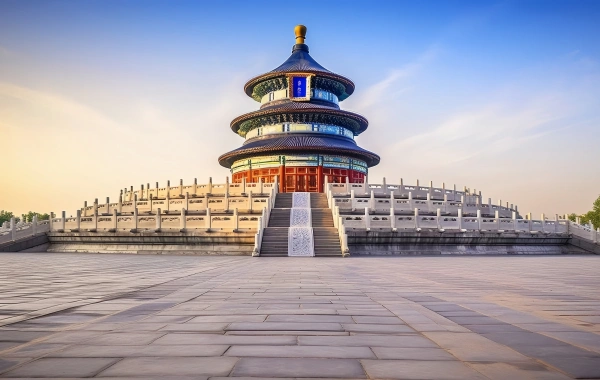
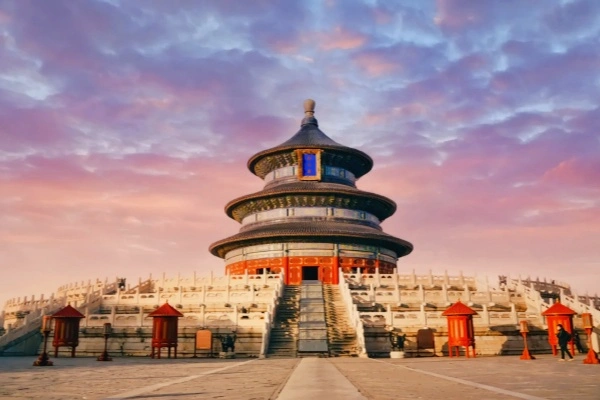
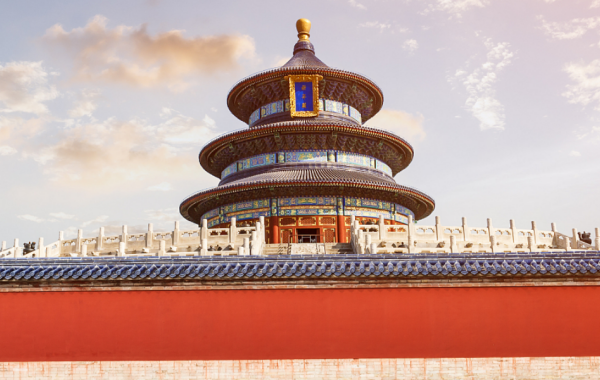
Core experience: Gaze up at the triple blue tiles and golden roof of the Hall of Prayer for Good Harvests, experience the miracle of sound transmission through the Echo Wall, stroll through the thousand-year-old ancient Berlin, and explore the royal ritual of woring-up Heaven
Suggested tour: At least half a day. It is recommended to spend 3 to 5 hours on an in-depth tour of the core building complex
Address:  No. 7, Dongli, Tiantan Nei, Dongcheng District, Beijing

  • The Temple of Heaven: A 600-Year Dialogue Journey from a Royal Altar to a World Heritage Site-1
  • The Temple of Heaven: A 600-Year Dialogue Journey from a Royal Altar to a World Heritage Site-2
  • The Temple of Heaven: A 600-Year Dialogue Journey from a Royal Altar to a World Heritage Site-3
  • The Temple of Heaven: A 600-Year Dialogue Journey from a Royal Altar to a World Heritage Site-4

Origin: From the "Emperor" Altar to Human Heritage

Furong Ancient Town

The sacred name - the only passage connecting heaven and earth
The name "Temple of Heaven" directly points to its core function. In the ancient Chinese ideological system of "divine right of Kings", the emperor called himself "Son of Heaven", and worshipping heaven was his supreme and irreplaceable privilege and responsibility. The Temple of Heaven is precisely the physical space for this sacred ceremony, and it is the exclusive place where emperors on earth pray to the "Heavenly Emperor" for favorable weather and national peace and prosperity. Its predecessor, the "Temple of Heaven and Earth", was first built in the 18th year of Yongle in the Ming Dynasty (1420), which is the same age as the Forbidden City of the Forbidden City. The two, one for handling secular affairs and the other for fulfilling sacred duties, together formed the complete layout of ancient Chinese capitals.

The Path of Inheritance - Six Hundred Years of Evolution and Rebirth
The history of the Temple of Heaven is a condensed account of modern and contemporary Chinese history:
- Imperial Forbidden Area (before 1912) : From the early Ming Dynasty to the late Qing Dynasty, for nearly 500 years, this place was a strictly forbidden zone that ordinary people were not allowed to enter. It was only used for the emperor to hold grand ceremonies of worshipping heaven and praying for good harvests.
- Open to the Public (1918) : In the seventh year of the Republic of China, the Temple of Heaven was officially converted into a park and opened to the public, completing its transformation from a royal exclusive space to a public cultural space.
- Heritage Coronation (1998) : Due to its unparalleled historical, scientific and artistic value, UNESCO inscribed the Temple of Heaven on the World Heritage List, affirming it as a cultural treasure shared by all mankind.
- New Chapter of The Times (Up to Now) : Nowadays, it is not only a bustling 5A-level scenic area but also a cultural and leisure home for Beijing residents. It regularly hosts cultural activities such as the Zhonghe Shaoyue Performance and the Autumn Ginkgo Festival, rejuvenating this ancient heritage.

> In-depth Understanding: Explore More World Heritage Sites along Beijing's Central Axis>> [The Summer Palace]

Must-see Wonder: A perfect symphony of architecture, acoustics and ecology

Furong Ancient Town Furong Ancient Town Furong Ancient Town

Humanistic craftsmanship - The Frozen philosophy of the Universe
The architecture of the Temple of Heaven is not merely a simple house; rather, it is a physical symbol of the ancient people's cosmology and philosophy.

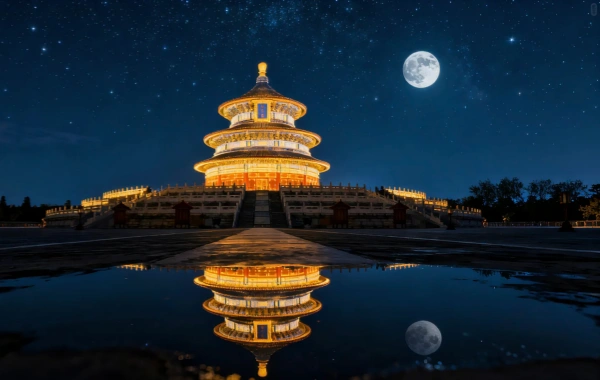
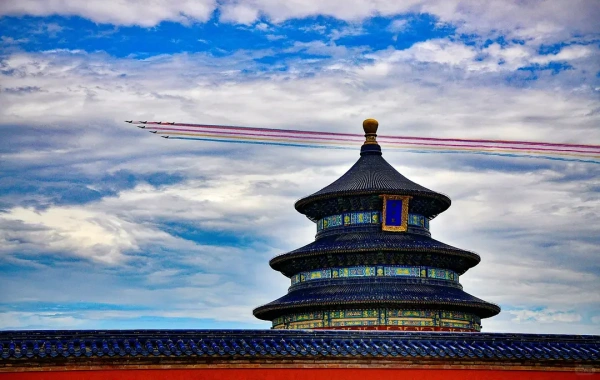
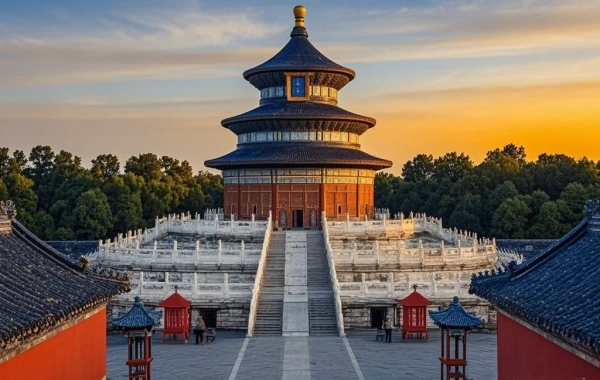
The Hall of Prayer for Good Harvests: The ultimate sanctuary for dialogue with Heaven
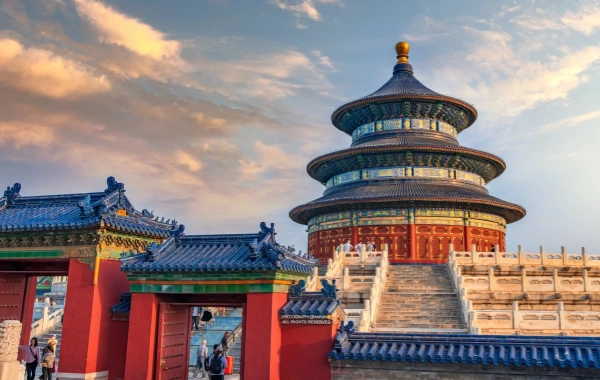
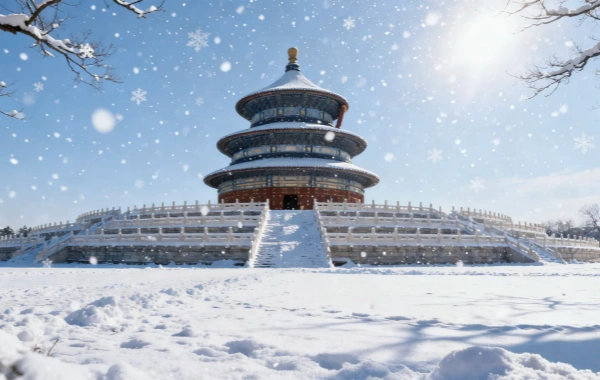
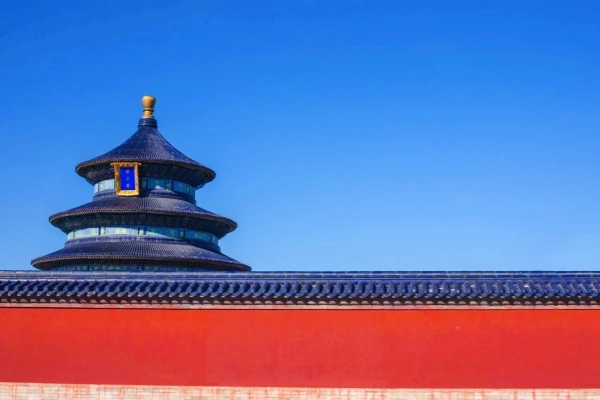
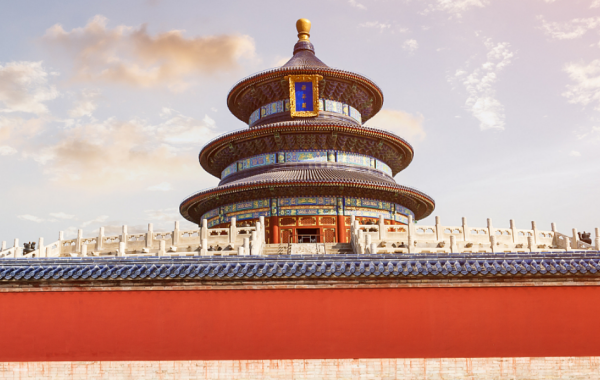
- Symbolic Analysis: As the most renowned symbol of the Temple of Heaven and even Beijing, every design of the Hall of Prayer for Good Harvests is rich in meaning. The triple-eaved blue glazed tile dome symbolizes the sky. The 28 golden-threaded nanmu pillars inside the hall are even more exquisite: the four "Longjing Pillars" in the center represent the four seasons of the year. The 12 golden pillars in the middle layer symbolize the twelve months. The 12 eave columns on the outer layer symbolize the twelve hours of a day. The total of the 24 pillars inside and outside represents the 24 solar terms. This is the place where the grand ceremony of praying for a bountiful harvest in early Spring was held, where the emperor prayed for a bountiful harvest of five grains.

The Circular Mound Altar: The Ultimate Application of the number "Nine"
The core of the Heaven Worship Ceremony: This is a three-story white open-air circular altar. Every Winter Solstice, the emperor holds the most solemn Heaven worship ceremony here. Its design takes the number "nine" (the number of the anode) to the extreme: each layer of balustrade and step is nine or a multiple of nine. Standing on the Tianxin stone at the center of the altar and Shouting, the voice was loud and deep due to the reflection of the balustrade, as if it could truly resonate with the heavens.

The Imperial Dome and the Echo Wall: An Astonishing acoustic Wonder
- Heavenly Treasury and Echoes: The Imperial Vault is the hall where the sacrificial amulets of the Circular Mound Altar are stored. The circular wall around it is the world-famous Echo Wall. The walls are smooth and have regular arcs. Two people stand behind the east and west side halls respectively, close to the walls and whispering to each other. Their voices can be clearly transmitted along the walls, which can be regarded as a masterpiece of ancient architectural acoustics. The three-tone stone on the imperial path in front of the hall, when you stand on it and clap your palm, you can hear multiple echoes, which is equally wonderful.

Danbi Bridge: The "Divine Path" Leading to the Heavenly Court
- Connecting the north and south: This 360-meter-long, 4-meter-high corridor, which links the Altar of Heaven and the Hall of Prayer for Good Harvests, serves as the axis of the Temple of Heaven. When the emperor walked on it, it was called "walking in the sky". Under the bridge, there is a "Ghost Gate" passage for livestock to pass through, which reflects a strict hierarchy of etiquette.

The Zhai Palace and the Kagura House: Solemn and dignified supporting buildings
- Place of Fasting: The emperor was required to fast here for three days before offering sacrifices to Heaven. Its main building is a beamless hall with a brick arch structure, using no nails or wood to prevent fires, which reflects strict etiquette and wisdom.
The Ritual and Music Center: The Divine Music Bureau is an institution that practices the music of the Shaoxing in sacrificial ceremonies and is known as the "Music Academy of the Temple of Heaven", which shows the significant position of ritual and music in ancient sacrificial ceremonies.

Natural creation - a solemn and verdant ecological backdrop
The landscape of the Temple of Heaven is far more than just its architecture; its ecological environment is the key to creating an atmosphere of "harmony between man and nature".

Thousand-year-old Berlin: The Guardian of Time
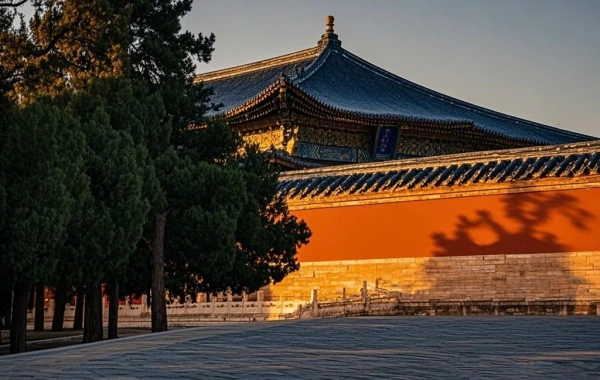
The inner and outer altars of the Temple of Heaven are dotted with ancient cypresses that are hundreds of years old, with a total number exceeding 3,600. These vigorous and tall ancient trees remain evergreen throughout the four seasons, creating the solemn, dignified and peaceful atmosphere that the altar needs. Walking through it is like traveling through a time tunnel.

Seasonal flowers: Ancient yet vivid embellishments
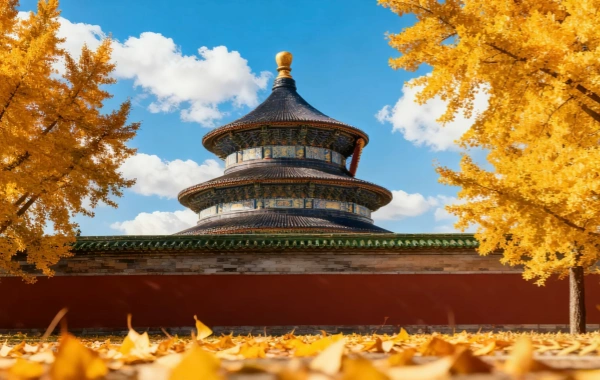
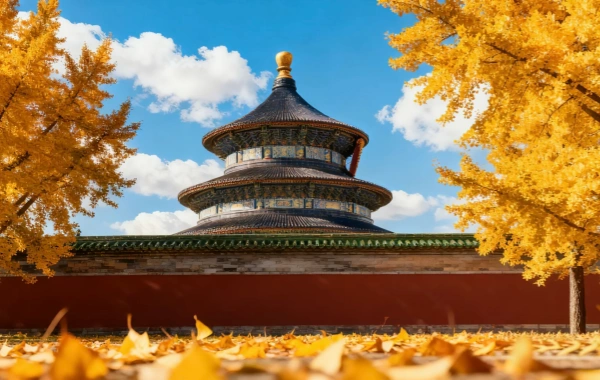
Besides the ancient cypresses, the Temple of Heaven also has the largest lilac forest in Beijing (located to the west of the Hall of Prayer for Good Harvests), which is filled with the fragrance of flowers in spring. In addition, the rose garden, the hundred Flowers garden and the golden ginkgo trees in autumn all add vivid colors and seasonal changes to the solemn altar and temple.

Photography Tipts:
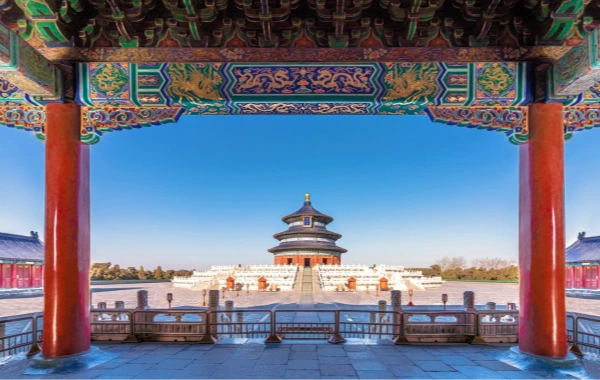
The best panoramic shooting position: At the glazed door on the south side of the Hall of Prayer for Good Harvests, use the door frame as the foreground to capture the full view of the Hall of Prayer for Good Harvests.
The iconic perspective: Shooting the Hall of Prayer for a Good Year from the Danbi Bridge to the north can reflect its grandeur and the imposing presence of the axis.
Details and Light and Shadow: In the afternoon, the setting sun gilds the blue tiles and golden roof of the Imperial Dome and the walls of the echo Wall with golden edges, making it an excellent opportunity to capture the architectural details and light and shadow.
Ancient Cypress portraits: With ancient cypresses of various shapes as the background, shooting silhouettes of people or ancient-style portraits is full of a sense of story.

Core Experience: An immersive guide to Royal Sacrifice culture

Furong Ancient Town Furong Ancient Town Furong Ancient Town

Four must-do things to complete a deep dialogue
1. Shoot a blockbuster of a time-space dialogue
- Time: When the park opens in the early morning or two hours before it closes, there are the fewest visitors and the light is soft, which is the best time to capture the solemnity and vastness of the Temple of Heaven.
- Location: The front of the Hall of Prayer for Good Harvests (a classic landmark), the Tianxin Stone of the Circular Mound Altar (from an upward perspective), and the curved wall of the Echo Wall (creative composition).
- Clothing: It is recommended to wear simple and elegant modern clothing, or try Hanfu to create a harmonious or spatio-temporal collision beauty with the ancient architecture.
2. Experience the acoustic miracle of "harmony between man and nature" once
Key point: At the echo wall, please stand behind the east and west side halls respectively with your companions, and speak softly close to the wall. Clap your hands or shout on the Three-tone Stone (the third stone slab in front of the Imperial Dome Hall) and listen to multiple echoes. Try Shouting on the Tianxin Stone of the Circular Mound Altar and feel the magic of the sound being amplified.
3. Participate in a deep cultural study tour
- In-depth Experience: Follow the official events of the Temple of Heaven. In summer, there are often performances of "Zhonghe Shaoyue", recreating ancient sacrificial music. The park will also host study Tours themed on ancient architecture and history, where visitors can explore the secrets of numbers and architecture under the guidance of experts.
- Fun Interaction: Search for the "Seven-star Stones" scattered throughout the park (there are actually eight of them) and learn about the origin of their stone culture.
4. Stroll along a royal sacrificial axis
- Complete route: Either from south to north or from north to south, complete the 1,200-meter central axis from the Circular Mound Altar - the Imperial Dome - the Danbi Bridge - the Hall of Prayer for Good Fortune, and personally experience the procession route and ritual space sequence of ancient emperors' worship of Heaven.

Suggested tour route
Half-day "Essence Axis" Tour (Suitable for Those with limited time)
Enter through the south gate → Visit the Circular Mound Altar and experience the mystery of the number "Nine Five Supreme" and the echo of the Tianxin Stone (40 minutes) → Head north to the Imperial Dome to explore the Echo Wall and the Three-tone Stone (30 minutes) → Walk across the long Danbi Bridge and feel the "Step towards the Heavenly Court" (20 minutes) → Arrive at the Hall of Prayer for Good Fortune complex Carefully observe the interior and exterior details of this wooden wonder (60 minutes) → Leave through the east gate or the north gate.
IntoTravelChina Tips: This itinerary is tight and covers all the core buildings. It is recommended to purchase a combined ticket and try to visit in the early morning of a weekday to avoid the crowds.

One-day "Deep Panoramic" Tour (Highly Recommended)
- Morning: Enter through the east gate → First visit the North Sacrificial Animal Pavilion and the Divine Kitchen (ticket exchange required), and learn about the preparations for the sacrificial ceremony (30 minutes) → Tour the Hall of Prayer for Good Harvest and the Hall of Emperor Gan (90 minutes) → Stroll south along the Danbi Bridge.
- Noon: Rest in the park or have lunch near the west gate.
- Afternoon: Visit the Imperial Dome and the Echo Wall (40 minutes) → Head south to the Circular Mound Altar (30 minutes) → Head west to visit the Emperor's Fasting Palace (30 minutes) → If interested, continue to the Shinto Music Office (additional tickets are required) → Exit the park through the west gate.
IntoTravelChina's advantages: We can plan the most reasonable route for you, reserve all venue tickets in advance, and provide detailed architectural and cultural interpretation Tours, allowing you not only to see but also to understand the Temple of Heaven.

Two-day "Beijing Central Axis Cultural Tour" Recommendation:
Day 1 (Temple of Heaven + Cultural Relics Exploration) : In the morning, take an in-depth tour of the Temple of Heaven (as shown in the "One-day In-depth Panoramic Tour" above) → In the afternoon, walk to the Natural History Museum outside the west gate of the Temple of Heaven (reservation required) for a natural science tour.
Day 2 (Imperial City Culture) : In the morning, visit the Forbidden City to experience the political center of the Ming and Qing Dynasties. In the afternoon, visit the Imperial Archives (the royal archives of the Ming and Qing Dynasties, reservation required) or the Yonghegong Lama Temple (the highest-level Buddhist temple of the Qing Dynasty) to understand the cultural connections among the "Three Architectural Kings" on the east side of the central axis of Beijing.

Professional Guide: IntoTravelChina can offer you a private customized itinerary, including a dedicated tour guide, transportation and activity arrangements, allowing you to enjoy a deep and worry-free trip. >> [Consult for Customization Now]

Travel Guide: Transportation, Ticketing and Seasons

Furong Ancient Town Furong Ancient Town

How to arrive and what are the ticket requirements
The Temple of Heaven is located in the center of Beijing and enjoys extremely convenient transportation.
- Subway (Recommended) :
Exit A of "Tiantan East Gate Station" on Line 5: You will reach the East Gate right after exiting the station, which is the most convenient entrance.
Exit C of Tianqiao Station on Line 8: Walk to the west gate after exiting the station.
- Public transportation: There are numerous routes that can reach the four gates of the Temple of Heaven, and you can flexibly choose according to your starting point.
- Ticket:
- Be sure to make an appointment! All tickets must be reserved in advance with real names through the official public accounts of "Temple of Heaven" or "Changyou Park". No tickets will be sold on site.
- Admission: Only the main entrance ticket is available. It costs 15 yuan during peak season and 10 yuan during off-peak season.
- Combined Ticket (Recommended) : Includes the main entrance ticket and core attractions such as the Hall of Prayer for Good Harvests, the Echo Wall, and the Round Mound Altar. It costs 34 yuan during peak season and 28 yuan during off-peak season. If you still plan to visit the Ramadan Palace, Kagura House, etc., please pay attention to their opening hours (usually closed on Mondays) and exchange tickets on the spot or purchase them separately.

Best visiting time
The Temple of Heaven has its own charm in each of the four seasons, but the best time to visit is in spring and autumn.
The golden seasons of spring and autumn (April to May, September to October) : The climate is pleasant, the sky is clear, ancient cypresses are lush and green, and flowers are in full bloom. It is the best time for sightseeing and photography.
- Summer retreat season (June - August) : It is advisable to visit in the early morning and late evening. The park is shaded by ancient cypresses and is a rare cool spot in the urban area. The park will provide "doting" services such as sunshades, cultural fans and mosquito repellent water. Pay attention to heatstroke prevention and cooling down.
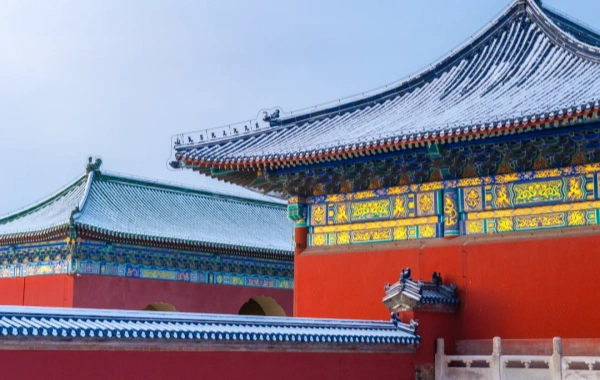
- Winter quiet season (November - March of the following year) : There are relatively fewer tourists. After the snow, the Temple of Heaven is covered in white, presenting a unique solemn and dignified atmosphere. Please keep warm and the closing times of some scenic spots will be advanced.

Opening hours and surrounding accommodation
- Park Opening: During peak season (April 1st - October 31st), the park opens at 6:00 and closes at 10:00. The park opens at 6:30 p.m. and closes at 10:00 p.m. during the off-season (November 1st - March 31st).
- Opening of scenic spots: Core scenic spots (such as the Hall of Prayer for Good Harvests, etc.) usually open at 8:00 and stop entering at 17:30 (peak season). They may be closed on Mondays (except for legal holidays). Please verify before your trip.
- Surrounding accommodation (As the Temple of Heaven tour does not require an overnight stay, accommodation in the city center is recommended) :
1. Qianmen/Chongwenmen Area: Located on the north side of the Temple of Heaven, it combines tradition and modernity, with extremely convenient transportation and dining. There are many high and mid-range hotels.
2. Wangfujing/Dongdan Area: Located northwest of the Temple of Heaven, it is bustling with commercial activities, featuring a concentration of high-end hotels and offering a wide range of shopping and dining options.
3. Near the overpass: Located on the west side of the Temple of Heaven, it has a stronger flavor of old Beijing life, offers good value for money, and is convenient for visiting other scenic spots in the old town.

IntoTravelChina itinerary booking suggestions
For tourists coming to Beijing from other places, we strongly recommend that the Temple of Heaven be planned in conjunction with scenic spots such as the Forbidden City and the Summer Palace. By booking through us, you can not only ensure one-click reservation of all popular venue tickets (solving the reservation problem), but also design the most reasonable connecting routes based on your interests and time, arrange convenient city transportation, and provide professional cultural interpretation services, so that your trip to Beijing will be without regrets. [Click to contact IntoTravelChina Travel Consultant]

Extended Journey: The Cultural Code Connecting Beijing's Central Axis

Furong Ancient Town

The Temple of Heaven is a crucial starting point for understanding the value of Beijing's "Central axis" application for World Heritage status, and it is also an excellent core for exploring Beijing's diverse cultures.

Two-day Cultural Essence Tour of Beijing: The Great Wall & The Forbidden City & the Temple of Heaven: This is a "Golden Triangle of World Heritage" route designed for those who value time. On the first day, conquer the Badaling Great Wall and experience the grandeur of ancient China. The next morning, I was immersed in the grand halls of the Forbidden City, and in the afternoon, I stepped into the Altar of Heaven and the Echo Wall. Within two days, complete the spiritual leap from military defense to royal political arts, and then to the interaction between heaven and man, and quickly grasp the peak expression of Chinese civilization in terms of power, order and philosophy. Check out the 2-day Beijing Cultural Essence Tour route

A classic one-day in-depth tour of Beijing: The Summer Palace, the Temple of Heaven, and the Hutongs: This route perfectly condenses the life picture of Beijing from the royal and noble families to the common people. In the morning, I strolled along the long corridor of mountains and waters in the Summer Palace, experiencing the leisure of a royal garden. In the afternoon, visit the Temple of Heaven to listen to the echoes and philosophy of the buildings dedicated to heaven. Wandering through the old Beijing hutongs in the evening, one can feel the pulse of the ancient capital among the quadrangle courtyards and the bustling snacks. In one day, you can see three sides of Beijing efficiently and deeply. Explore a 1-day classic in-depth tour route in Beijing

Join hands with IntoTravelChina to start your exclusive dialogue on ancient architecture culture

Furong Ancient Town

The story of the Temple of Heaven is about the ancients' reverence for the universe, their pursuit of harmony, and their unparalleled architectural wisdom. IntoTravelChina is dedicated to creating in-depth, personalized and worry-free Chinese cultural travel experiences. Our travel experts can help you
Tailor-made itinerary: Based on your interests and time, we design the perfect route that includes the Temple of Heaven and other cultural heritages in Beijing.
One-stop service: Handle all the reservation tickets for popular attractions, special accommodation, local transportation and professional cultural tour guides.
Exclusive Experience: Special performances of Zhonghe Shaoyue are arranged, accompanied by ancient architecture experts for explanations, and guidance on the best photography times, etc.

Let your visit to the Temple of Heaven be more than just taking photos and checking in, but a profound dialogue with the 600-year-old cultural heritage.
Start planning your journey right away
Welcome to contact our professional travel consultants. We will provide you with a customized itinerary plan and quotation within 24 hours. >> [Click to contact IntoTravelChina Travel Consultant}

Recommended Tours

Top 3 tours chosen by most customers to explore in the best way. Check the detailed itinerary, or tailor your own trip now with us.

Zhangjiajie Tour
Beijing-Harbin 10-Day Ice Kingdom Tour

10 Days  |  Beijing-Harbin

Zhangjiajie Tour
Beijing Guilin Shanghai 9-Day Tour

9 Days  |  Beijing-Guilin-Shanghai

Zhangjiajie Tour
The Imperial Triad: Shanghai, Luoyang & Beijing

8 Days  |  Shanghai - Luoyang - Beijing

What Our Clients Say?

Based on 10,000+ traveler reviews

...
Daniel Dorothea
Canada
Reviewed on April 29,2025
Shopping on Nanjing Road in Shanghai was just amazing! It's truly the "First Commercial Street of China", where tradition and modernity blend perfectly. You can find awesome souvenirs and experience the trendy vibes in cool stores. The neon lights at night are just spectacular, shining bright like Times Square in New York. The food here is incredible too. I had a feast for my taste buds. Shanghai, I'll definitely be back!
Destination(s): Shanghai
Date of Experience: May 08,2024
...
...
Elvis Eva
Canada
Reviewed on June 20,2025
As a solo traveler from Canada, I was nervous about navigating China alone—but this 11-day tour was PERFECT! From hiking the Great Wall at sunrise (Day 3) to gasping at the Terracotta Army (Day 5), every day delivered ‘pinch-me’ moments. The real showstopper? Zhangjiajie’s Avatar Mountains (Day 7)! Our guide made the stone pillars come alive with stories. Massive thanks for handling all logistics—bullet train tickets, entry passes, car! And the 4-star hotels surprised me.
Destination(s): Beijing Xian Zhangjiajie Shanghai
Date of Experience: June 02,2025
... ... ...
...
Simon
America
Reviewed on May 29,2025
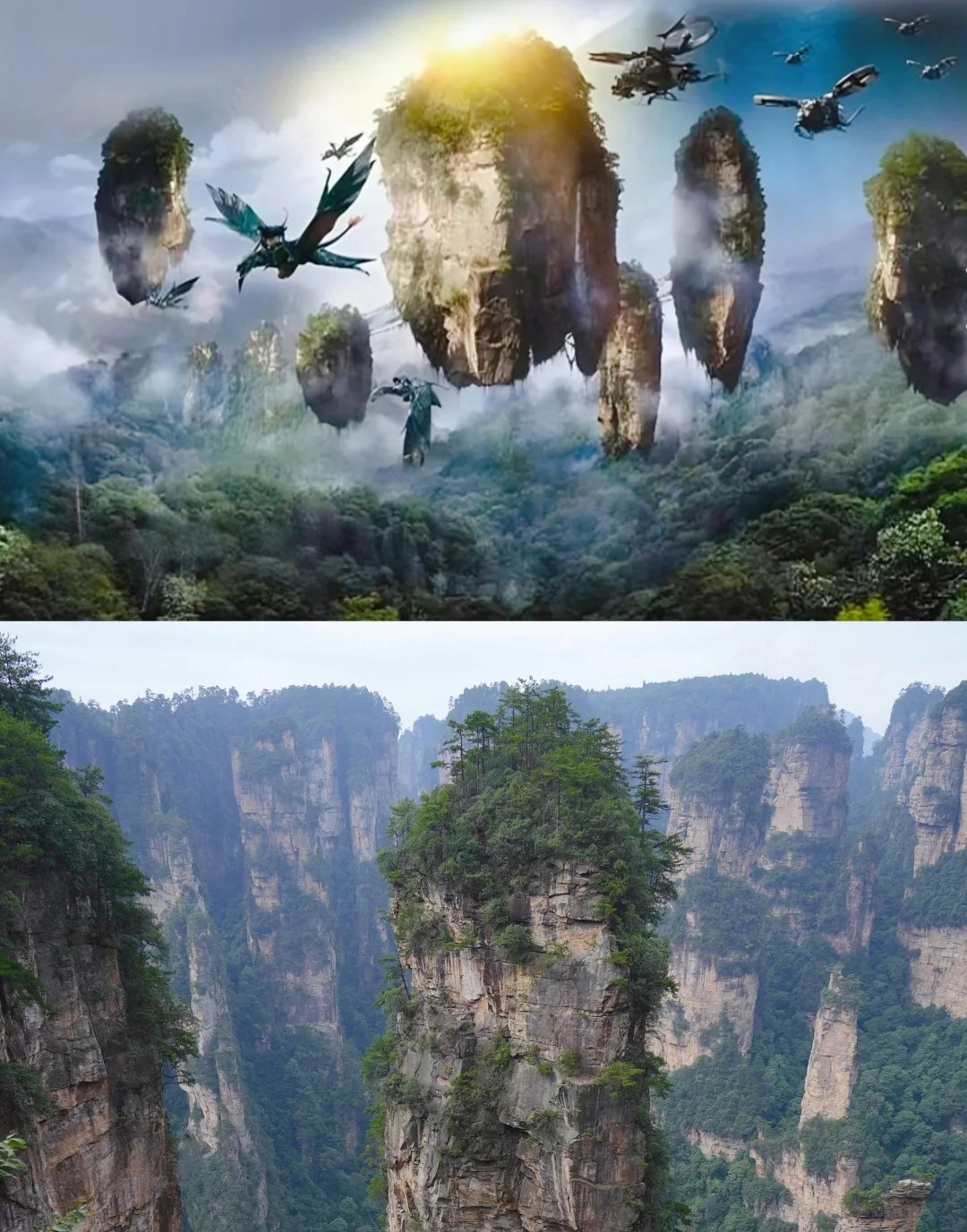
Our 2-day Zhangjiajie tour was beyond spectacular! As someone who’s visited Beijing and Shanghai for work, this trip revealed China’s wild, magical heart. Day 1 in Zhangjiajie National Forest Park felt like stepping onto Pandora—I’m a huge Avatar fan, and Yuanjiajie’s floating peaks left me breathless. The misty pillars and lush valleys like pure movie magic! Then came Fenghuang Ancient Town, we eat dinner beside the thundering waterfall. It seems Unreal! The night views of stilt houses glowing over the river were straight from a fairy tale. For fellow Avatar lovers and adventure seekers: Don’t miss this bucket-list experience! 10/10 would return. A Well-Traveled Film Buff, May 2025
Destination(s): Zhangjiajie
Date of Experience: May 08,2025
... ...

Ask a Question

Question Summary (100 characters)
Details (optional) (2,000 characters)
Name
Country
Email