Nature's Artistry—The Singing Sand Dunes and the Ever-Flowing Spring
The natural landscape of Mingsha Mountain (Singing Sand Mountain) and Crescent Spring stands as an eternal masterpiece, sculpted jointly by the forces of wind, sand, and water.
Mingsha Mountain—A Singing Golden Sea of Sand
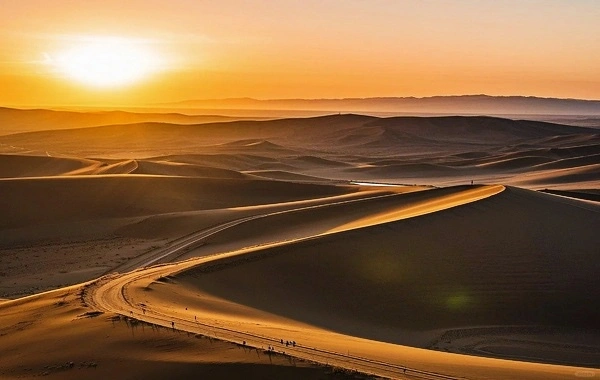
The "Singing Sand Dunes on a Clear Day": Mingsha Mountain was formed through the weathering and wind-driven transport of quartz sandstone. Its sand grains are crystal-clear and translucent, appearing in five distinct colors—red, yellow, green, white, and black—earning it the moniker "Five-Colored Sand." When visitors slide down the sandy slopes, the grains rub and collide against one another, emitting a resonant hum that resembles the ringing of camel bells or the rumble of thunder—this phenomenon is the origin of the legend of the "Singing Sand Dunes on a Clear Day." Scientists explain that tiny pores on the surface of the sand grains act as "resonating chambers"; the faint sounds generated by friction are amplified within these cavities, giving rise to this desert marvel.
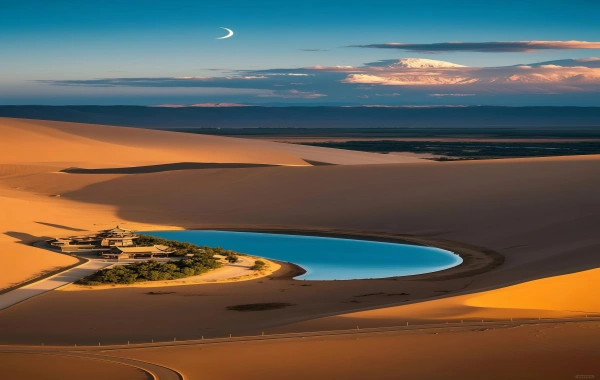
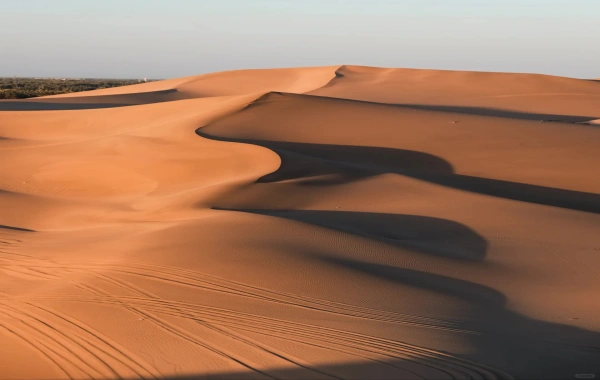
Restoration After the Night: Most miraculous of all is the nature of the dunes at Mingsha Mountain: "buffeted by wind all night, yet restored to their original state by dawn." No matter how many people climb or slide down the dunes during the day, a single night's wind restores them to their pristine condition, allowing them to maintain their timeless, unchanging forms throughout the ages. Winds typically blow from the southeast, causing sand to migrate along the dune crests toward the northwest; this directional flow prevents the sand from burying Crescent Spring—the natural secret behind the thousand-year "coexistence of sand and spring."
Dune Crests and Morphology: The crests of the Mingsha Mountain dunes are as sharp as knife blades. Standing atop a ridge and gazing into the distance, one sees the dunes stretching out like golden waves toward the horizon. Crescent dunes, pyramidal dunes, and conical dunes—each displaying a distinct form—combine to create a natural classroom for the study of geology.
Crescent Spring—The Fountain of Life in the Desert
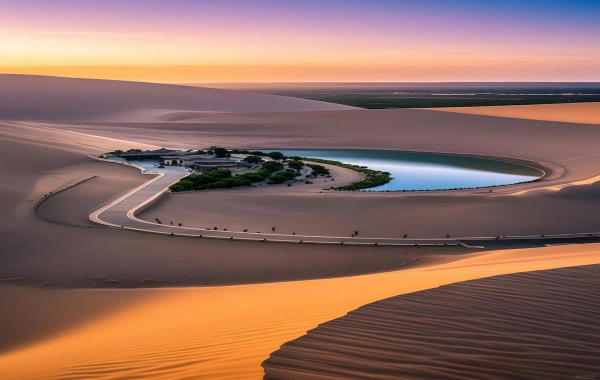
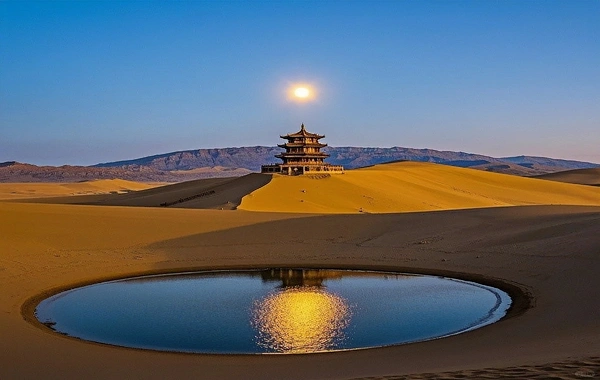
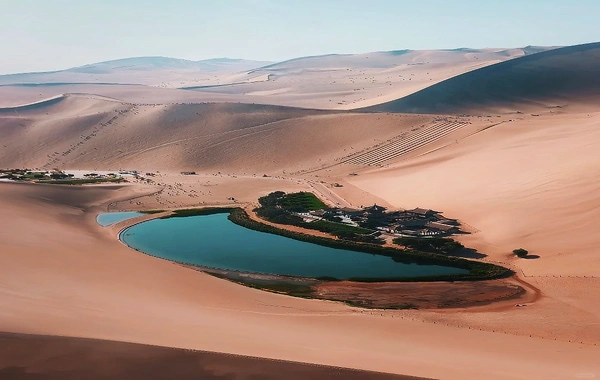
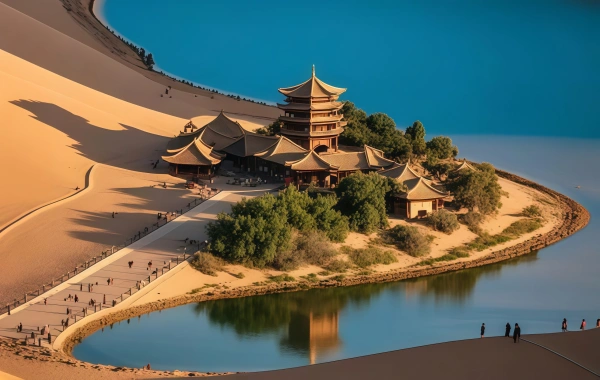
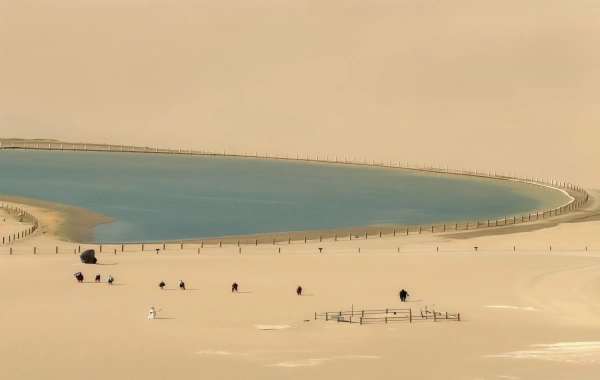
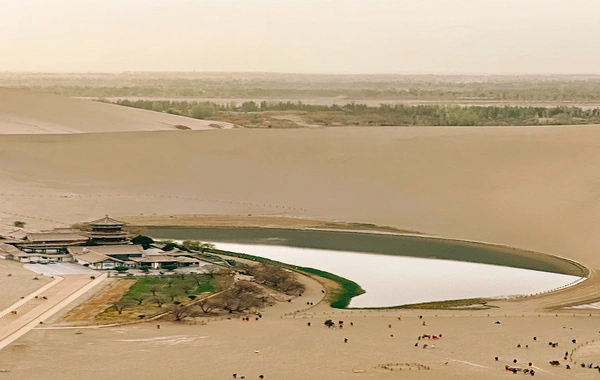
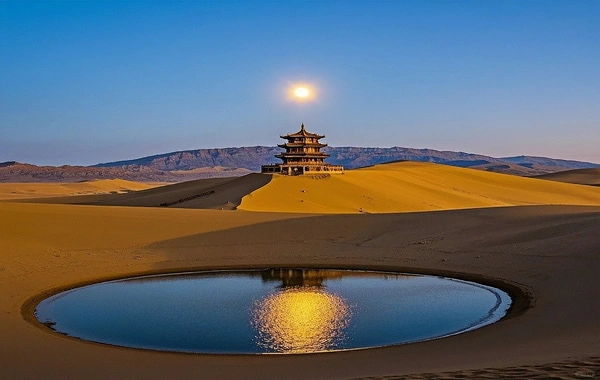
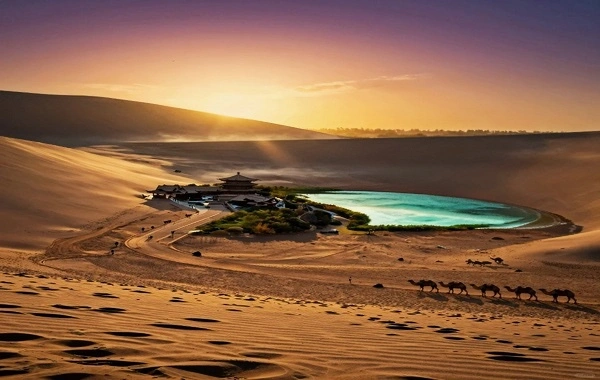
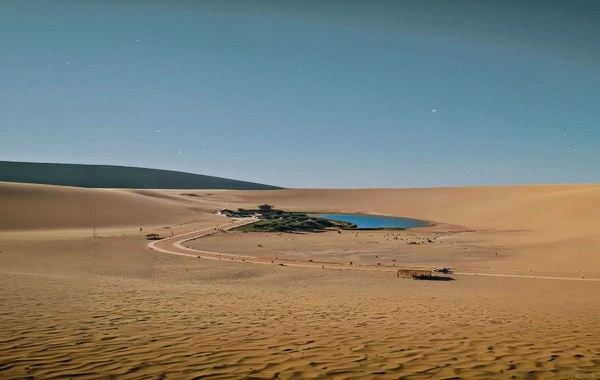
The Coexistence of Sand and Spring: Crescent Spring measures nearly 100 meters from east to west and approximately 25 meters from north to south, reaching a maximum depth of about 5 meters. Shaped like a slender crescent moon, it lies embedded within a vast golden sea of sand. The spring water is crystal clear—transparent to the very bottom—and gleams with the emerald hue of jade. Remarkably, even amidst fierce winds, the spring remains unburied by shifting sands; situated deep within the Gobi Desert, its waters remain perpetually clear and never run dry. This extraordinary phenomenon owes its existence to the convergence of three exacting conditions: a stable underground water source, a favorable orientation of the surrounding dunes, and a precise balance of wind forces.
The Mystery of Its Formation: Crescent Spring is situated within the ancient riverbed of the Dang River; its water source consists of groundwater formed by the infiltration of meltwater from the glaciers and snowfields of the Qilian Mountains. This regional groundwater flows via subterranean channels into the natural depression where the spring lies, eventually welling up to the surface to form this perennial oasis that has endured for millennia. Scientists have hailed it as the "Premier Spring of All Deserts"—a title that is by no means an exaggeration.
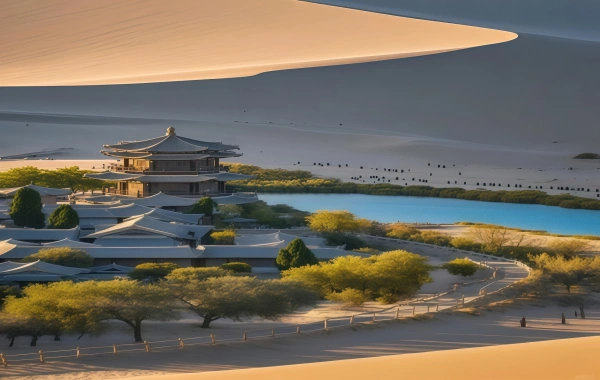
Vegetation by the Spring: The banks of the spring are lush with dense reeds, Euphrates poplars, and oleaster trees. Most renowned among them are the "Husband and Wife Willows"—planted in 1971, these trees have weathered countless sandstorms with tenacious resilience, becoming a cherished symbol of enduring love. On the southern bank, the reed beds sway gently in the breeze, while the waters mirror the towering sand dunes, creating a scene of poetic and picturesque beauty. A Desert Sanctuary—A "Breathing" Gobi Oasis
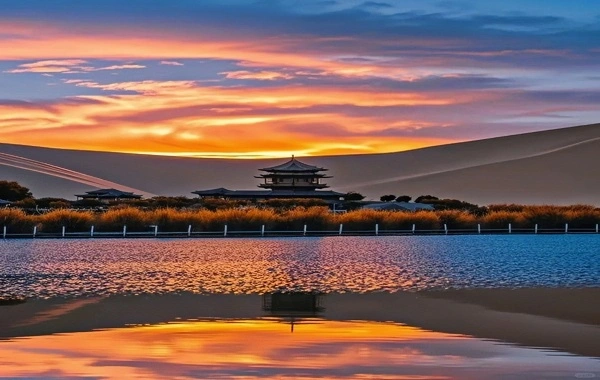
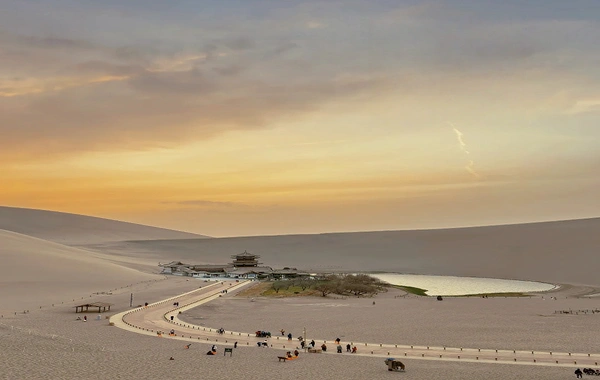
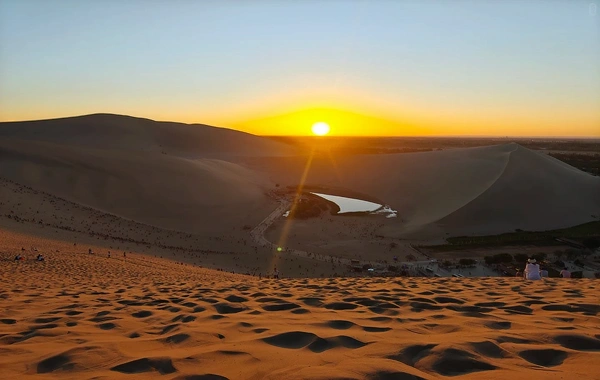
Desert Sunsets and Starry Skies: Mingsha Mountain (Singing Sand Mountain) is an exceptional location for watching the sunset. As the sun dips below the horizon, the sand dunes are painted in hues of orange-red, crimson, and gold—a shifting interplay of light and shadow resembling a flowing oil painting. After sunset, thanks to the minimal light pollution in Dunhuang, the Milky Way stretches across the firmament, visible to the naked eye—making it a paradise for astrophotography enthusiasts.
Five-Colored Sand Therapy: The "five-colored sand," heated by the sun's rays, is believed to possess remarkable therapeutic properties for alleviating lower back and leg pain, as well as rheumatic arthritis. The region has maintained a tradition of "sand therapy" since ancient times; a complimentary sand therapy zone is located on the eastern side of the scenic area, allowing visitors to experience this unique treatment firsthand.
Human Ingenuity—Cultural Footprints on the Ancient Silk Road
Yuequan Pavilion—An Ancient Structure Standing Watch for a Millennium
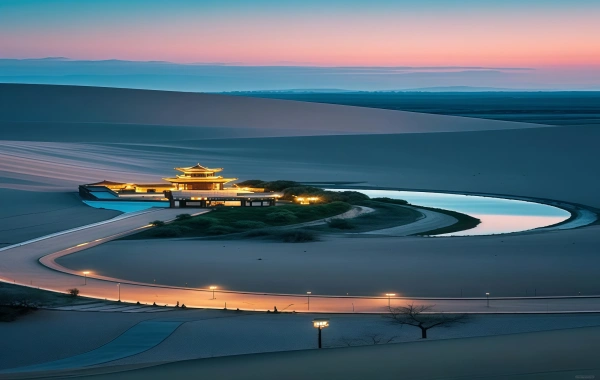
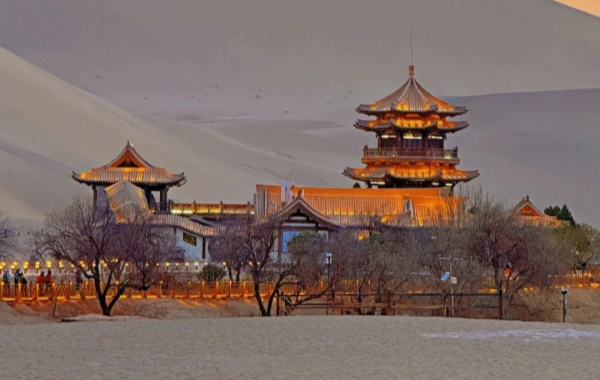
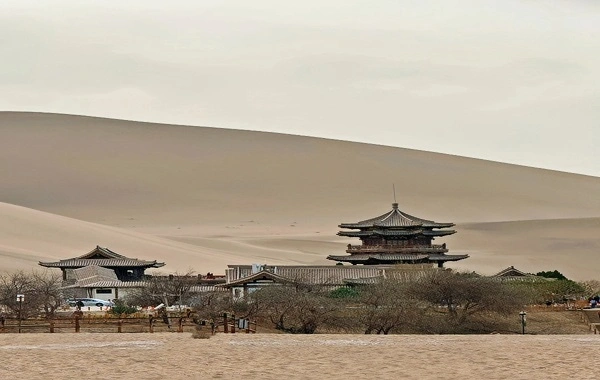
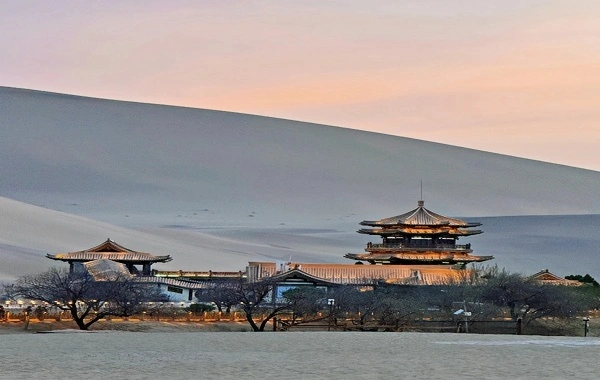
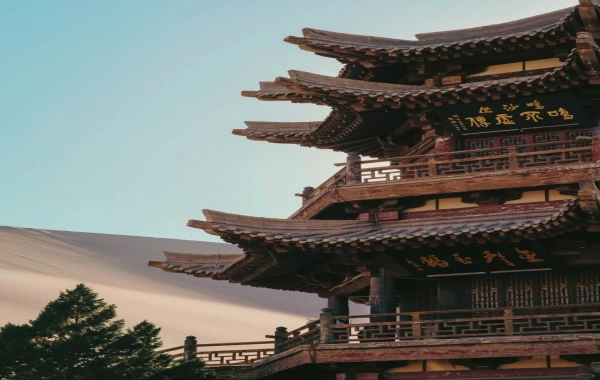
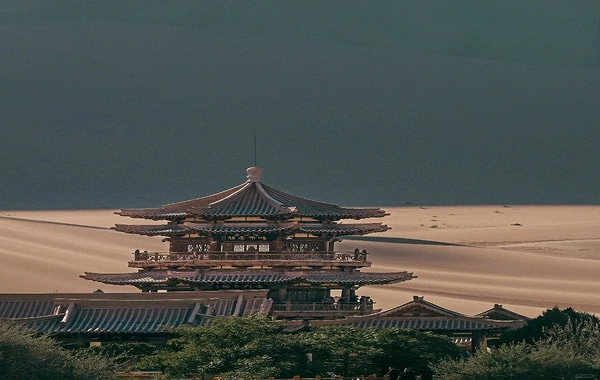
Situated beside the spring stands the quaint and historic Yuequan Pavilion. Originally constructed during the Han Dynasty, the current structure is a modern reconstruction comprising two levels. The upper level offers a panoramic view of Crescent Spring (Yueyaquan), while the lower level houses educational exhibits on the desert ecology of Dunhuang. The pavilion and its reflection shimmering in the spring waters create a captivating visual harmony, making it the quintessential vantage point for capturing panoramic photographs of Crescent Spring.
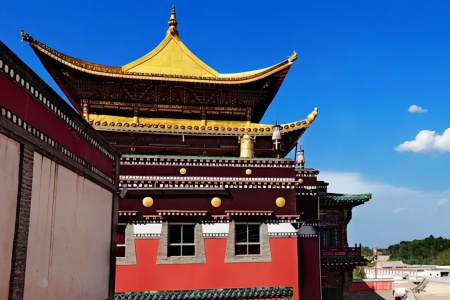
Originally, a complex of ancient structures stood along the southern bank of the spring. Stretching from east to west, this complex comprised over a hundred chambers—including the Hall of the Goddess (Niangniang Dian), the Dragon King's Palace, the Bodhisattva Hall, the Medicine King's Cave, and the Thunder God's Terrace. Each hall once housed over a hundred painted clay sculptures and featured hundreds of murals. Adorning the walls were inscribed plaques bearing titles such as "The Foremost Spring," "A World Apart," and "Reaching the Kunlun Peaks"—works of calligraphy so elegant and refined that they were considered masterpieces.
Ancient Willows and the "Couple Willows"
Zuo Zongtang's Willow: Growing beside the spring stands a venerable willow tree, said to be over a thousand years old. Legend has it that it was planted by Zuo Zongtang during the Qing Dynasty following his successful campaign to reclaim Xinjiang. With its sturdy trunk and lush foliage, it stands as a rare and vibrant patch of greenery amidst the desert landscape.
The "Couple Willows": Planted along the banks of the spring in 1971, these two willows have repeatedly suffered damage from desert sandstorms over the years. Yet, thanks to diligent care and maintenance, they have tenaciously survived. Standing side-by-side in a close embrace, the pair has become a cherished pilgrimage site for visiting couples.
Silk Road Caravans—The Timeless Sound of Camel Bells
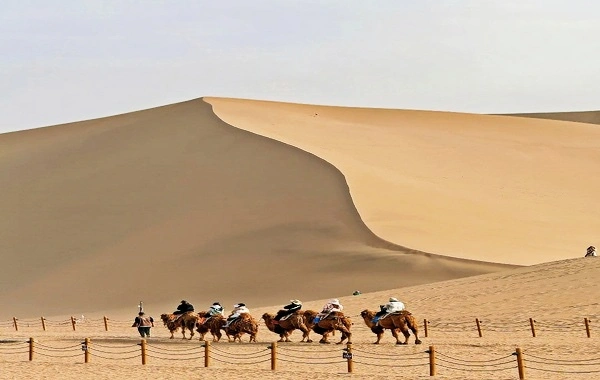
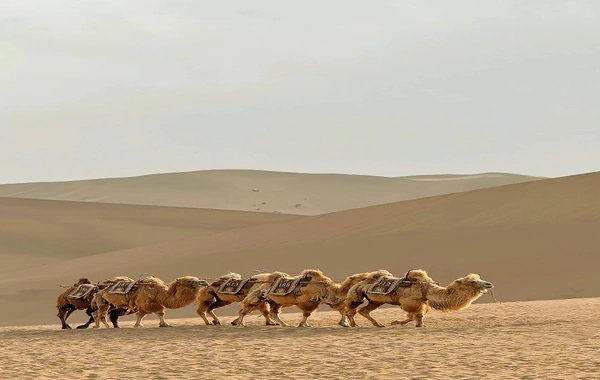
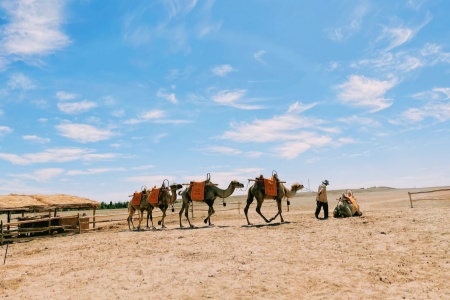
Riding a camel is the most classic and quintessential way to experience the magic of Mingsha Mountain. The camel caravans follow a fixed route, their bells chiming rhythmically—evoking the sensation of traveling back in time to the Silk Road era of the Han and Tang dynasties. The local camel handlers are mostly villagers whose families have lived by Crescent Spring for generations; they share a deep emotional bond with their camels and with this very desert landscape.
> Photography Tips:
The Wooden Walkway South of Yuequan Pavilion: The optimal vantage point for capturing a panoramic view of Crescent Spring, allowing you to frame the spring, the reeds, and the surrounding sand dunes all in a single shot.
The Top of Climbing Staircase No. 1: Offers a bird's-eye view of the entire Crescent Spring area; the interplay of light and shadow at sunrise and sunset is absolutely stunning.
The Summit of East Mountain: The perfect spot to capture silhouettes of the camel caravans, fully encapsulating the poetic imagery of "solitary smoke rising over the vast desert."
The Reed Beds by the Spring: Shoot from a low angle to create a visually rich, layered composition featuring the reeds, the spring waters, and the sand dunes.