Nature's Masterpiece—The Sapphire of the Snowy Plateau
The natural landscape of Mugecuo is a magnificent symphony composed of shimmering lake waters,majestic mountain vistas,seas of wildflowers,and soothing hot springs.
The Heart of the Sacred Lake:Mugecuo(Wild Man Lake)
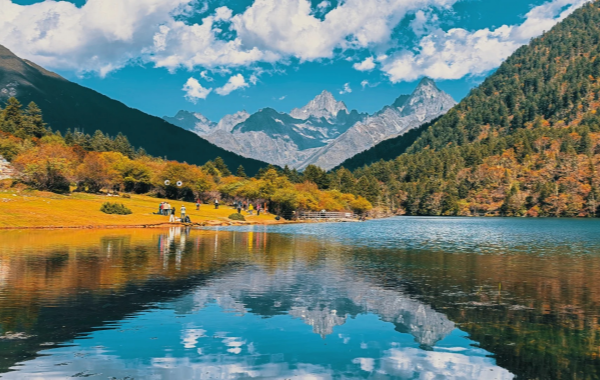
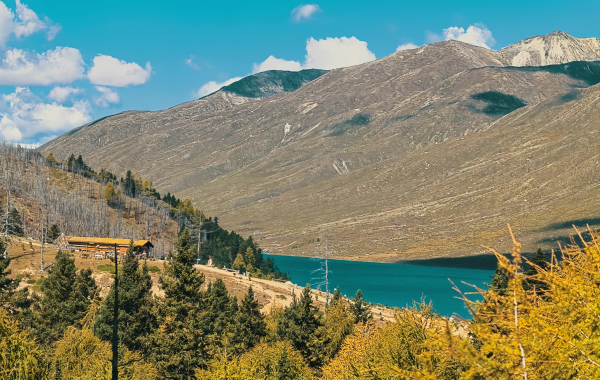
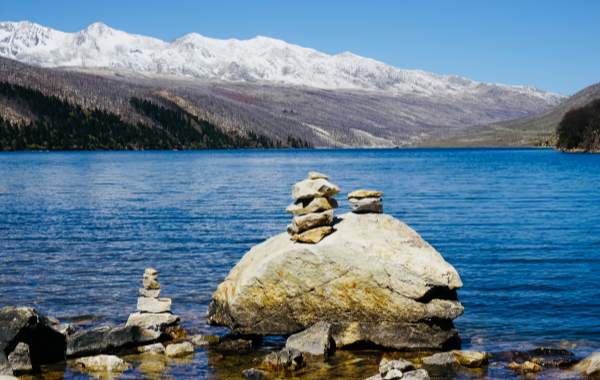
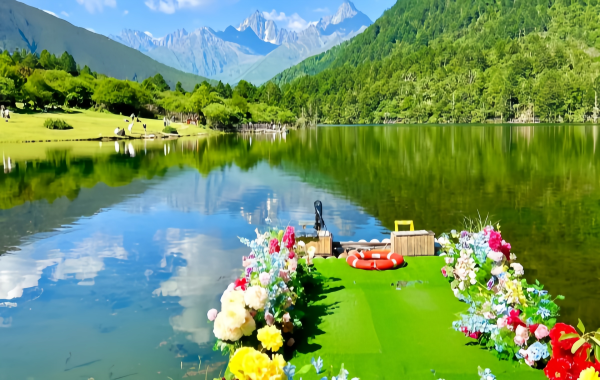
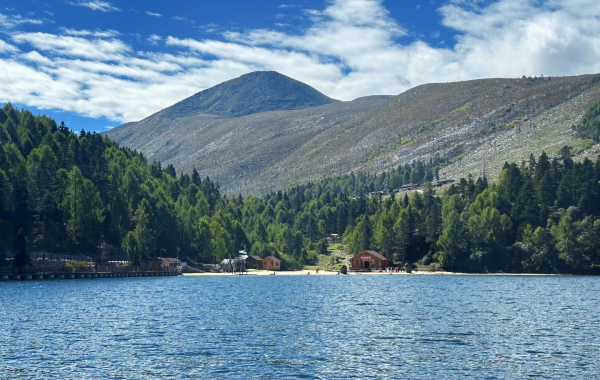
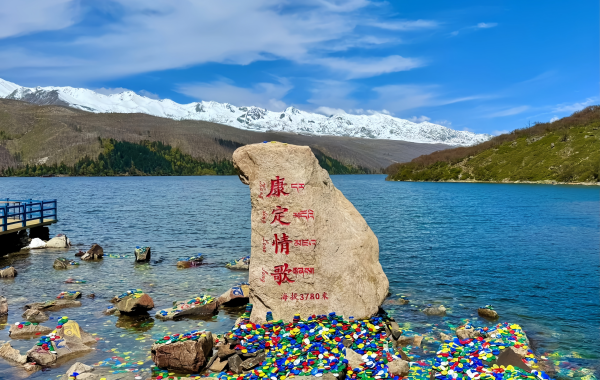
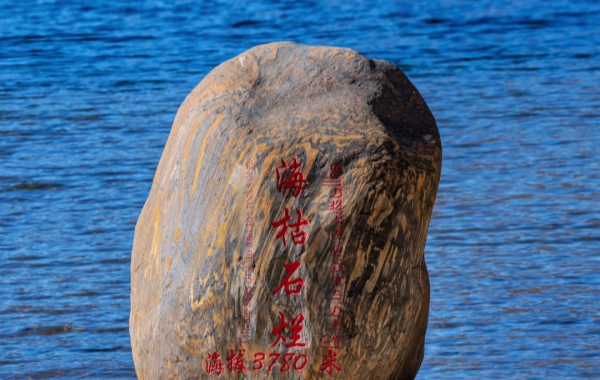
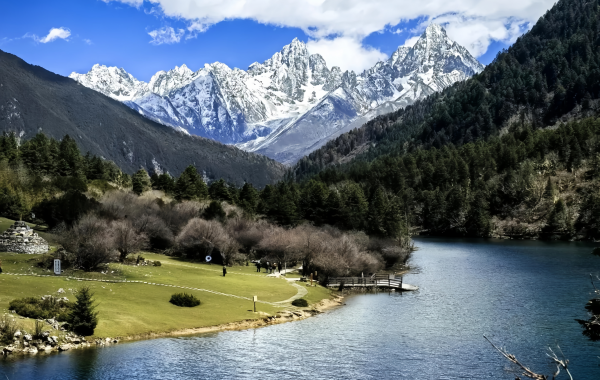
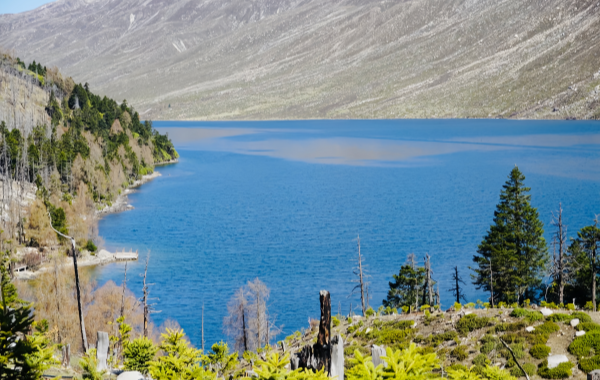
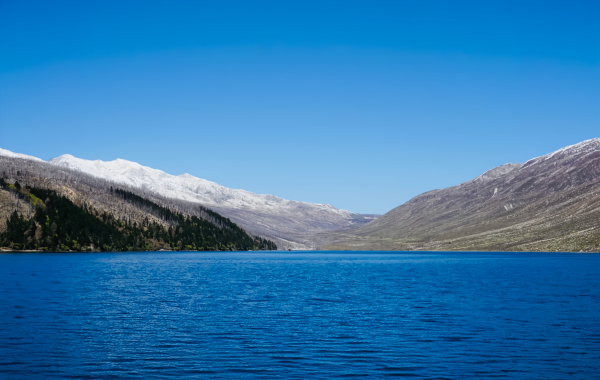
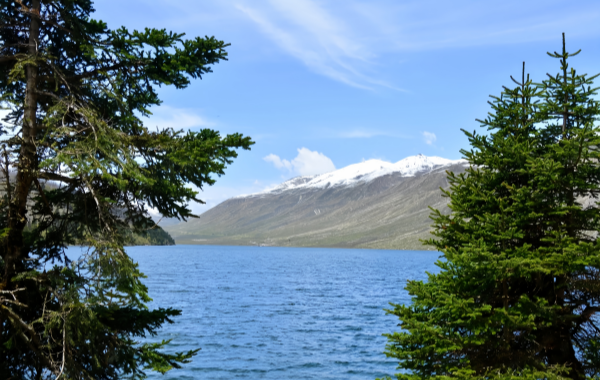
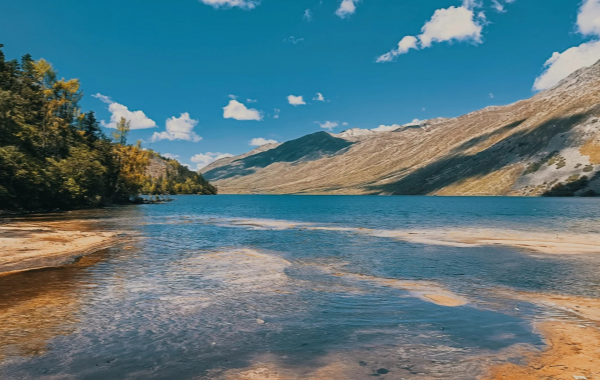
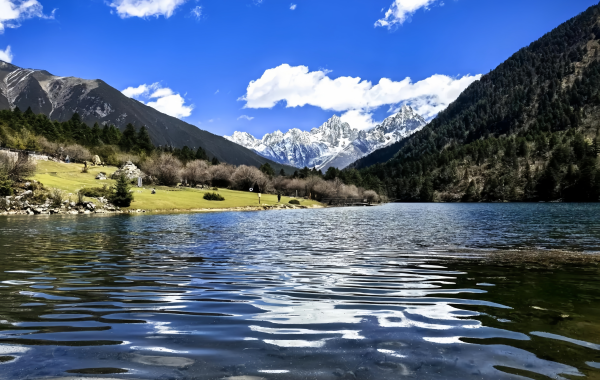
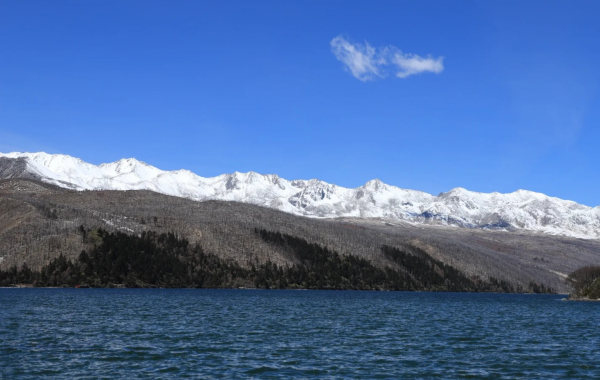
As the core and soul of the scenic area,the sacred lake of Mugecuo sits at an elevation of 3,780 meters,making it the largest alpine lake in northwestern Sichuan.Its waters are primarily fed by the melting snow and runoff from the Nüwa Snow Mountain;consequently,the water is exceptionally crystal-clear,boasting a visibility depth of 6 to 10 meters.Within a single day,the lake's surface undergoes a myriad of transformations:at dawn,it lies vast and unblemished—still as a mirror—reflecting the snow-capped peaks and surrounding mountains;by afternoon,rolling waves surge across the water,their thunderous roar reverberating through the valley;and as the sun dips toward the horizon in the evening,the lake glows with a brilliant golden light—a magnificent and dazzling spectacle.To the left of the lakeshore lies a stretch of golden beach;composed of fine,soft sand that naturally gleams with a golden hue,it is affectionately known as"Lovers'Beach"—a rarity in the high-altitude regions of Western Sichuan.Photography Tip:The lighting is best at dawn or dusk,offering the perfect opportunity to capture reflections of the snow-capped mountains.Couples can use the golden beach as a foreground and the snow-capped peaks as a backdrop to create stunning,cinematic shots symbolizing"eternal love."
Waters of Vitality:The Seven-Color Lake and the Medicinal Boiling Springs
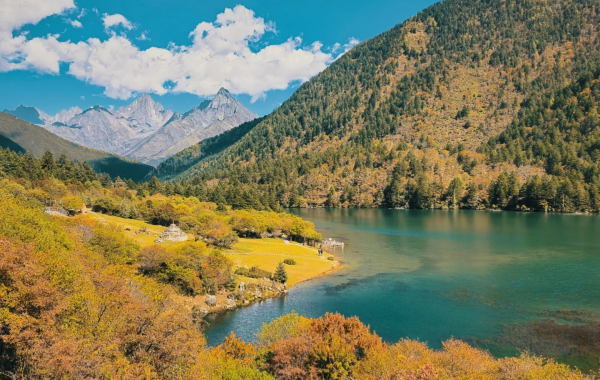
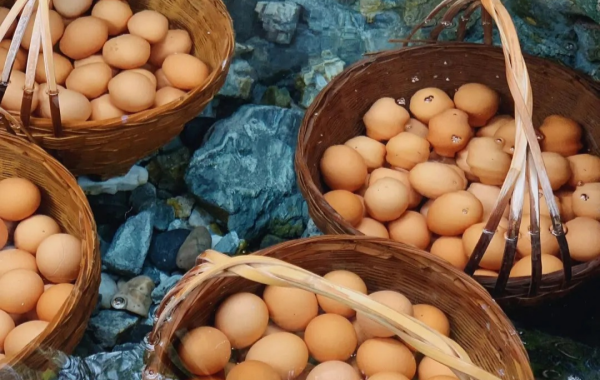
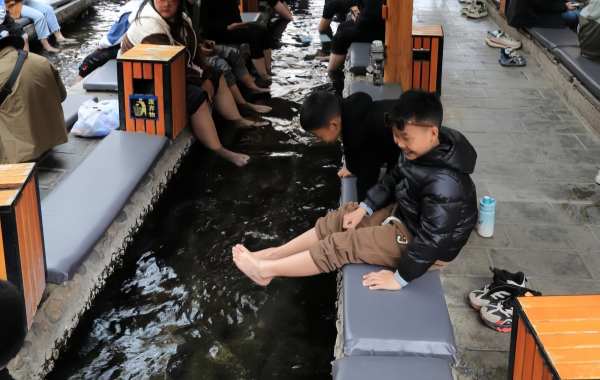
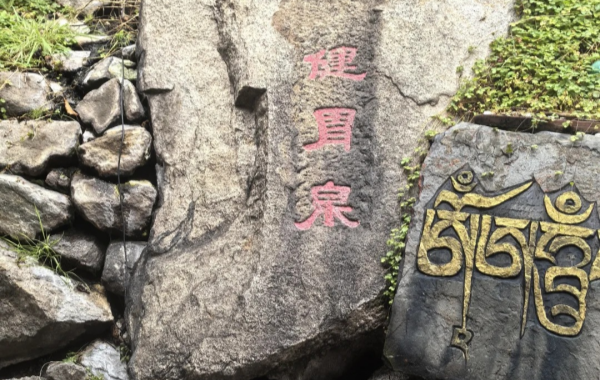
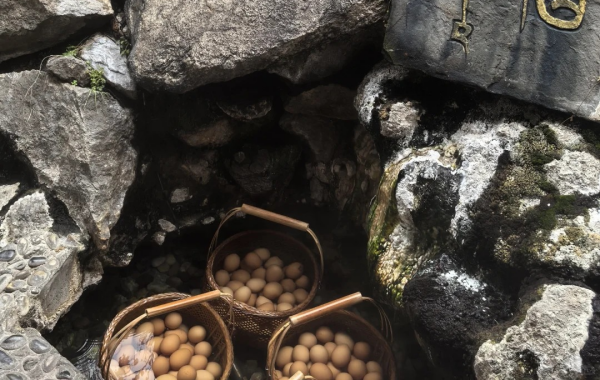
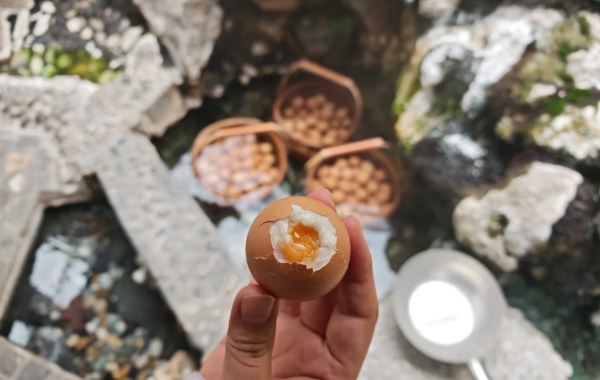
Situated at an elevation of 3,200 meters,the Seven-Color Lake(Qise Hai)is a unique symbiotic lake where cold springs and hot springs intermingle.Crescent-shaped and encircled by forests and meadows,the lake features crystal-clear,azure waters that shimmer with a kaleidoscope of colors—shifting and transforming in response to changes in sunlight and weather—hence its name,the"Seven-Color Lake."Depending on the season,visitors can admire classic scenic vistas such as"Mist-Veiled Lotuses"and"Reflected Camel Humps."The Medicinal Boiling Springs(Yaochi Feiquan)constitute a natural geothermal marvel located just 3 kilometers from the Seven-Color Lake at an elevation of 3,500 meters.The site features over 20 high-temperature vents,with water temperatures reaching as high as 95°C;the heat source originates from a thermal reservoir situated deep within the Earth's crust,where temperatures exceed 200°C.The spring water is rich in various trace elements beneficial to human health,and the different vents are reputed to offer unique therapeutic effects for ailments ranging from eye conditions and gastric disorders to rheumatism.Most astonishing of all is the opportunity to cook"Tofu-Style Eggs"directly in the 90°C spring water within the boiling springs area—the yolks solidify,yet the egg whites remain incredibly tender and silky-smooth,much like soft tofu—a truly unique culinary delight.
The Valley of Blossoms:The Poetic and Picturesque Corridor of Azalea Gorge
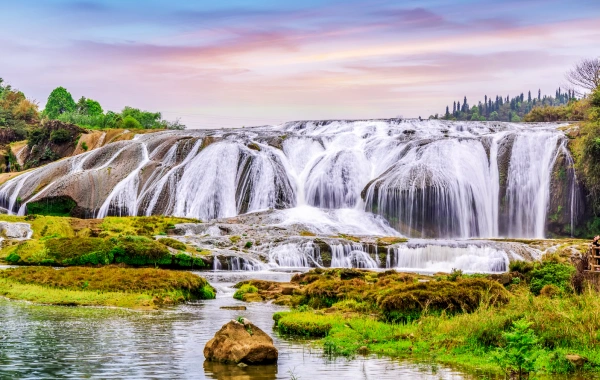
Azalea Gorge(Dujuan Xia)serves as the scenic area's"Poetic and Picturesque Corridor."Spanning approximately 6 kilometers in length,it connects the Seven-Color Lake to the east with Mugecuo Lake to the west,seamlessly linking together a diverse array of natural wonders:hot springs,lakes,primeval forests,lush meadows,and cascading waterfalls.This site is home to 68 varieties of alpine rhododendrons,which bloom in succession from late April through July.Their branches—laden with blossoms of pink-purple,pale yellow,and snowy white—cascade like waterfalls,weaving a dreamlike tableau in harmony with the rushing streams and cascading waters of the gorge.Among these varieties,the Rhododendron kangdingense holds a particularly esteemed status;in 1976,specimens were transplanted to the Chairman Mao Memorial Hall in Beijing to serve as ornamental flora—a testament to their rarity and preciousness.Within the canyon,the streams alternate between rushing torrents and cascading waterfalls that scatter droplets like flying pearls and jade;hiking along the wooden boardwalks here feels akin to strolling through a living Landscape Painting.
The Green Sanctuaries:Fangcaoping and the Red Sea Grassland
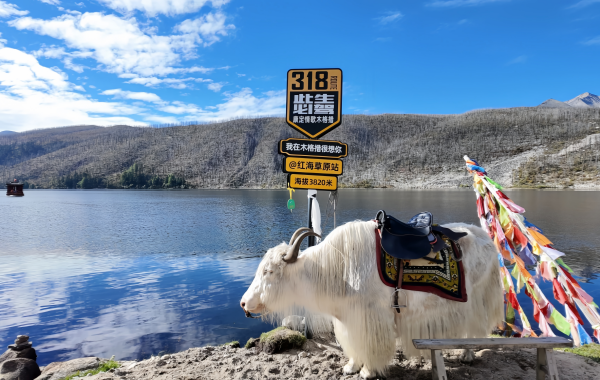
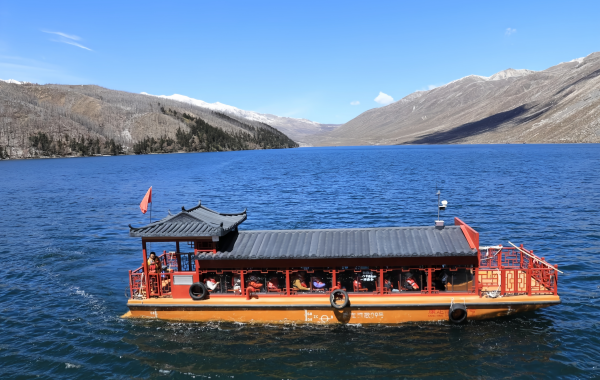
Fangcaoping(Fragrant Grass Meadow)covers an area ofapproximately 500 square meters—a lush green carpet spread amidst the mountains and dense forests.Herds of yaks graze peacefully here,while the love songs hummed by herdsmen drift away on the breeze,perfectly capturing the rustic spirit of the"mountains where the horses run free"immortalized in local folklore.The Red Sea Grassland,conversely,requires a boat ride to reach.Here,meadows,seas of Gesang flowers,and the reflections of snow-capped peaks converge within a single frame,making it an exceptional location for capturing stunning photographs of the high-altitude landscape.
Cultural Craftsmanship:The Spiritual Codes of the"Hometown of Love Songs"
Mugecuo is not merely a masterpiece of nature;it serves as a vibrant living vessel for Tibetan culture and spiritual beliefs.
A Sanctuary of Faith:Lakeside Buddha-light and Prayer Flags
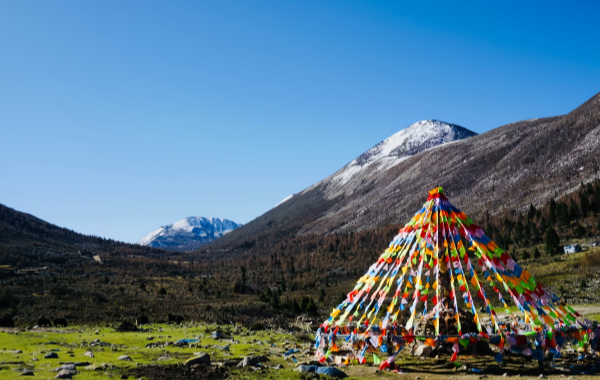
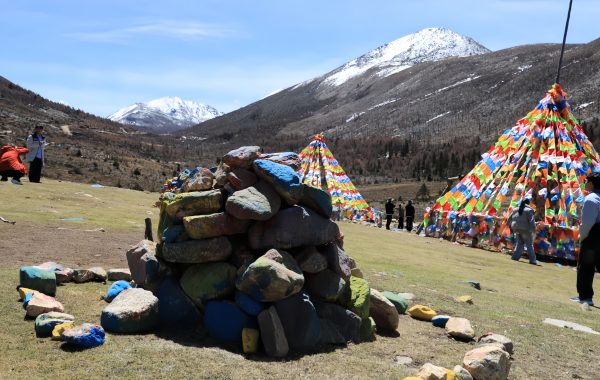
Perched on the slopes overlooking Mugecuo Lake stand four painted Buddhist statues:Green Tara(an incarnation of Princess Bhrikuti,the Nepalese consort of King Songtsen Gampo);Padmasambhava(Guru Rinpoche),the founder of the Nyingma school of Tibetan Buddhism;Achala(the Immovable One),the embodiment of rationality;and Four-Armed Avalokiteśvara(Guanyin),the guardian deity of the snowy plateau.At the lake's outlet lies the"Pool of Purification"(Jingxin Chi);here,four colorful thangkas and traditional Tibetan paintings adorn the steep rock face,creating a sacred"Grotto-Sanctuary of the Buddha."This site symbolizes the belief that all worldly troubles and afflictions will be swept away and carried far off by the rushing waters.Within the"Mingkong Prayer Wheel Corridor,"each prayer wheel houses hundreds of sutra scrolls;driven by the flow of the stream,these wheels rotate ceaselessly—day and night—offering prayers for the good fortune and safety of every passing visitor.
The Soul of Song:The Culture of the Kangding Love Song
Mugecuo is the birthplace of the renowned Kangding Love Song.This short folk song—adapted from the"Liuliu Tune"of Kangding—has allowed the world to remember the romance and deep sentiment of a small highland town.Today,the scenic area features a"Love Song Grand Stage"showcasing traditional Tibetan song and dance performances,as well as interactive attractions such as a museum dedicated to Intangible Cultural Heritage.These offerings allow visitors to immerse themselves amidst the natural scenery and experience the profound cultural depth of the region's love song traditions.
Photography Tips:
Holy Lake Panorama:The best vantage point for a panoramic view of the Holy Lake is the Yerenhai(Wild Man Sea)Observation Deck;visit in the early morning to capture reflections of the snow-capped mountains and the soft glow of dawn.
Seven-Color Sea:Ideal for early morning visits when a thin mist hangs in the air,allowing you to capture the magical spectacle of"lotus-like mist formations."
Yaochi Boiling Springs:A great spot to capture scenes of visitors soaking their feet amidst the swirling steam of the hot springs,as well as the unique local delicacy—eggs and douhua(silken tofu)cooked right in the boiling water.
Red Sea Grassland:Accessible by boat,this area offers stunning photo opportunities where the meadow,Gesang flowers,the lake,and Mount Gongga all appear together in a single frame.
Drone Photography:Drones are permitted in the area,allowing you to capture epic aerial perspectives of the Holy Lake and the surrounding mountain ranges.