

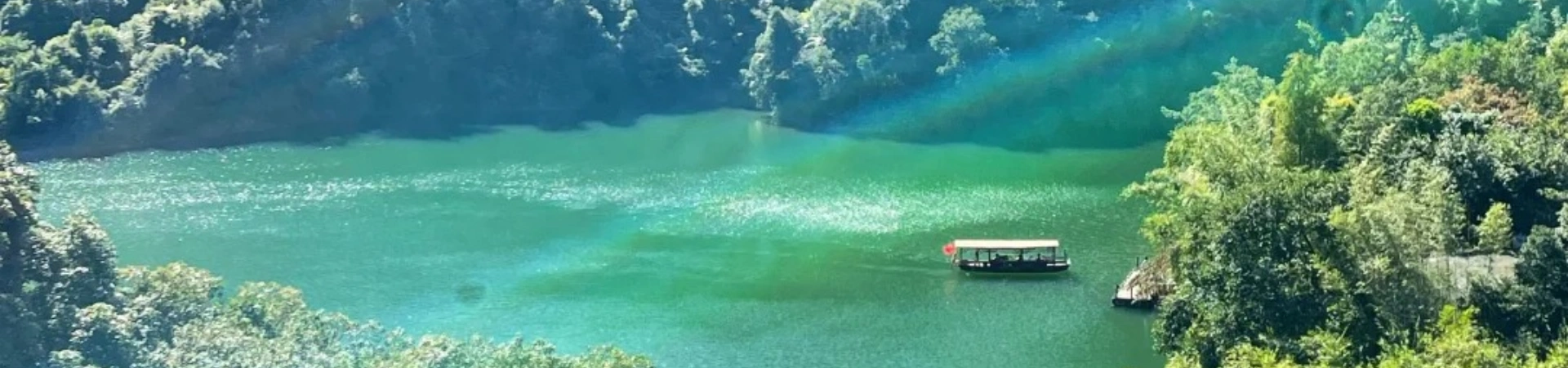
Dinghu Mountain Scenic Area
Historical Overview
The reserve was proposed by scientists in 1956 to protect its unique ecosystem, marking China’s first modern conservation effort. In 1979, it joined UNESCO’s Biosphere Reserve program. Human history dates to the Ming Dynasty (1573–1620), with temples like Qiyun Temple founded during this period. The area later became a hub for ecological research, hosting carbon sink studies and biodiversity monitoring.
Structural Layout
The area is divided into three zones:
- Core Conservation Zone: Primordial forests with 300-year-old trees, restricted to scientific research.
- Eco-Tourism Zone: Public access areas including Qiyun Temple, Flying Waterfall, and Butterfly Valley.
- Cultural Heritage Zone: Ming-Qing era sites like Baoding Park (Nine-Dragon Cauldron) and ancient pavilions.
Key structures include the Flying Waterfall (40m cascade with Sun Yat-sen’s swimming site) and Celestial Lake (a crater-like basin formed 200 million years ago).
Major Attractions
- Qiyun Temple: One of the "Four Great Temples of Lingnan," founded in the Ming Dynasty, housing Buddhist relics and offering vegetarian cuisine.
- Flying Waterfall: A 40-meter cascade where Sun Yat-sen swam in 1912; cliffside inscribed with Soong Ching-ling’s calligraphy.
- Butterfly Valley: A rainforest accessible by boat, home to over 300 butterfly species and ancient ferns.
- Baoding Park: Features a 16-ton bronze cauldron (China’s largest) and ritual platforms for traditional ceremonies.
- White Pheasant Valley: Observation decks for spotting rare birds and tropical plants.
Suggested Itineraries
- Classic Route (2–3 hours):
Entrance → Qiyun Temple → Flying Waterfall → Baoding Park → Exit
Highlights: Ming Dynasty architecture, waterfall views, and bronze cauldron. - Eco-Adventure Route (4–5 hours):
Add Butterfly Valley boat tour, White Pheasant Valley hike, and Celestial Lake exploration. - Cultural & Deep Ecology Route (Full Day):
Include Qiyun Temple morning chanting, ancient forest trek, and night safari (spotting fireflies and nocturnal animals).
Ticket Purchase
- Adult Tickets: ¥70 (peak season April–October), ¥50 (off-season).
- Discounts: 50% off for students/seniors; free for children under 1.2m.
- Purchase: Official website (https://www.dinghushan.net/) or WeChat mini-program.
Transportation
- By Car: From Guangzhou: 1.5-hour drive via G55 Expressway.
- By High-Speed Rail: Guangzhou South Station → Zhaoqing East Station (30 mins), then taxi (20 mins to entrance).
- By Bus: Zhaoqing City Bus #21 or tourist shuttle to Dinghu Mountain Entrance.
Best Time & Tips
- Ideal Seasons: spring (April–May) for blooms, autumn (October–November) for clear skies and firefly season.
- Essentials:
- Wear sturdy shoes for forest trails and waterfall steps.
- Bring insect repellent and a raincoat (mountain weather is unpredictable).
- Photography allowed except in restricted zones.
- Prohibited Items: Drones, loudspeakers, and littering.
- Cultural Note: Respect temple rituals—remove hats and speak softly indoors.


Contact Us
What Our Clients Say?




Ask us before you decide.
Unsure about a route, departure date or room option? Tell us what is holding up your plans. You will get a clear answer from our China-based travel team—no booking required.