Natural Fortifications: A Heaven-Sent Stronghold in Karst Landscapes
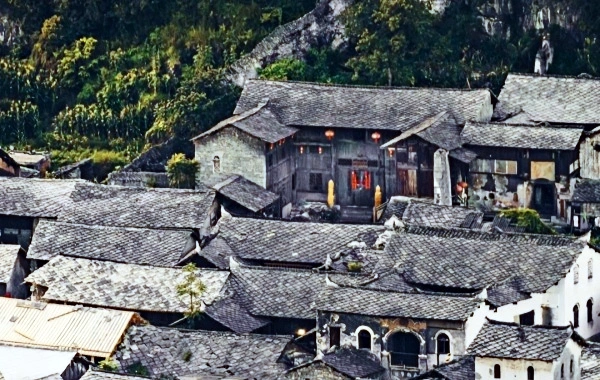
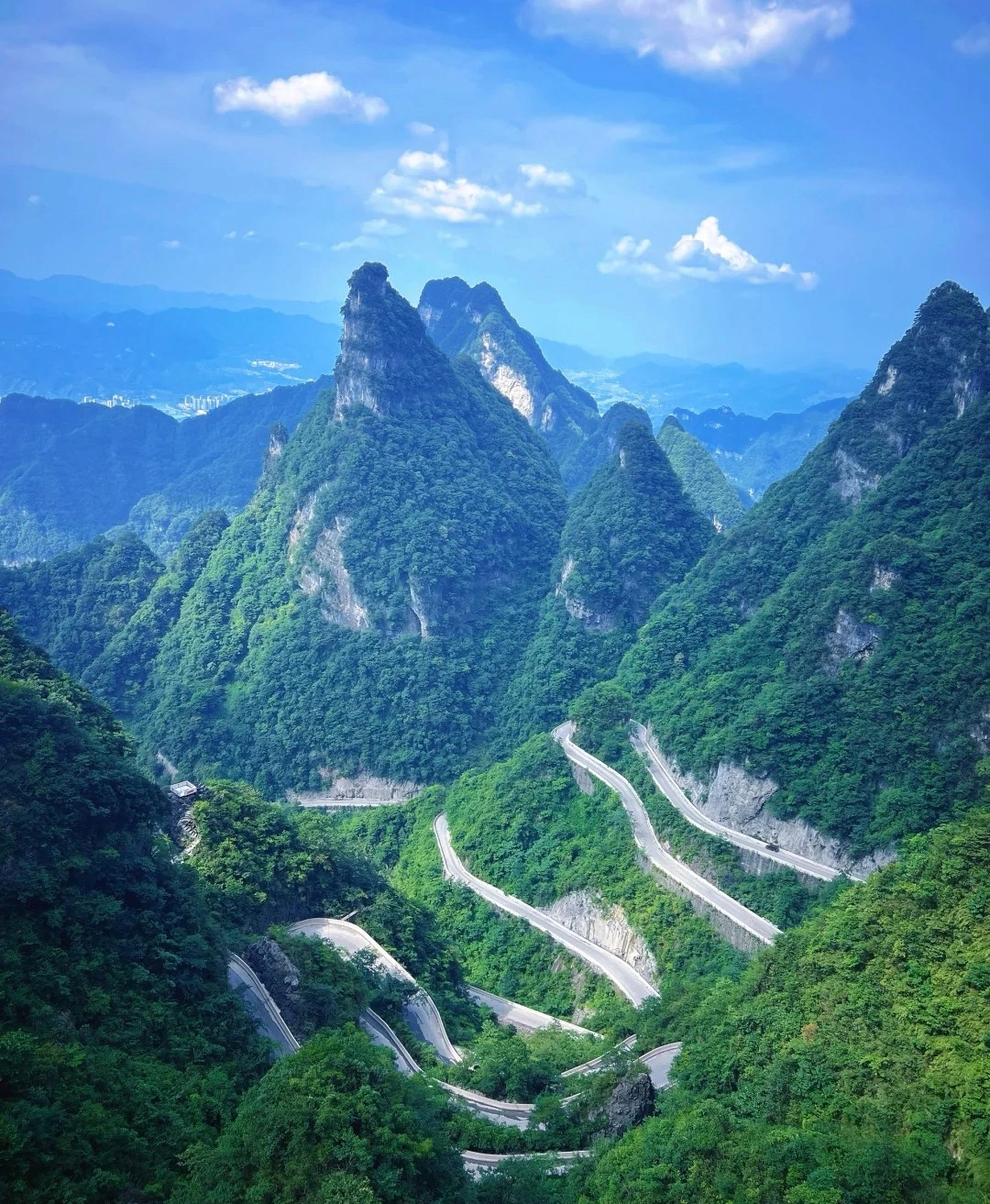
The location and layout of Tianlong Tunpu perfectly demonstrate ancient military wisdom, merging with the natural environment.
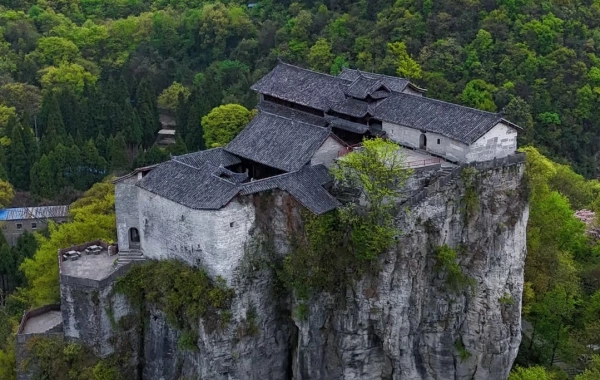
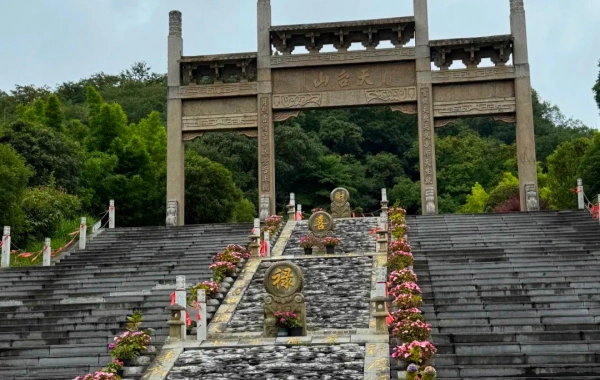
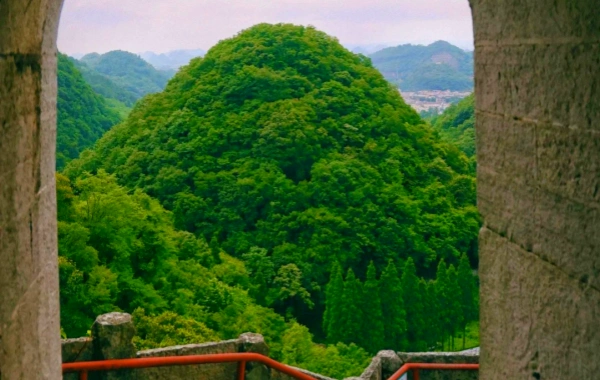
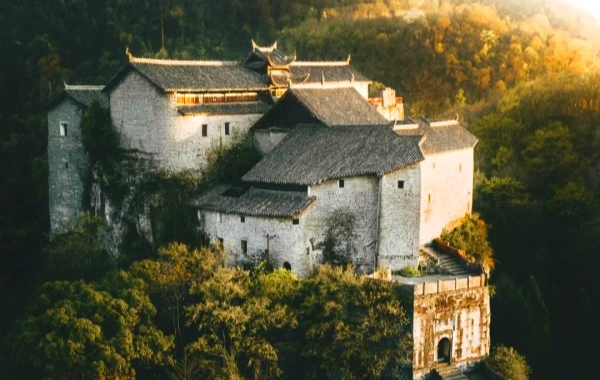
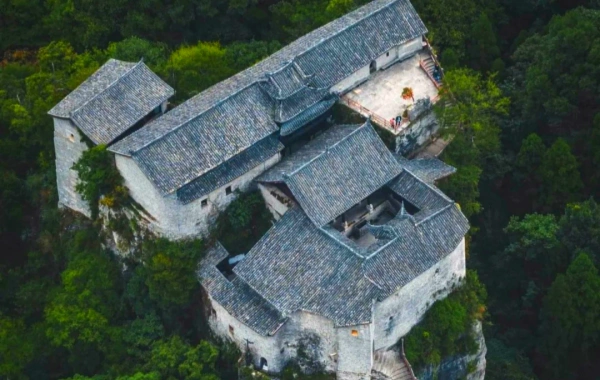
Tiantai Mountain: This solitary peak, known as the “First Mountain in Southern Guizhou,” rises abruptly from flat land with three sheer cliffs, making it easily defensible. The Wulong Temple on its summit, built during the Wanli era of the Ming Dynasty, is a masterpiece combining military defense with religious architecture. The temple’s outer walls blend seamlessly with the rock face, featuring narrow “cat windows” (for observation and defense), while the interior has intricately carved wooden beams—a “paragon of stone construction.” The summit offers a panoramic view of the Tunpu village and surrounding farmland.
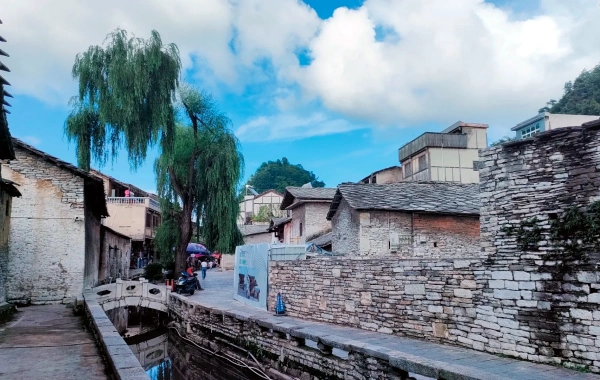
Embraced by Two Rivers: The Heizhai River and Houjie River flow through the village, providing not only water for life but also forming a natural moat, which was the geographical foundation for the Tunpu’s self-sufficiency and long-term resilience.
Human Craftsmanship: A Defensive Epic in Stone and a Vivid Living Tapestry
Every stone, every garment, every melody here is a relic of Ming Dynasty elegance from 600 years ago.
Stone Architecture – The Art of Defensive Living
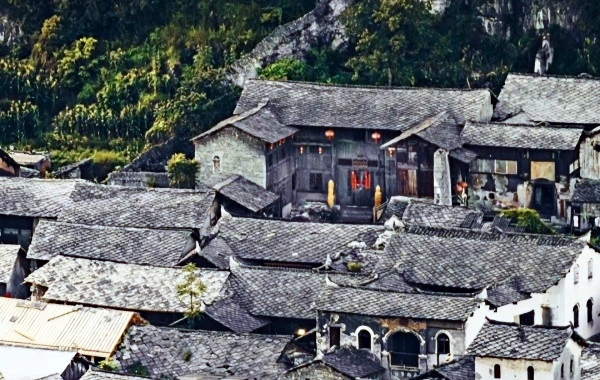
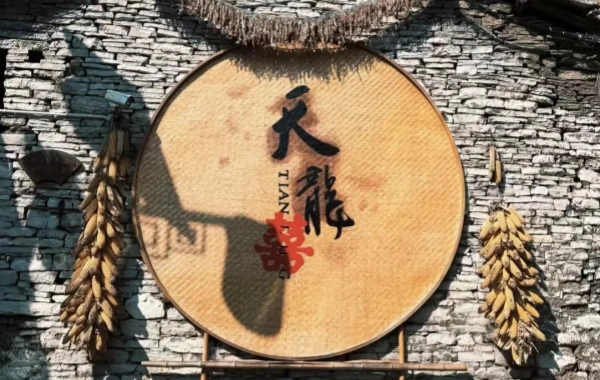
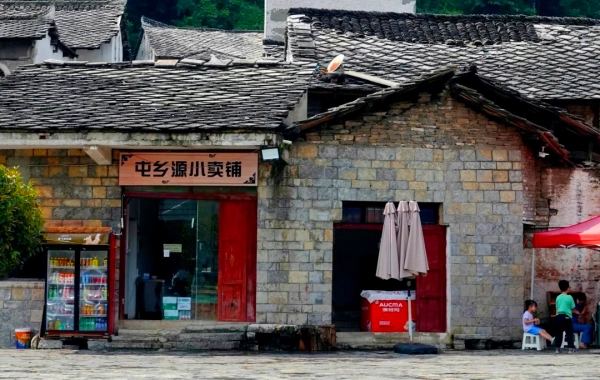
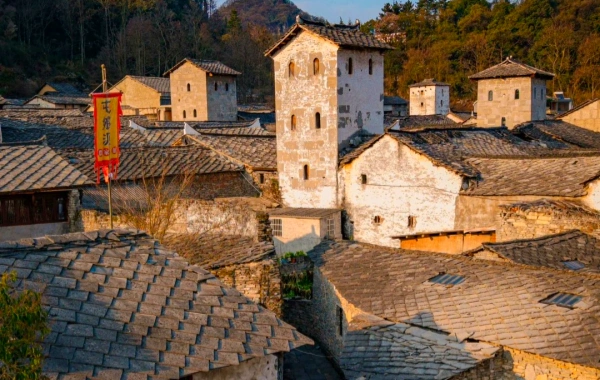
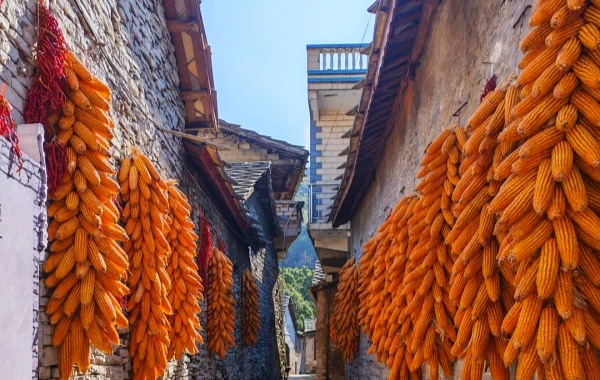
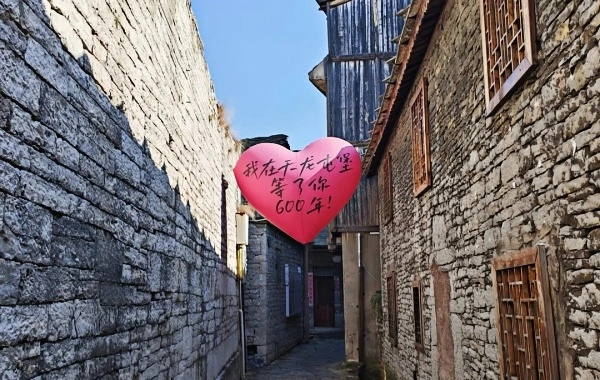
Entering the Tunpu is stepping into a world of stone, aptly described by a local rhyme: “Stone tiles cover stone houses, stone slabs pave stone streets, stone walls enclose stone yards, stone mills grind with stone rollers, stone mortars and stone vats abound.”
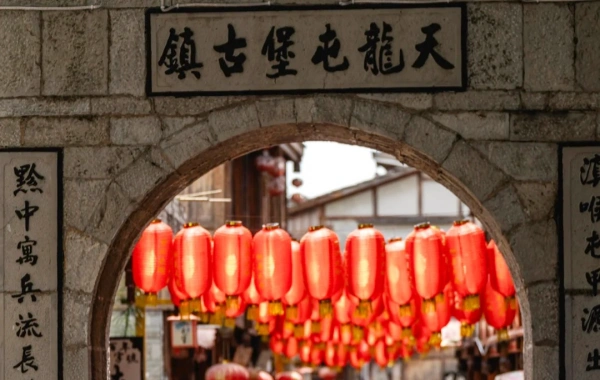
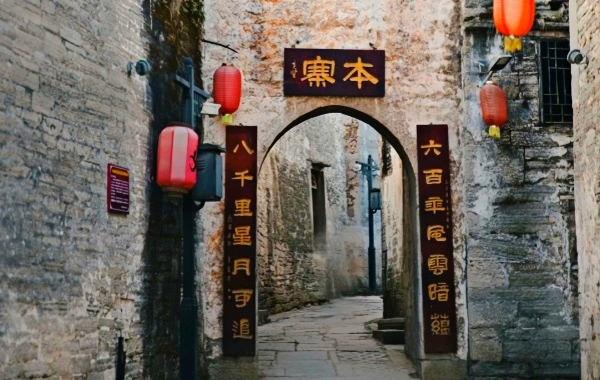
Military Layout: The entire old town is laid out like a maze with “nine main streets and eighteen alleys.” The alleys are narrow and winding, with archways at either end that could be sealed shut in an emergency. Walls are dotted with outward-narrow, inward-wide “cat windows” (firing ports). An invading force would be trapped and ambushed.
Residential Features: Each household was an independent defensive unit. Stone gateways are low, requiring one to stoop to enter. Walls are thick (up to 60 cm). Buildings within a compound could be connected via back doors. In the era of cold weapons, this was an impregnable fortress.
Fengyang Han Attire – A Ming Dynasty History Book Worn on the Body
Tunpu women are the most faithful guardians of this culture. Their “Fengyang Han clothing” is a living specimen of early Ming Jianghuai Han attire.
Unique Style: Indigo or blue long gowns with large overlapping fronts, cuffs, and collars embroidered with piping. Their hairstyle and adornments are vividly summarized: “A net on the head, dangling earrings on the ears, a silk sash around the waist, and upturned tips on the shoes.” Legend says those upturned shoe tips could conceal small weapons for self-defense.
Cultural Code: Young married women wear white headscarves, a “living mourning” for husbands often away on campaign, praying for a long union together. Elderly women wear dark blue scarves. This attire has been worn for over six centuries.
Tunpu Dixi Opera – A Soul-Stirring Dramatic Living Fossil
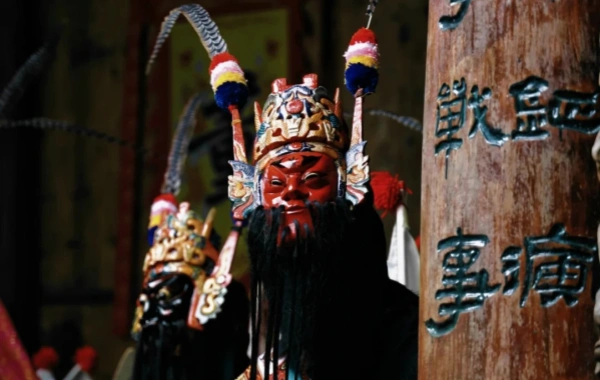
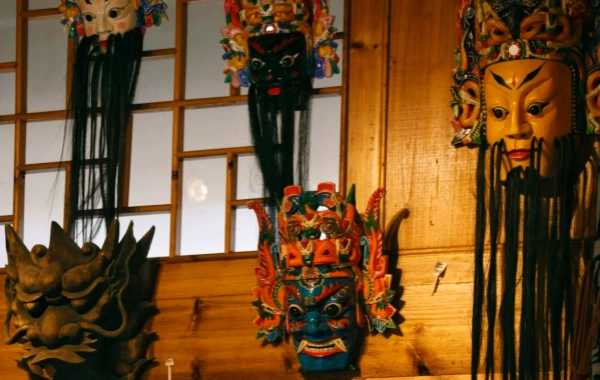
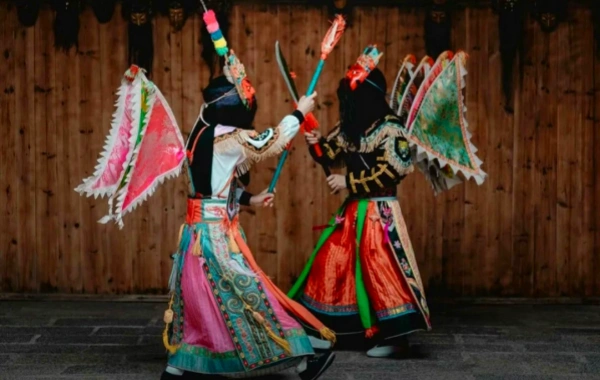
Dixi opera, originally called “Jun Nuo” (Military Exorcism), is the most dazzling gem of Tunpu culture, acclaimed as the “living fossil of Chinese drama” and listed as a National Intangible Cultural Heritage.
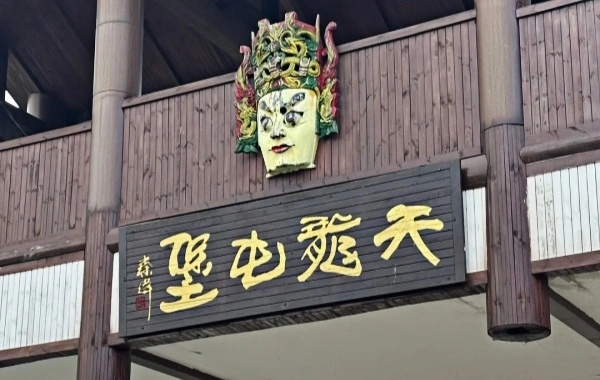
Origin & Function: It originated from “Jun Nuo,” rituals performed by armies before expeditions to worship, drill, and boost morale, brought to Guizhou by the expeditionary forces. Performers wear exquisitely carved wooden masks called “Lianzi,” tied to their foreheads, with black veils covering their faces. With battle flags on their backs and weapons in hand, they perform stories of loyalty and valor like “The Romance of the Three Kingdoms,” “Generals of the Yang Family,” and “Xue Rengui’s Expedition to the East,” accompanied by gongs and drums.
Viewing Experience: At the Yanwutang (Martial Arts Hall) or Tianlong Academy, once the drums and gongs sound and the high-pitched “Yiyang-style” singing begins, the “generals” leap and tumble. The scene is simple, unadorned, vigorous, and filled with raw masculine energy and historical tension, captivating every audience member.
Historical Sites – Where Notable Figures and Faith Converge
Shen Wansan’s Former Residence: Surprisingly, the legendary wealthy merchant Shen Wansan from the Jiangnan region was exiled here in his later years. His former home, “Shenjia Chaomen,” is a typical courtyard house, witnessing the final chapter of the magnate’s life and hinting at the deep connections between Tunpu and the Jiangnan region.
Sanjiao Temple (Temple of Three Teachings): Reflects the inclusive religious views of the Tunpu people. It simultaneously enshrines Buddha, Confucius, and the Taoist deity Yuanshi Tianzun—a rare instance of Buddhism, Confucianism, and Taoism coexisting in one hall in China.
Photography Tips:
The best time for cultural shots is early morning or late afternoon when soft light perfectly outlines the texture of stone walls and clothing details.
For Dixi opera, use side/back lighting to capture the glow of the mask paint and dust kicked up by the actors, creating dramatic tension.
In narrow alleys like “Jiudaokan,” use the vanishing point perspective for storytelling shots.
Wulong Temple on Tiantai Mountain is the perfect vantage point for panoramic shots of the Tunpu and karst landscape.