
The Four Celestial Beasts
The Four Celestial Beasts: Guardians of Ancient Cosmos and Modern Culture
In Chinese mythology, the Four Celestial Beasts—Azure Dragon (Qinglong), White Tiger (Baihu), Vermilion Bird (Zhuque), and Black Tortoise (Xuanwu)—are more than mythical creatures; they are the cosmic architects of balance, guardians of directions, and symbols of seasonal cycles. Rooted in ancient astronomy and Daoist philosophy, these beings have shaped Chinese culture for millennia, appearing in art, architecture, and even urban planning.
Origins & Cosmic Role
The Four Beasts emerged from the primordial chaos of the "Cosmic Egg," where Huanglong (Golden Dragon) chiseled the universe into being. Each beast oversees a cardinal direction and element:
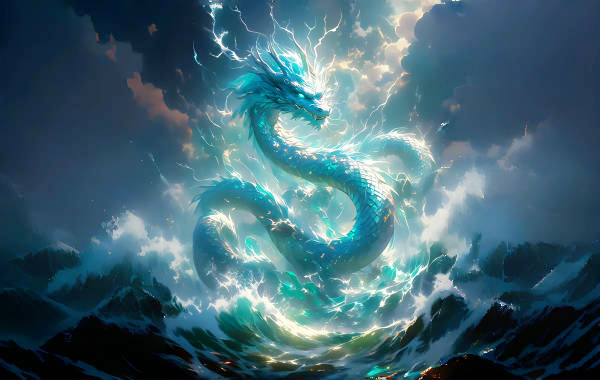
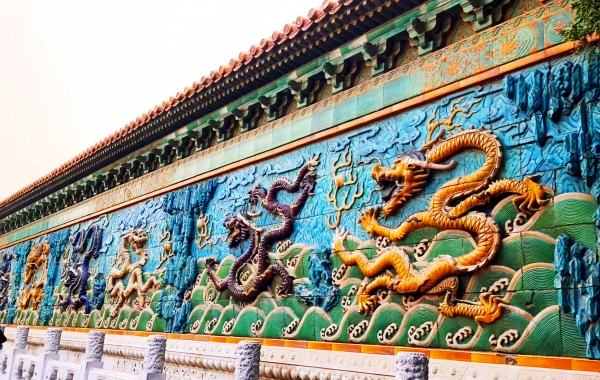
- Qinglong (East/Spring/Wood): The Azure Dragon embodies spring’s renewal. In star lore, it governs seven lunar mansions, including Virgo and Libra. Ancient texts like the Book of Rites link it to growth and prosperity, while modern Beijing’s Forbidden City features dragon motifs on roofs to symbolize imperial power.
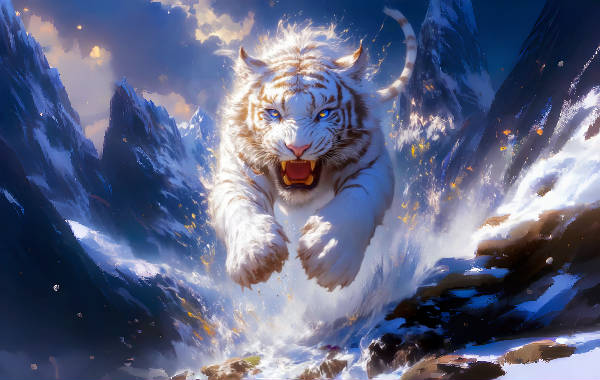
- Baihu (West/Autumn/Metal): The White Tiger, often depicted with bared fangs, symbolizes autumn’s harvest and military might. Han Dynasty tomb art shows it flanking doorways as a protector, while today, Xi’an’s ancient city wall bears tiger sculptures to ward off evil.
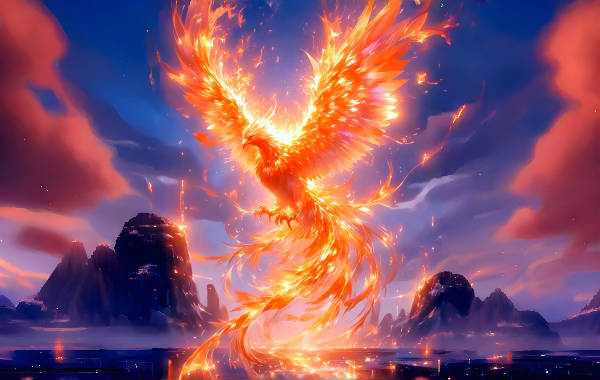
- Zhuque (South/Summer/Fire): The Vermilion Bird, akin to a phoenix, represents summer’s fiery vitality. It’s said to rise from ashes, making it a symbol of rebirth. In Nanjing, the Ming Xiaoling Mausoleum’s Zhuque Gate welcomes visitors with its vibrant red hue, echoing southern prosperity.
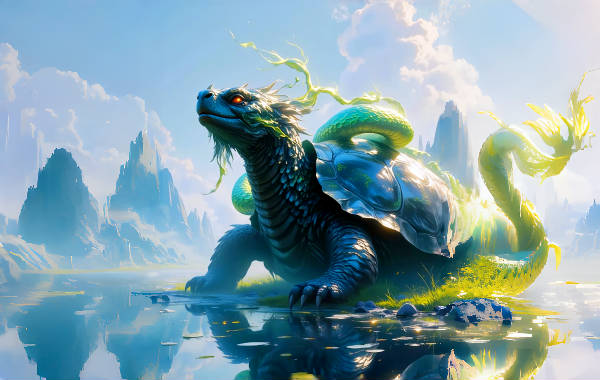
- Xuanwu (North/Winter/Water): The Black Tortoise, a fusion of turtle and snake, guards winter’s wisdom. Ancient texts credit it with stabilizing mountains and rivers. Modern Beijing’s Beihai Park features a Xuanwu sculpture, while feng shui practitioners place tortoise statues in homes to attract wealth.
Myths & Cultural Significance
- Qinglong’s Spring Festival Role: During Chinese New Year, dragon dances celebrate Qinglong’s return, believed to bring rain for crops. In art, cobalt-blue Porcelain dragons from the Ming Dynasty remain prized collectibles.
- Baihu’s Dual Symbolism: Though linked to war, Baihu also balances yin-yang. In the Investiture of the Gods, it battles demons, while in modern Seoul, its image guards corporate buildings as a talisman against misfortune.
- Zhuque’s Fiery Rebirth: Legends tell of Zhuque’s immolation every 500 years, emerging renewed. This mirrors the phoenix in Western lore, inspiring films like Crouching Tiger, Hidden Dragon.
- Xuanwu’s Defensive Prowess: In the Journey to the West, Xuanwu protects heavenly gates. Today, its likeness appears in martial arts schools, symbolizing resilience.
Modern Manifestations
- Architecture & Urban Planning: Form School Feng Shui uses the Four Beasts to orient homes—Qinglong (east) for wealth, Baihu (west) for protection. Shanghai’s skyline incorporates dragon-shaped skyscrapers, while Singapore’s Chinatown features tiger street art.
- Pop Culture & Branding: Video games like Genshin Impact feature beast-inspired characters, while brands like Huawei use dragon motifs for luck. The 2008 Beijing Olympics’ "Fuwa" included a phoenix-like creature for Zhuque.
- Festivals & Rituals: During the Dragon Boat Festival, dragon-shaped boats race to honor Qinglong. In southern China, Zhuque-themed lantern festivals light up summer nights.
Iconic Landmarks
- the forbidden city (Beijing): Dragon-adorned roofs and the Meridian Gate’s Zhuque statues reflect imperial grandeur.
- Mount Tai (Shandong): Ancient inscriptions of Xuanwu guard the mountain’s northern slopes.
- Summer Palace (Beijing): Qilin and phoenix sculptures in Suoi Tien Park echo the beasts’ harmonious presence.
- Xi’an City Wall: White Tiger carvings flank the western gate, symbolizing martial strength.
From ancient star charts to skyscrapers, the Four Celestial Beasts remain living symbols of harmony, resilience, and renewal. Their stories, etched in stone and sky, continue to inspire—a testament to humanity’s eternal dance with myth and nature.


What Our Clients Say?



Ask us before you decide.
Unsure about a route, departure date or room option? Tell us what is holding up your plans. You will get a clear answer from our China-based travel team—no booking required.