

Chinese Cold Weapons - Sword
Sword (剑,Jian)
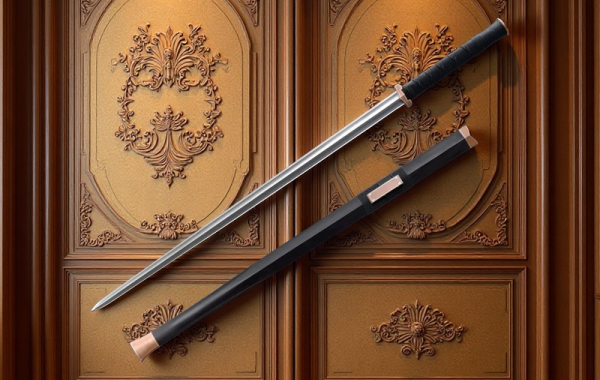
The sword is one of the most iconic weapons in Chinese Kung Fu, symbolizing elegance, precision, and lethal efficiency. Sword techniques emphasize fluid movements, quick changes of direction, and precise targeting, making it a formidable weapon in the hands of a skilled practitioner. Training in sword techniques involves mastering various stances, strikes, parries, and footwork patterns, as well as developing the ability to read an opponent's movements and anticipate their attacks.
 Types of Swords
Each type of sword in Chinese cold weapons offers distinct advantages and challenges, reflecting the rich diversity and depth of this ancient martial tradition. Whether wielded for combat, ceremonial purposes, or artistic expression, these swords continue to captivate and inspire martial artists and enthusiasts around the world with their lethal beauty and historical significance.
Types of Swords in Chinese Cold Weapons
1. Double-Edged Straight Sword (双刃直剑, Shuāngrèn Zhíjiàn)
The double-edged straight sword is one of the most classical and iconic types of Chinese swords. Featuring a straight blade with sharp edges on both sides, it is designed for both thrusting and slicing attacks. Its balanced design allows for precise control and versatile combat applications, making it a favorite among martial artists and warriors throughout history. The double-edged straight sword often symbolizes justice, honor, and martial prowess in Chinese culture.
2. Single-Edged Curved Sword (单刃曲剑, Dānrèn Qūjiàn)
While traditionally, "swords" in Chinese context lean more towards straight blades, there are single-edged swords with a slight curve, resembling a cross between a traditional straight sword and a curved saber (dao). These swords combine the slicing ability of a curved blade with some of the thrusting capabilities of a straight sword. They are often used in martial arts styles that emphasize fluidity and agility, allowing practitioners to execute quick, sweeping strikes and agile footwork.
3. Long Sword (长剑, Chángjiàn)
The long sword is characterized by its extended blade length, which provides greater reach advantage in combat. It retains the straight, double-edged design of classical Chinese swords but is longer and heavier, requiring more strength and skill to wield effectively. The long sword is often used in formal martial arts demonstrations and historical reenactments, showcasing the elegance and power of traditional Chinese swordsmanship. Its length also makes it suitable for cavalry use, allowing riders to strike at enemies from a distance while maintaining control over their mounts.
4. Short Sword (短剑, Duǎnjiàn)
In contrast to the long sword, the short sword features a compact blade that is easier to handle and conceal. Its smaller size makes it ideal for close-quarters combat and self-defense situations where agility and speed are crucial. Despite its diminutive stature, the short sword can deliver devastating blows when wielded with precision and skill. It is often used in conjunction with other weapons or as a secondary weapon in martial arts styles that emphasize versatility and adaptability.
5. Ring-Hilted Sword (环首剑, Huánshǒu Jiàn)
The ring-hilted sword is easily recognizable by the large ring attached to the end of its hilt, which serves both as a decorative element and a functional grip aid. This design allows for greater control over the weapon during rapid movements and changes in direction, making it suitable for dynamic combat styles. The blade of the ring-hilted sword is typically straight and double-edged, retaining the classical design elements of Chinese swords while incorporating unique aesthetic features.
6. Willow-Leaf Sword (柳叶剑, Liǔyè Jiàn)
The willow-leaf sword is named for its slender, curved blade that resembles the shape of a willow leaf. While more commonly associated with sabers (dao), there are variations of this design that feature a straighter blade with a slight curve, qualifying them as swords in certain contexts. The willow-leaf sword is designed for quick, fluid movements, allowing practitioners to execute rapid slashes and thrusts with precision. Its lightweight construction makes it suitable for extended combat sessions without causing excessive fatigue.
7. Pattern-Welded Sword (花纹剑, Huāwén Jiàn)
Pattern-welded swords are renowned for their exquisite craftsmanship and unique visual patterns on the blade. These patterns are created through a complex forging process that involves folding and welding multiple layers of metal together, resulting in a blade with exceptional strength and durability. Pattern-welded swords are often considered works of art as well as functional weapons, showcasing the skill and creativity of ancient Chinese swordsmiths. Their aesthetic appeal and historical significance make them highly sought after by collectors and martial arts enthusiasts alike.
8. Dragon Sword (龙剑, Lóngjiàn)
The dragon sword is a ceremonial and symbolic weapon that incorporates elements of dragon imagery into its design. The blade often features intricate engravings or inlays depicting dragons, which are revered creatures in Chinese mythology associated with power, wisdom, and good fortune. The hilt and scabbard of the dragon sword may also be adorned with dragon motIFS, adding to its overall aesthetic appeal. While primarily used for ceremonial purposes or as a symbol of authority, the dragon sword retains the functional design elements of traditional Chinese swords, making it a formidable weapon in the hands of a skilled practitioner.
Top 10 Famous Swords in China
1.轩辕剑 (Xuānyuān Sword)
The Xuānyuān Sword is regarded as the "Supreme Emperor's Sword" in Chinese mythology and history. Legend has it that it was forged by the divine blacksmith with the essence of heaven and earth, imbued with immense power and the ability to command the elements. It is often associated with the legendary Yellow Emperor,轩辕 (Xuānyuān), and symbolizes the unity and authority of ancient China. This sword represents the pinnacle of sword - making craftsmanship and holds a revered place in Chinese cultural heritage as a symbol of divine right and national strength.
2.湛泸剑 (Zhànlú Sword)
The Zhànlú Sword is known as the "Gentleman's Sword" due to its aura of righteousness and benevolence. Forged by the master swordsmith Ou Yezi, it has a black blade that shines with a soft, mysterious luster. Unlike other swords with a fierce and aggressive appearance, the Zhànlú Sword exudes a sense of calm and wisdom. It is said to only recognize and serve a just and virtuous master, making it a symbol of moral integrity and the pursuit of righteousness in Chinese culture.
3.赤霄剑 (Chìxiāo Sword)
The Chìxiāo Sword is a legendary weapon with a rich historical and mythical background. It is closely associated with Emperor Gaozu of Han, Liu Bang. According to the legend, Liu Bang obtained this sword while leading a rebellion against the Qin Dynasty. The sword has a red blade, which is said to symbolize the fire of revolution and the spirit of overthrowing tyranny. It represents courage, determination, and the will to fight for freedom and justice, playing a significant role in the establishment of the Han Dynasty.
4.泰阿剑 (Tài'ē Sword)
The Tài'ē Sword is a masterpiece of ancient Chinese sword - making. Forged by the combined efforts of Ou Yezi and his disciples, it possesses an unparalleled sharpness and a unique aura. The sword's design is said to be inspired by the power of thunder and lightning, giving it the ability to cut through any obstacle. It was once the national treasure of the Chu State and was highly regarded for its defensive and offensive capabilities in battles, symbolizing the strength and resilience of a nation.
5.龙渊剑 (Lóngyuān Sword)
Also known as Longquan Sword, the Lóngyuān Sword has a long - standing reputation for its excellent quality and exquisite craftsmanship. Originating from Longquan City in Zhejiang Province, it is made using traditional forging techniques that have been passed down for generations. The blade of the Lóngyuān Sword is known for its sharpness, durability, and the beautiful patterns formed during the forging process. It represents the pinnacle of Chinese sword - making art and is highly sought after by collectors and martial arts enthusiasts around the world.
6.干将莫邪剑 (Gānjiāng - Mòyé Swords)
The Gānjiāng - Mòyé Swords are a pair of legendary swords with a tragic and romantic story. Forged by the husband - and - wife swordsmiths Gānjiāng and Mòyé, the process of making these swords was filled with difficulties and sacrifices. The male sword, Gānjiāng, and the female sword, Mòyé, are said to be inseparable and possess a mysterious power. Their story symbolizes the deep love between the couple and the unyielding spirit of craftsmen in the pursuit of perfection. These swords are also regarded as symbols of loyalty and devotion in Chinese culture.
7.工布剑 (Gōngbù Sword)
The Gōngbù Sword is another remarkable creation of Ou Yezi. It has a unique design with a wavy blade, which gives it an aesthetic appeal and also enhances its cutting ability. The wavy pattern on the blade is not only visually striking but also serves a practical purpose in battle, allowing the sword to cause more damage to the enemy. The Gōngbù Sword represents the innovation and creativity of ancient Chinese sword - makers and is a testament to their advanced forging techniques.
8.鱼肠剑 (Yúcháng Sword)
The Yúcháng Sword is a short and slender sword with a distinctive shape resembling the intestines of a fish, hence its name. Despite its small size, it is extremely sharp and was famously used by Zhuan Zhu in an assassination attempt on King Helü of Wu. The Yúcháng Sword symbolizes courage, cunning, and the ability to achieve great things with limited resources. It is often cited as an example of how a well - crafted weapon can turn the tide of a situation, even in the most unexpected ways.
9.纯钧剑 (Chúnjūn Sword)
The Chúnjūn Sword is known for its elegance and refinement. Forged with great care and precision, it has a straight blade with a smooth surface and a delicate balance. The hilt and scabbard of the Chúnjūn Sword are often decorated with precious materials, adding to its luxurious appearance. This sword represents the aesthetic and artistic aspects of ancient Chinese sword - making, as well as the high - level craftsmanship required to create a weapon that is both beautiful and functional.
10.承影剑 (Chéngyǐng Sword)
The Chéngyǐng Sword is a mysterious and elusive weapon. It is said that the sword is so sharp that it can cut through objects without leaving a visible trace, and its blade seems to disappear in the light, leaving only a faint shadow. This unique characteristic gives the Chéngyǐng Sword an air of mystery and magic. It symbolizes the subtlety and profundity of ancient Chinese philosophy, as well as the idea that true power often lies in the unseen and the intangible.




What Our Clients Say?
Based on 10,000+ traveler reviews

Daniel Dorothea
Canada
Reviewed on April 29,2025
Shopping on Nanjing Road in Shanghai was just amazing! It's truly the "First Commercial Street of China", where tradition and modernity blend perfectly. You can find awesome souvenirs and experience the trendy vibes in cool stores. The neon lights at night are just spectacular, shining bright like Times Square in New York. The food here is incredible too. I had a feast for my taste buds. Shanghai, I'll definitely be back!
Destination(s):
Shanghai
Date of
Experience:
May 08,2024


Elvis Eva
Canada
Reviewed on June 20,2025
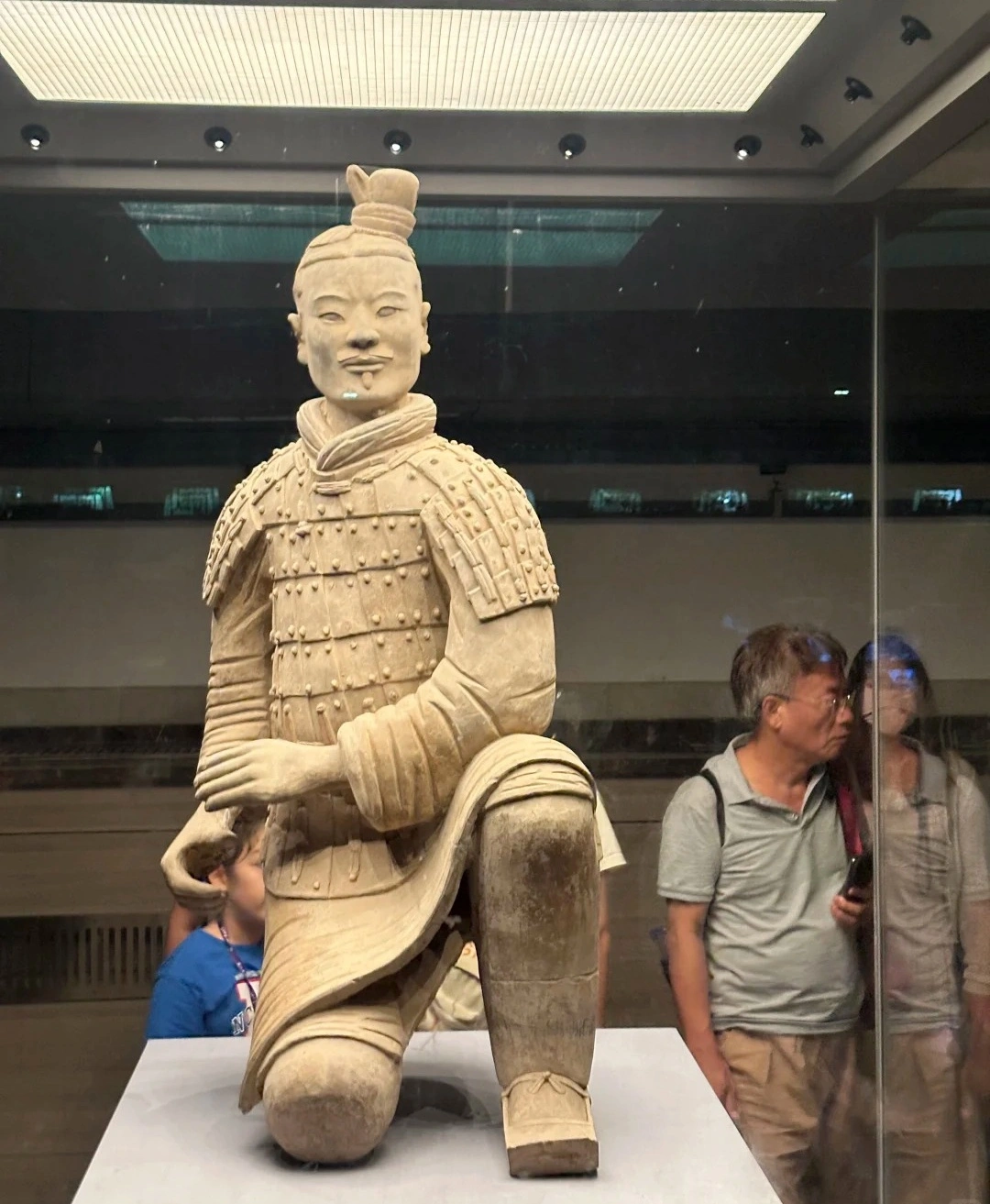
As a solo traveler from Canada, I was nervous about navigating China alone—but this 11-day tour was PERFECT! From hiking the Great Wall at sunrise (Day 3) to gasping at the Terracotta Army (Day 5), every day delivered ‘pinch-me’ moments. The real showstopper? Zhangjiajie’s Avatar Mountains (Day 7)! Our guide made the stone pillars come alive with stories.
Massive thanks for handling all logistics—bullet train tickets, entry passes, car! And the 4-star hotels surprised me.
Destination(s):
Beijing Xian Zhangjiajie Shanghai
Date of
Experience:
June 02,2025



Simon
America
Reviewed on May 29,2025
Our 2-day Zhangjiajie tour was beyond spectacular! As someone who’s visited Beijing and Shanghai for work, this trip revealed China’s wild, magical heart. Day 1 in Zhangjiajie National Forest Park felt like stepping onto Pandora—I’m a huge Avatar fan, and Yuanjiajie’s floating peaks left me breathless. The misty pillars and lush valleys like pure movie magic!
Then came Fenghuang Ancient Town, we eat dinner beside the thundering waterfall. It seems Unreal! The night views of stilt houses glowing over the river were straight from a fairy tale.
For fellow Avatar lovers and adventure seekers: Don’t miss this bucket-list experience! 10/10 would return.
A Well-Traveled Film Buff, May 2025
Destination(s):
Zhangjiajie
Date of
Experience:
May 08,2025