
Zhangliang Temple
Zhangliang Temple, nestled in the serene mountains of Zibaishan, Shaanxi Province, is a revered Taoist sanctuary dedicated to Zhang Liang, a legendary strategist and statesman of the early Han Dynasty. Known for his wisdom in retiring from politics after assisting Liu Bang in founding the Han Dynasty, Zhang Liang became a symbol of humility and spiritual pursuit. The temple, built during the Tang Dynasty (618–907 CE) and later expanded, blends architectural elegance with profound cultural heritage. Surrounded by lush forests and crystal-clear springs, it serves as both a historical monument and a pilgrimage site, embodying Taoist ideals of harmony with nature. Designated a national cultural relic in 1956, the temple attracts visitors seeking tranquility and insight into China’s philosophical traditions.
Historical Overview
Founded in the Tang Dynasty to honor Zhang Liang’s legacy, the temple underwent major renovations during the Ming (1368–1644) and Qing (1644–1912) dynasties. Zhang Liang, hailed as the "Master of Strategies," renounced worldly power after the Han Dynasty’s establishment, retiring to Mount Zibaishan to cultivate Taoist wisdom. The temple’s history reflects his philosophy of balancing ambition with spiritual detachment. Key events include its reconstruction after a fire in 1465 and its role as a center for Taoist studies during the Ming. In 1949, it became a protected site, preserving its cultural significance through modern times.
Structural Layout
The temple follows a traditional Taoist layout along a north-south axis, divided into three main sections:
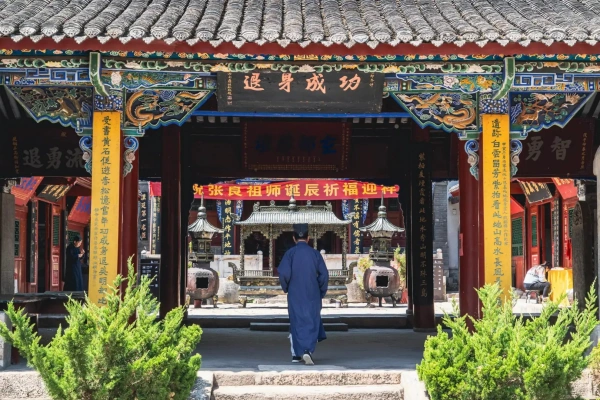
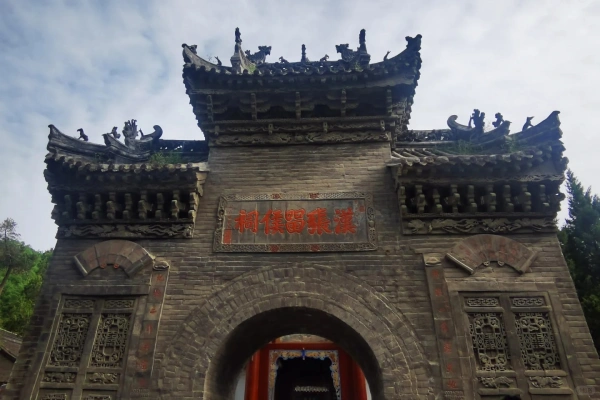
Front Gate Area: Features the imposing Mountain Gate (Shanmen), flanked by stone lions and ancient cypress trees, symbolizing protection and longevity.
Central Courtyard: Houses the Main Hall (Dadian), dedicated to Zhang Liang, with intricate wooden carvings and a statue of the sage seated in meditation. Surrounding structures include the Hall of Three Purities (Sanqingdian) and the Pavilion of Moral Cultivation (Dexingge).
Rear Garden: A tranquil space with ponds, pavilions, and the spring of Immortality (Xianquan), believed to grant longevity to those who drink its waters.
Major Attractions
Main Hall (Dadian): The temple’s heart, featuring a life-sized statue of Zhang Liang and murals depicting his legendary encounters, such as meeting the Yellow Stone Elder (Huangshigong).
Pavilion of Moral Cultivation (Dexingge): A hexagonal pavilion inscribed with Taoist scriptures, offering panoramic views of the mountains.
Spring of Immortality (Xianquan): A natural spring with clear water, surrounded by stone carvings of immortals and dragons.
Stone Stele Pavilion (Beileiting): Houses ancient stone tablets with inscriptions by Ming and Qing scholars, praising Zhang Liang’s virtue.
Three Purities Hall (Sanqingdian): Dedicated to the Taoist Trinity (Yuanshi Tianzun, Lingbao Tianzun, and Daode Tianzun), with colorful ceiling paintings of constellations.
Suggested Itineraries
Classic Route (1–2 hours):
Mountain Gate → Main Hall → Pavilion of Moral Cultivation → Spring of Immortality → Exit via the East Gate.
Highlights: Core shrines and natural scenery.
Cultural Route (2–3 hours):
Mountain Gate → Main Hall → Stone Stele Pavilion → Three Purities Hall → Rear Garden → Spring of Immortality.
Highlights: Historical inscriptions and Taoist philosophy.
Extended Route (3–4 hours):
Include all sites above, plus the Western Courtyard (Xiyuan), home to smaller shrines and a tea house serving local mountain herbs.
Ticket Purchase
Online: Book via the official WeChat account “Zhangliang Temple” (up to 3 days in advance).
On-Site: Tickets available at the entrance, but queues peak during holidays.
Prices:Peak Season (April–October): ¥50 (adults), ¥25 (students/seniors).
Off-Season (November–March): ¥30 (adults), ¥15 (students/seniors).
Free: Children under 1.2m, disabled visitors, and clergy.
Transportation
By Bus: From Xi’an’s South Bus Station, take a direct bus to Zhangliang Temple (2 hours, ¥30/person).
By Taxi: Approximately ¥200 from downtown Xi’an (1.5 hours).
By Car: Drive via the G65 Baotou-Maoming Expressway, exiting at Zibaishan Interchange (toll: ¥45).
Best Time & Tips
Peak Hours: Avoid 10 AM–2 PM; visit early (8:30 AM opening) or late afternoon.
Crowds: Weekends and Festivals (e.g., Zhang Liang’s Birthday, March 15th lunar calendar) are busiest.
Weather: Spring (April–May) and autumn (September–October) offer mild temperatures and colorful foliage.
Essentials:Wear sturdy shoes (uneven stone paths).
Bring a reusable water bottle (refill stations available).
Respect temple etiquette: avoid loud conversations and photography in prayer halls.
Try local Taoist tea at the Western Courtyard café.


Contact Us
What Our Clients Say?
Based on 10,000+ traveler reviews

Daniel Dorothea
Canada
Reviewed on April 29,2025
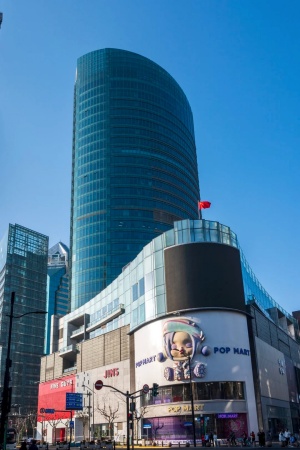
Shopping on Nanjing Road in Shanghai was just amazing! It's truly the "First Commercial Street of China", where tradition and modernity blend perfectly. You can find awesome souvenirs and experience the trendy vibes in cool stores. The neon lights at night are just spectacular, shining bright like Times Square in New York. The food here is incredible too. I had a feast for my taste buds. Shanghai, I'll definitely be back!
Destination(s):
Shanghai
Date of
Experience:
May 08,2024

Elvis Eva
Canada
Reviewed on June 20,2025
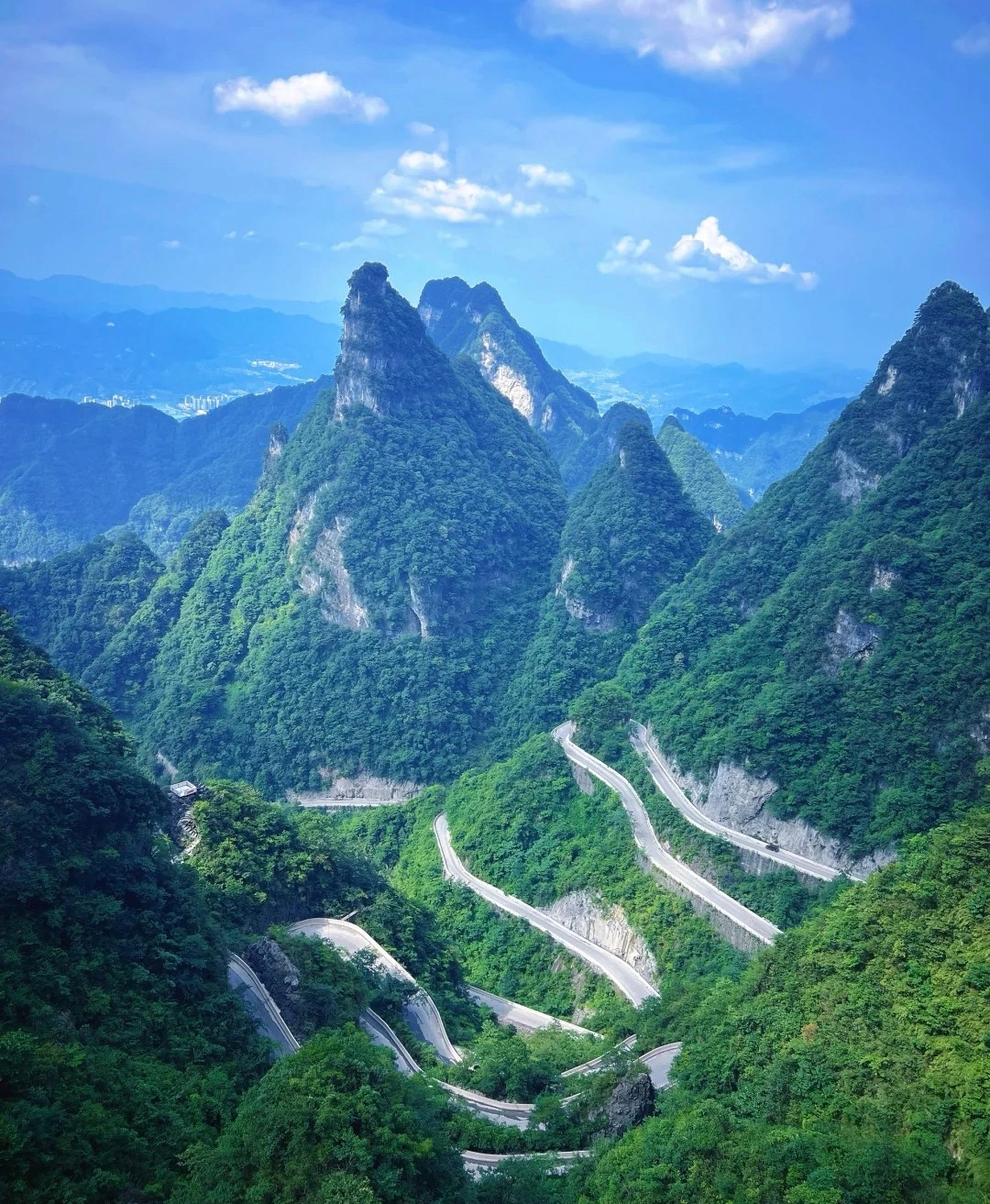
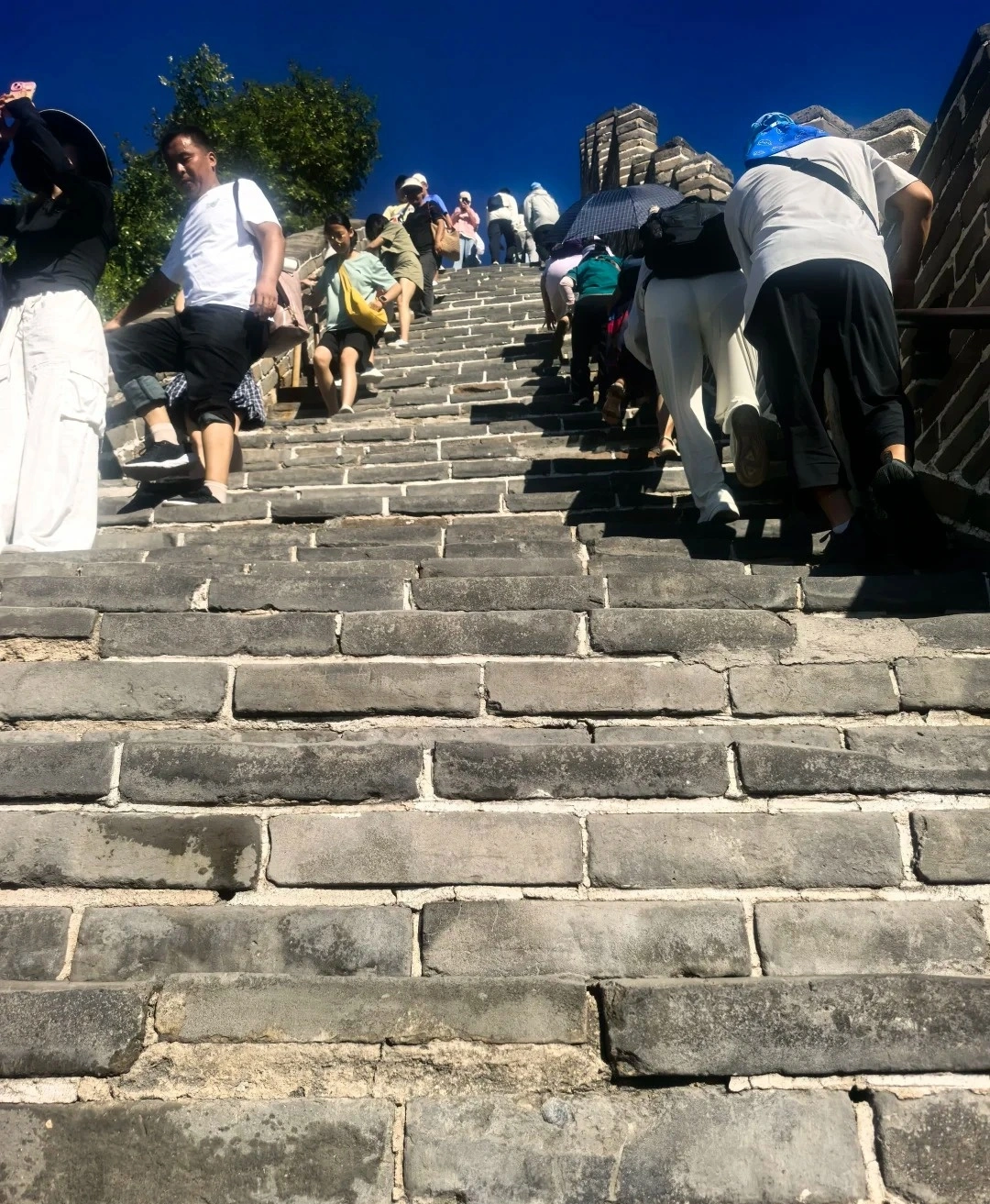
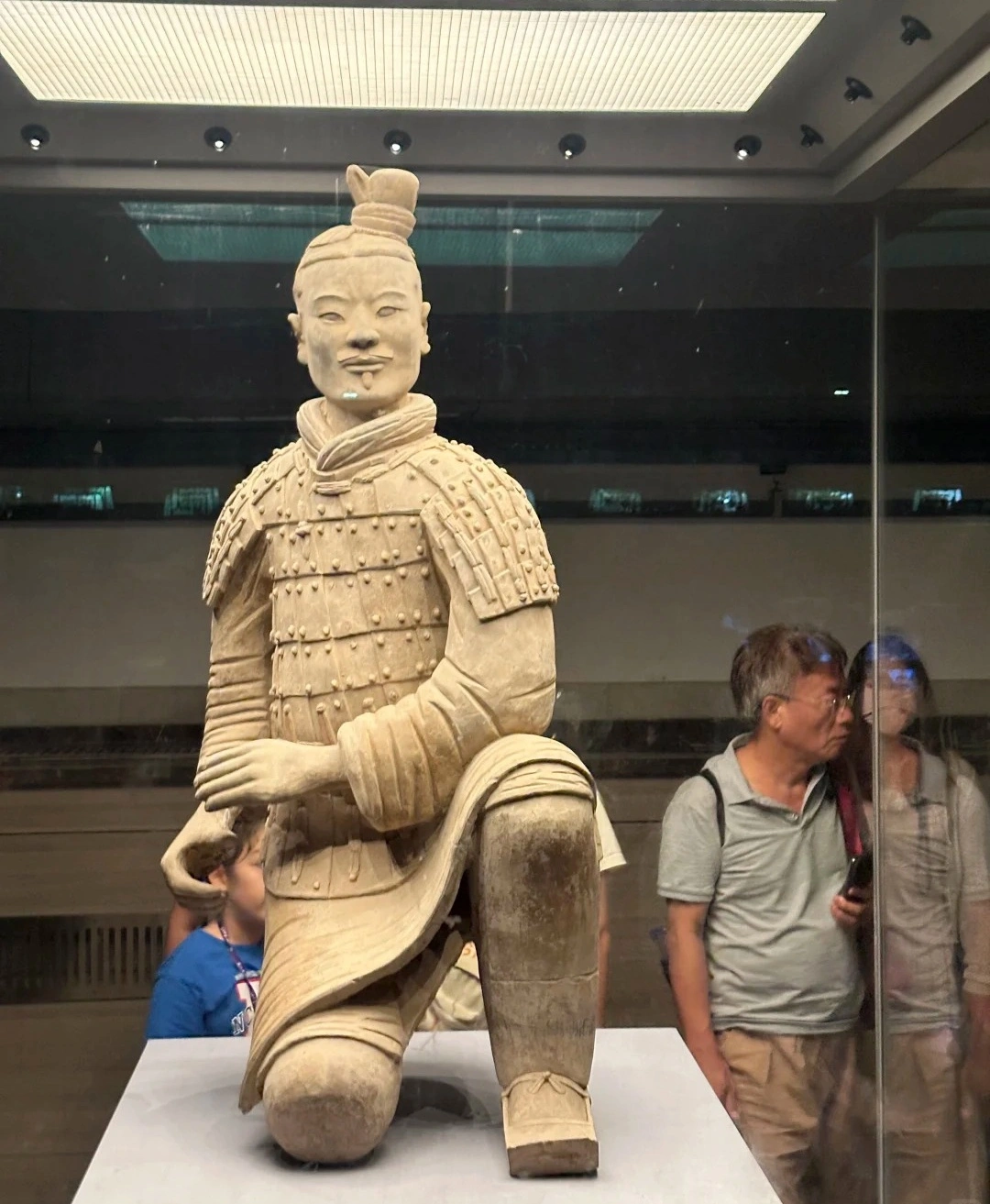
As a solo traveler from Canada, I was nervous about navigating China alone—but this 11-day tour was PERFECT! From hiking the Great Wall at sunrise (Day 3) to gasping at the Terracotta Army (Day 5), every day delivered ‘pinch-me’ moments. The real showstopper? Zhangjiajie’s Avatar Mountains (Day 7)! Our guide made the stone pillars come alive with stories.
Massive thanks for handling all logistics—bullet train tickets, entry passes, car! And the 4-star hotels surprised me.
Destination(s):
Beijing Xian Zhangjiajie Shanghai
Date of
Experience:
June 02,2025

Simon
America
Reviewed on May 29,2025
Our 2-day Zhangjiajie tour was beyond spectacular! As someone who’s visited Beijing and Shanghai for work, this trip revealed China’s wild, magical heart. Day 1 in Zhangjiajie National Forest Park felt like stepping onto Pandora—I’m a huge Avatar fan, and Yuanjiajie’s floating peaks left me breathless. The misty pillars and lush valleys like pure movie magic!
Then came Fenghuang Ancient Town, we eat dinner beside the thundering waterfall. It seems Unreal! The night views of stilt houses glowing over the river were straight from a fairy tale.
For fellow Avatar lovers and adventure seekers: Don’t miss this bucket-list experience! 10/10 would return.
A Well-Traveled Film Buff, May 2025
Destination(s):
Zhangjiajie
Date of
Experience:
May 08,2025