Huguang Guild Hall: An Epic of Migration Etched into the Banks of the Yangtze River

Huguang Guild Hall: An Epic of Migration Etched into the Banks of the Yangtze River

Overview: A Living Museum Preserving 300 Years of Migration Memories

Situated by the Yangtze River at Dongshuimen in Chongqing’s Yuzhong District, the Chongqing Huguang Guild Hall stands as China’s largest surviving complex of Qing Dynasty guild hall architecture, with its core area spanning an impressive 18,418 square meters.

Core Highlights at a Glance

Identity Tags: China’s Largest Qing Dynasty Guild Hall Complex / An Encyclopedia of Migration Culture

Core Experiences: Admire the three grand guild halls adorned with carved beams and painted rafters; listen to performances of intangible cultural heritage opera on a century-old stage.

Suggested Visit: Half a day to a full day; afternoon entry is recommended to experience the interplay of light and shadow on the ancient architecture alongside the sunset over the Yangtze River.

Address: No. 1 Bajiaoyuan, Changbin Road, Yuzhong District, Chongqing.

  • Huguang Guild Hall: An Epic of Migration Etched into the Banks of the Yangtze River-1
  • Huguang Guild Hall: An Epic of Migration Etched into the Banks of the Yangtze River-2
  • Huguang Guild Hall: An Epic of Migration Etched into the Banks of the Yangtze River-3
  • Huguang Guild Hall: An Epic of Migration Etched into the Banks of the Yangtze River-4

Origins: A Monumental Saga of Human Migration

Furong Ancient Town Furong Ancient Town Furong Ancient Town

What is the "Huguang Guild Hall"? — When One's Homeland Becomes a Distant Dream

In the name "Huguang Guild Hall," the term "Huguang" does not refer to a single province or city, but rather encompasses the Qing Dynasty's Huguang Province (comprising present-day Hubei and Hunan) as well as Guangdong and other regions—the ancestral homelands of the migrants. In the Chinese cultural context, the term "Guild Hall" (Huiguan) carries a weight of profound significance—it serves as a home away from home for people from the same hometown living in a distant land.

The story begins in the 17th century. During the transition from the late Ming Dynasty to the early Qing Dynasty, Sichuan Province was ravaged by war, famine, and pestilence; its population plummeted, and vast tracts of land lay desolate and abandoned. Around the beginning of the Kangxi Emperor's reign, the total population of Chongqing city was fewer than 30,000, while the entire county of Dazu was home to a mere 66 households. Consequently, the Qing government issued the Edict to Encourage Migration to Sichuan (Zhao Min Yi Shu Zhao), urging people from other provinces to move to Sichuan to reclaim and cultivate the land—a historical event known as "Huguang Fills Sichuan."

Over the subsequent century or so, approximately two million people embarked on this westward journey. Some traveled upstream along the Yangtze River through the Three Gorges, navigating treacherous rapids and shoals; others traversed towering mountains and rugged ranges, braving wild beasts and malarial mists. Carrying the ancestral tablets on their backs, they bade farewell to their native lands, fully aware that this departure might well be a permanent separation. Chongqing, leveraging the strategic advantage of its location at the confluence of the Yangtze and Jialing Rivers—a hub for riverine transport—became the primary gateway for these migrants entering Sichuan.

Once these migrants from Huguang (present-day Hubei and Hunan) and Guangdong had taken root in Chongqing—establishing businesses and raising families—they sought a dedicated space to worship the deities of their homelands, discuss matters concerning their fellow provincials, and find solace for their lingering homesickness. Thus, merchant guilds and local gentry from various regions pooled their resources to construct assembly halls; one after another, these Huiguan (guild halls) rose majestically along the banks of the Yangtze. By the zenith of the Qing Dynasty, the area in Chongqing’s "Lower City"—stretching from Nanji Gate to Chaotian Gate—hosted a cluster of nine provincial-level guild halls, forming a spectacular architectural complex.

A Journey of Rebirth: Two Decades from Obscurity to Restoration

The modern saga of the Huguang Guild Hall complex is a history of cultural rescue—a journey from oblivion to rediscovery and restoration.

- The Sorrow of Silence (Mid-to-Late 20th Century): The Huguang Guild Hall complex gradually became submerged amidst a chaotic sprawl of residential dwellings, factories, and warehouses. The structures within the complex fell into severe disrepair due to years of neglect; a wealth of exquisite wood carvings, stone sculptures, grand halls, and pavilions suffered extensive damage. The Guangdong Guild Hall was, for a time, repurposed as a factory workshop, while the Temple of King Yu (Yuwang Palace) was reduced to serving as a mere warehouse.

- Discovery and Awakening (Late 1980s – 2003): In the mid-1980s, during Chongqing’s second comprehensive survey of cultural relics, this slumbering architectural complex was rediscovered. In 1998, the Yuzhong District government established a specialized agency and designated the Huguang Guild Hall complex as the top priority for the comprehensive renovation and revitalization of the areas along the two rivers. Over the ensuing years, the expert team completed the precise surveying, drafting, and restoration design for the architectural layout, structural forms, interior components, and wood carvings of the ancient complex.

- Masterful Restoration (2003–2005): On December 28, 2003, the restoration project officially commenced. The restoration team strictly adhered to principles such as "authenticity," "identifiability," "reversibility," "leaving space," and "minimal intervention." Upholding the philosophy of "restoring the old to look like the old," they insisted on utilizing original materials and traditional craftsmanship to repair the structures, thereby maximizing the preservation of the site's original architectural character. Spanning 21 months of meticulous work, the project successfully restored a total area of ​​4,524 square meters of ancient structures, including 3,108 square meters of enclosed building space.

- A Stunning Reawakening (2005–Present): In September 2005, after lying dormant for some six or seven decades, the Huguang Guild Hall once again opened its doors to the public. In 2006, it was designated by the State Council as a "Major Historical and Cultural Site Protected at the National Level" (the sixth batch of such sites); that same year, it was recognized as a National AAAA-level Tourist Attraction. Over the 20 years since its reopening, the site has welcomed nearly 10 million visitors, becoming a shining emblem of Chongqing's rich history and culture.

> Further Reading: Explore more masterpieces of ancient Chinese architectural preservation >>Wuyuan Ancient Town

Must-See Wonders: An Epic of Migration Etched in Carved Beams and Painted Pillars

Furong Ancient Town Furong Ancient Town Furong Ancient Town

The architectural complex of the Huguang Guild Hall is far more than just a shelter from the elements; it is a history of migration written in wood and stone. Every carved beam, every fire-retardant gable wall, and every theater stage tells the story of souls who, 300 years ago, left their homelands behind yet carried hope in their hearts.

The Beauty of Architecture: The Pinnacle of Ming and Qing Dynasty Southern Architectural Art

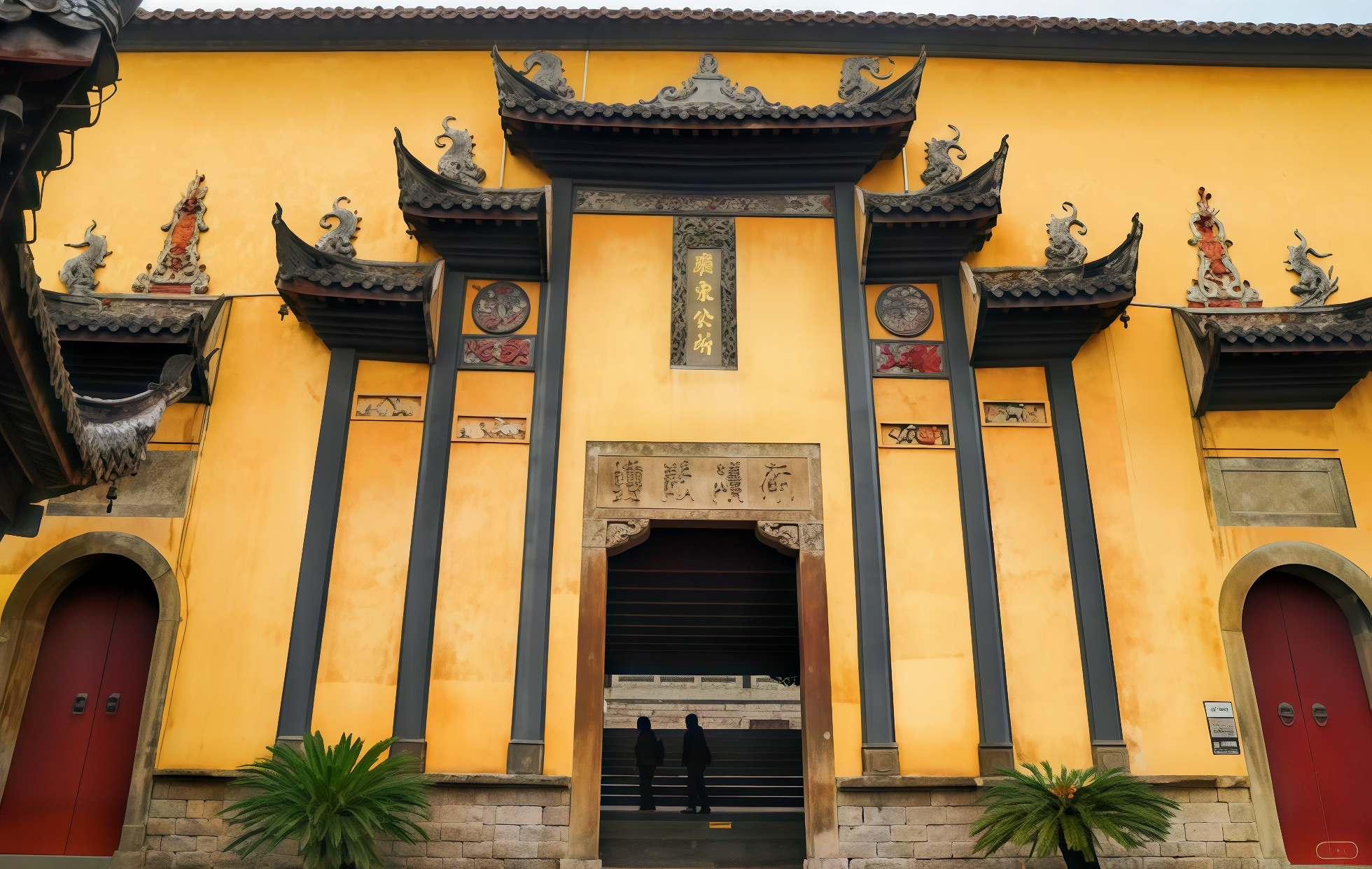
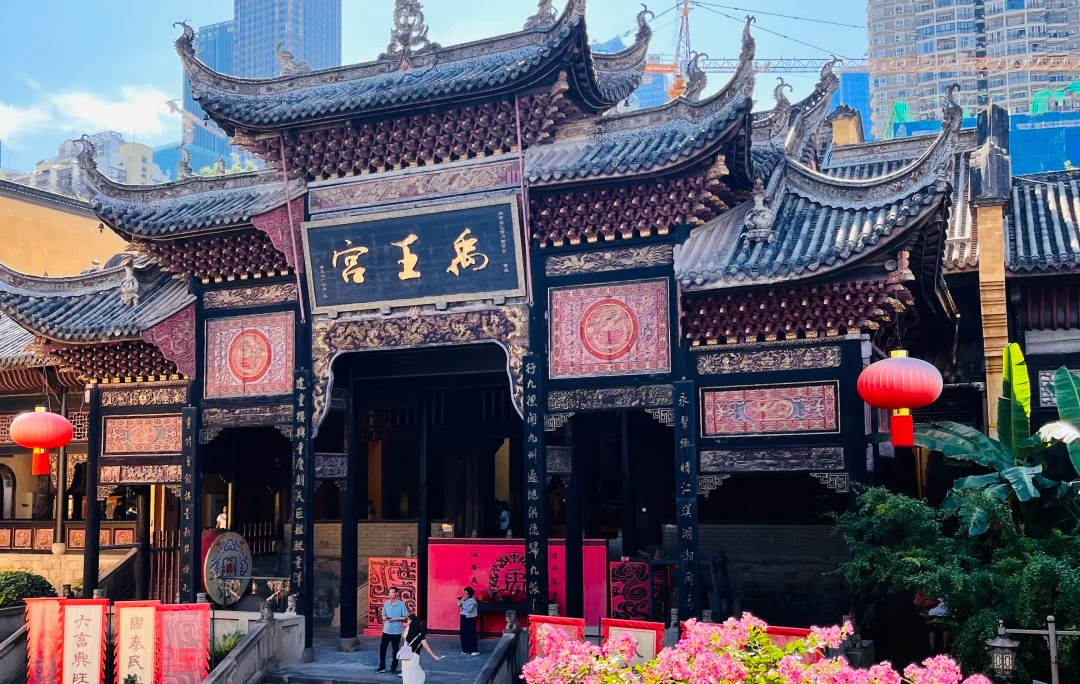
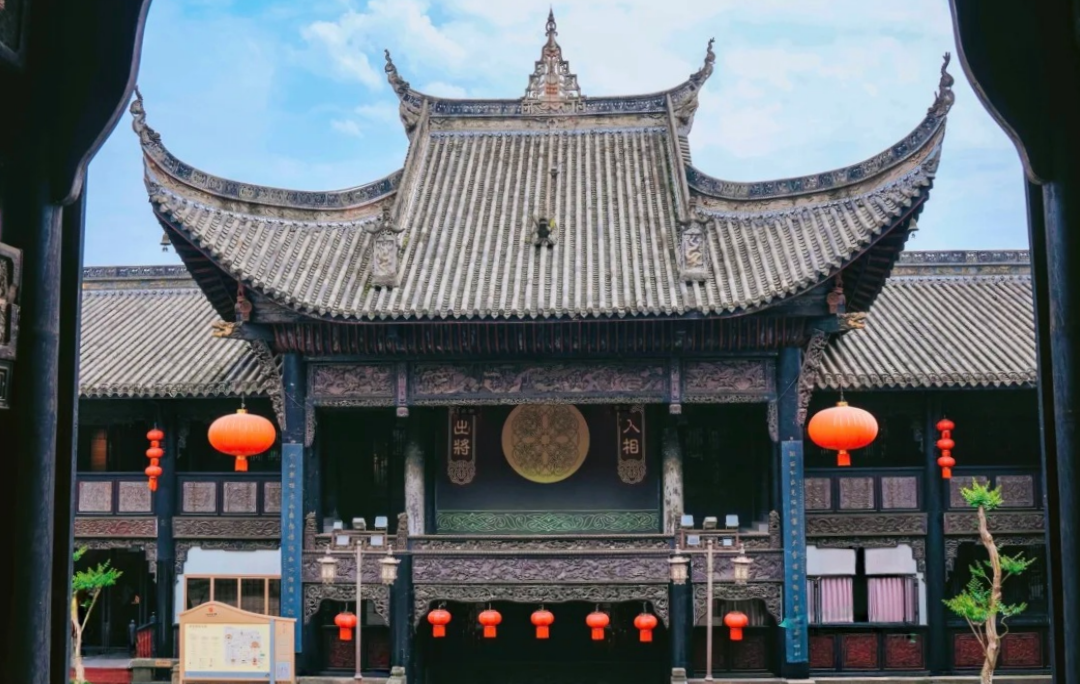
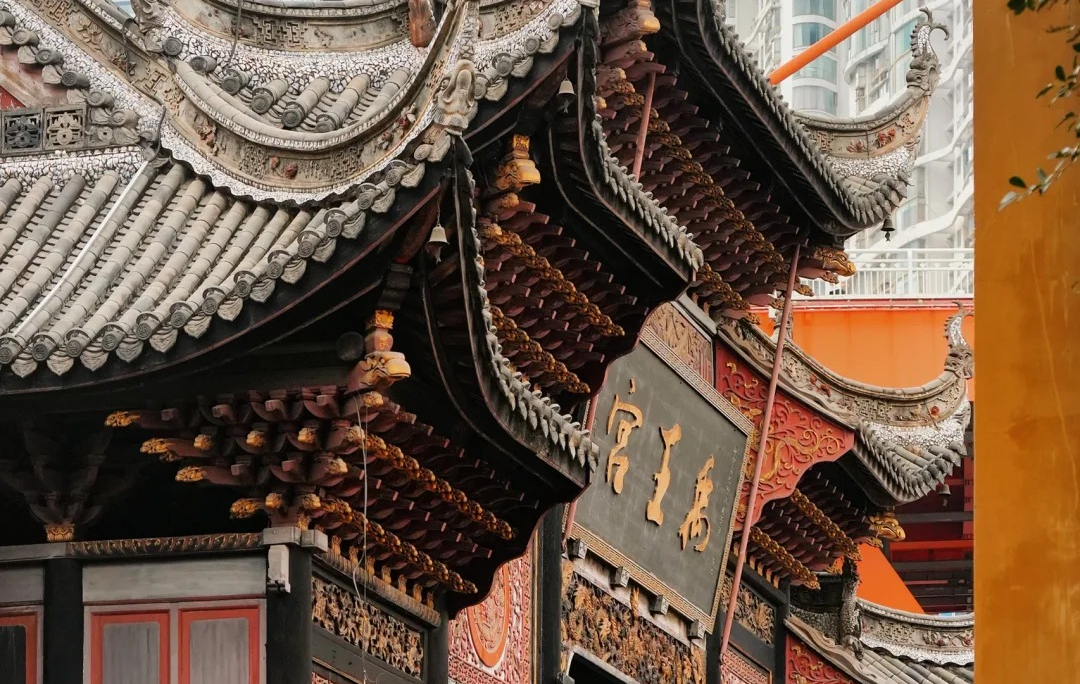
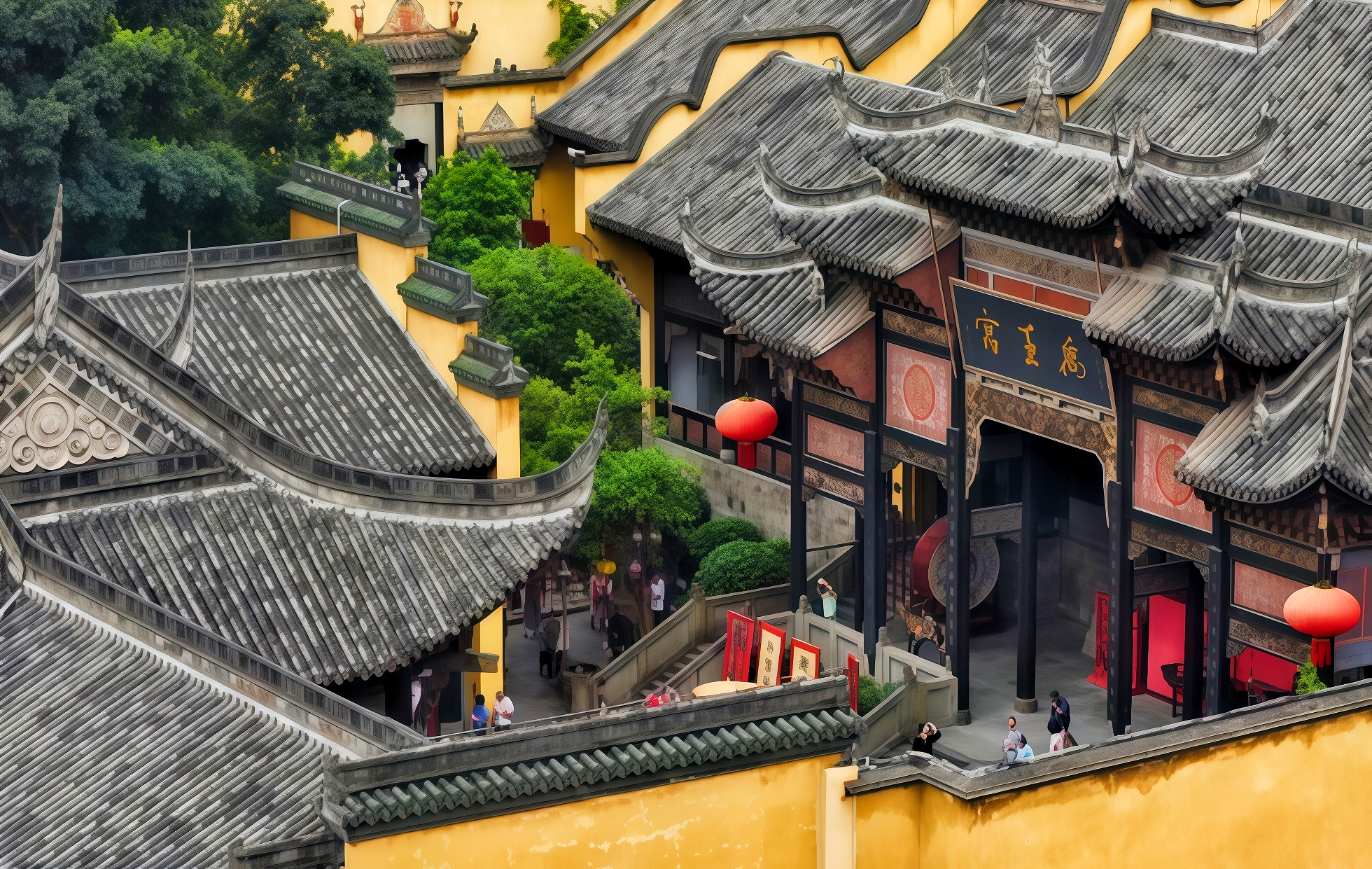
The Huguang Guild Hall complex is built in harmony with the natural terrain, situated on a sloping site with an elevation difference of nearly 40 meters. Its structures rise in dense succession, cascading down the hillside in a magnificent and imposing display. The complex not only inherits the quintessential architectural styles of Guangdong, Guangxi, Hunan, Hubei, and the Jiangnan region, but also seamlessly integrates the unique traditional architectural characteristics of Chongqing. Yuwang Palace (Palace of King Yu): As the centerpiece of the guildhall complex, Yuwang Palace was constructed to venerate Da Yu (Yu the Great), the legendary hero renowned for his mastery over floods. Many immigrants from the Huguang region hailed from water-rich landscapes and had suffered greatly from recurrent flooding; consequently, they adopted Da Yu—the tamer of floods—as their patron deity, praying to him for safe passage on the waterways. The Main Hall features a double-eaved xieshan (hip-and-gable) roof; the dragon-head brackets supporting the flying eaves all face toward the Yangtze River, symbolizing the auspicious concept of "The Great Dragon Locking the River." Housed within the main sanctuary stands a bronze statue of King Yu weighing two tons; holding a spear in one hand while resting the other on his knee, the figure exudes an air of majestic grandeur.

Qi'an Guildhall: Built by immigrants from the Huangzhou Prefecture in Hubei, this structure is the best-preserved building within the entire complex, covering a floor area of approximately 1,600 square meters. It derives its name from the Qi'an Commandery, an administrative district established in the Huangzhou region of Hubei during the Tang Dynasty. Its most poignant feature is the main entrance, which is angled toward the east—facing directly toward the immigrants' distant homeland of Huangzhou Prefecture in Hubei. This orientation served not only to satisfy the principles of feng shui but, more importantly, to embody the immigrants' boundless nostalgia and longing for their native soil. Inside the guildhall, a series of historically reconstructed sculptural vignettes—titled "Gathering for Joyous Occasions," "Supporting Righteous Causes," and "Cherishing Hometown Ties"—vividly recreate scenes of fellow villagers congregating in days gone by.

Guangdong Guildhall: Funded and constructed by immigrants from Guangdong, this guildhall features a plaque above its main entrance inscribed with four bold characters: "Lingnan Grandeur." Preserved within the hall is a deeply moving couplet: "Amidst the boundless mists and waters, long have we sojourned in this distant land of Ba; though our hometown lies far away, our hearts yearn to board the homeward vessel bound for the shores of Yue." These twenty-two characters eloquently encapsulate the hardships endured by the Hakka pioneers as they settled in a foreign land, as well as their ceaseless, soul-deep longing for their native home.

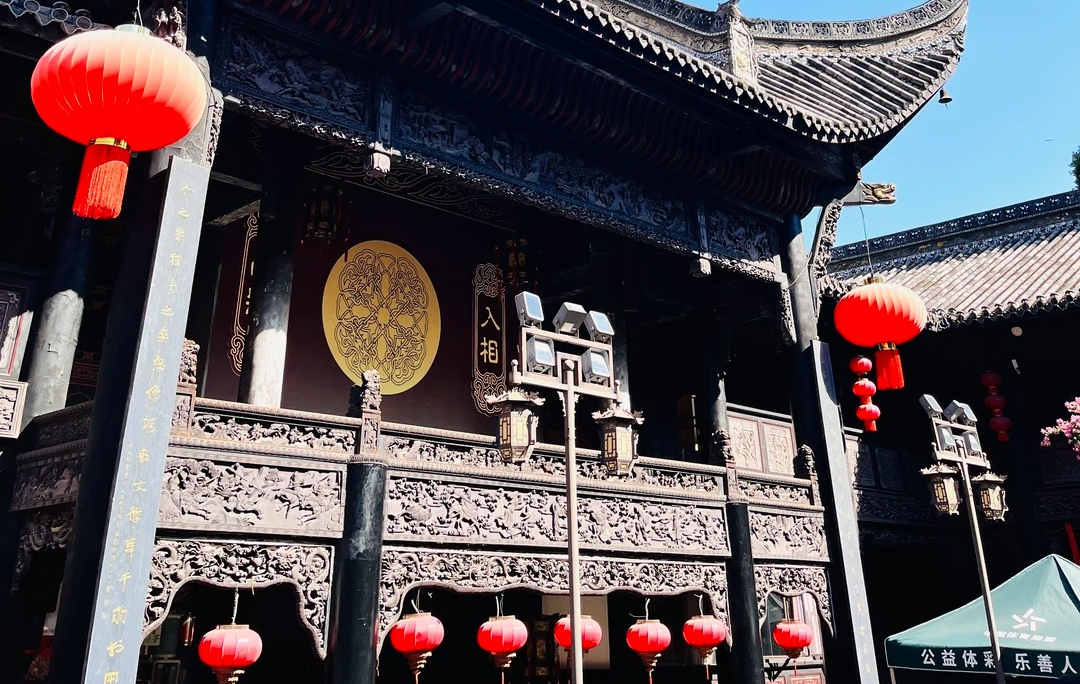
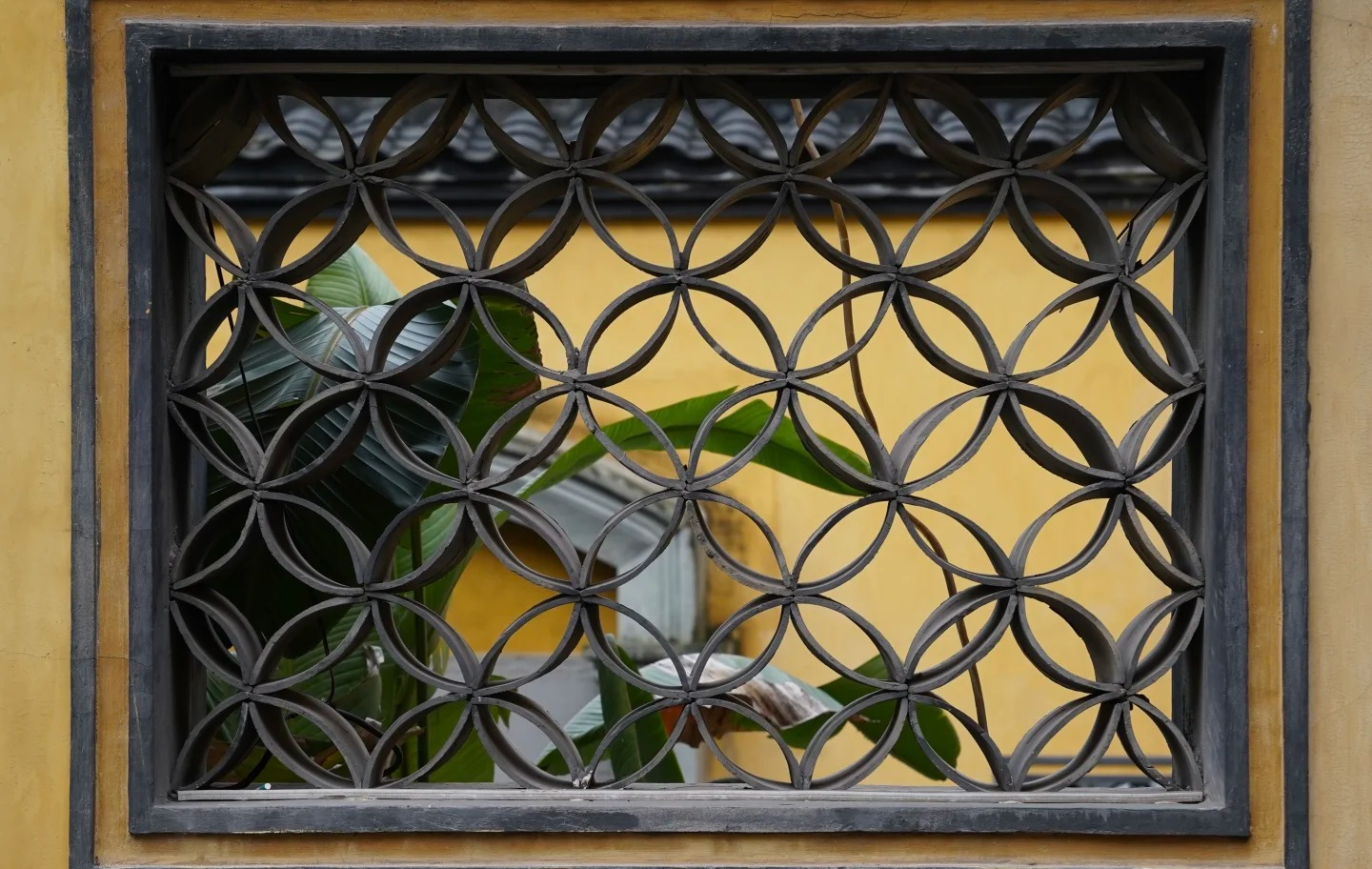
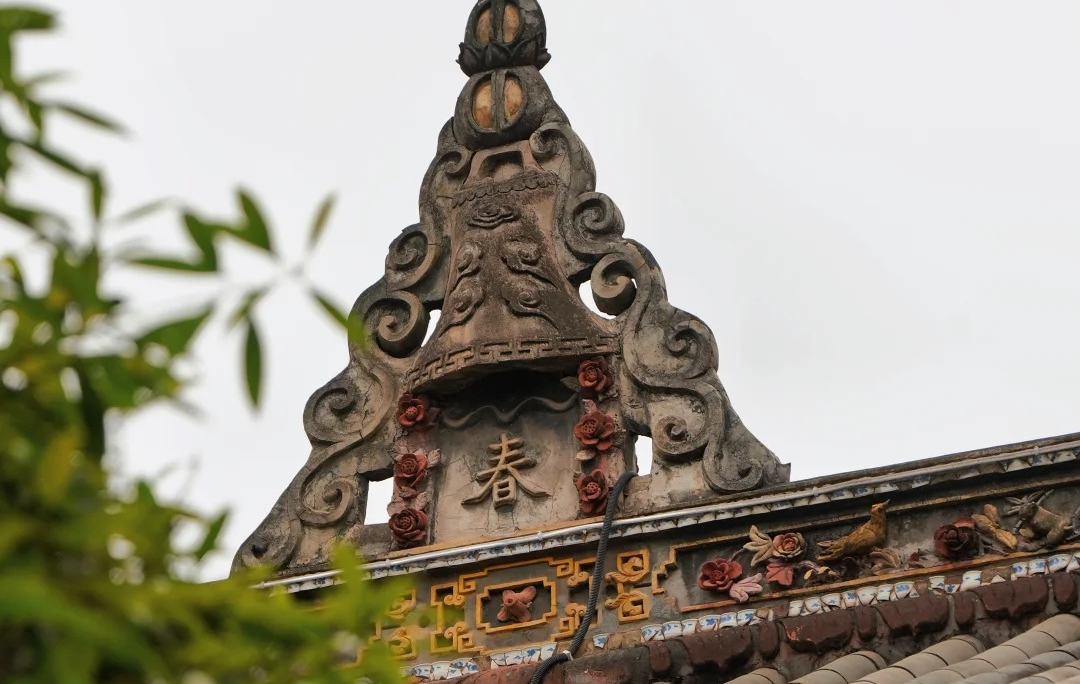
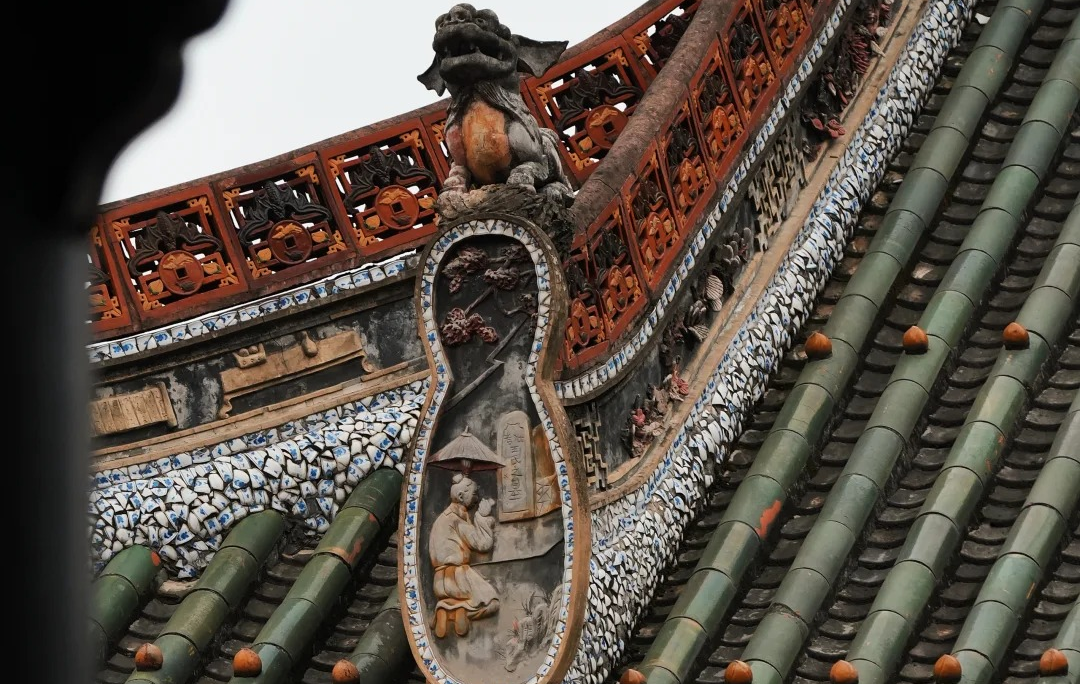
Decorative Arts: As one strolls through the complex, a glance upward reveals an entirely different world. The decorative elements of the guildhall complex consist primarily of stone carvings, wood carvings, brick carvings, colorful murals, poetic couplets, and inscribed plaques. The thematic motifs are largely drawn from characters and stories found in classic literary works such as Journey to the West, The Romance of the Western Chamber, and Investiture of the Gods, as well as the Twenty-Four Paragons of Filial Piety. These are further complemented by designs featuring auspicious creatures—such as dragons and phoenixes—and patterns of exotic flowers and rare plants. Its hundreds of decorative elements—executed with exquisite craftsmanship and elegant form—serve as a veritable textbook of southern Chinese architectural ornamentation from the Ming and Qing dynasties.

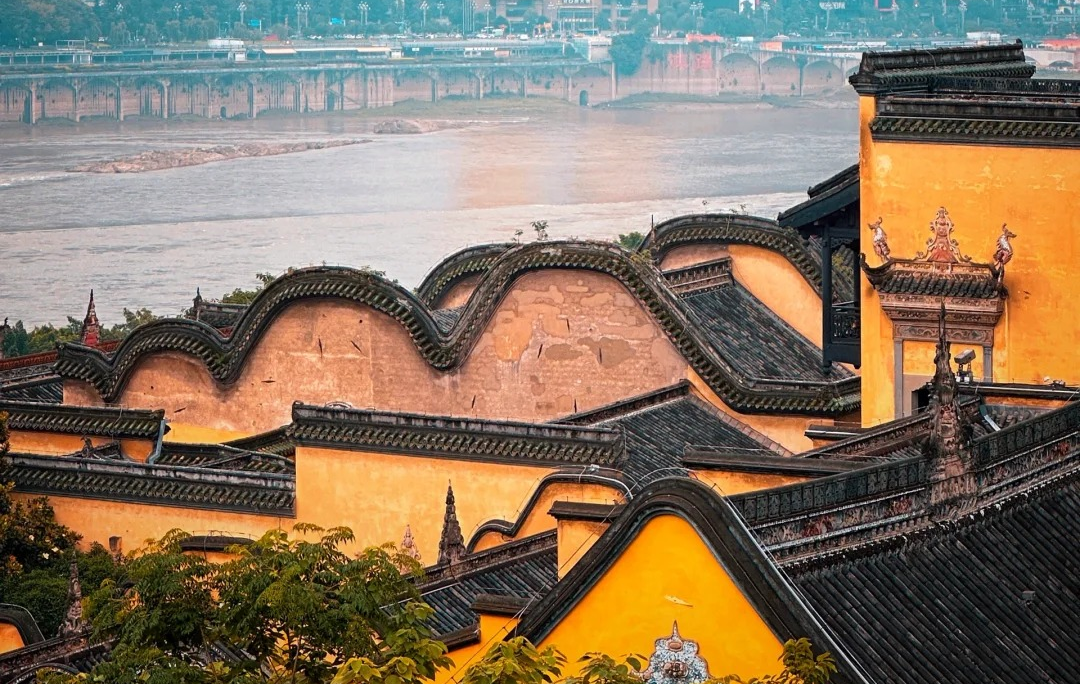
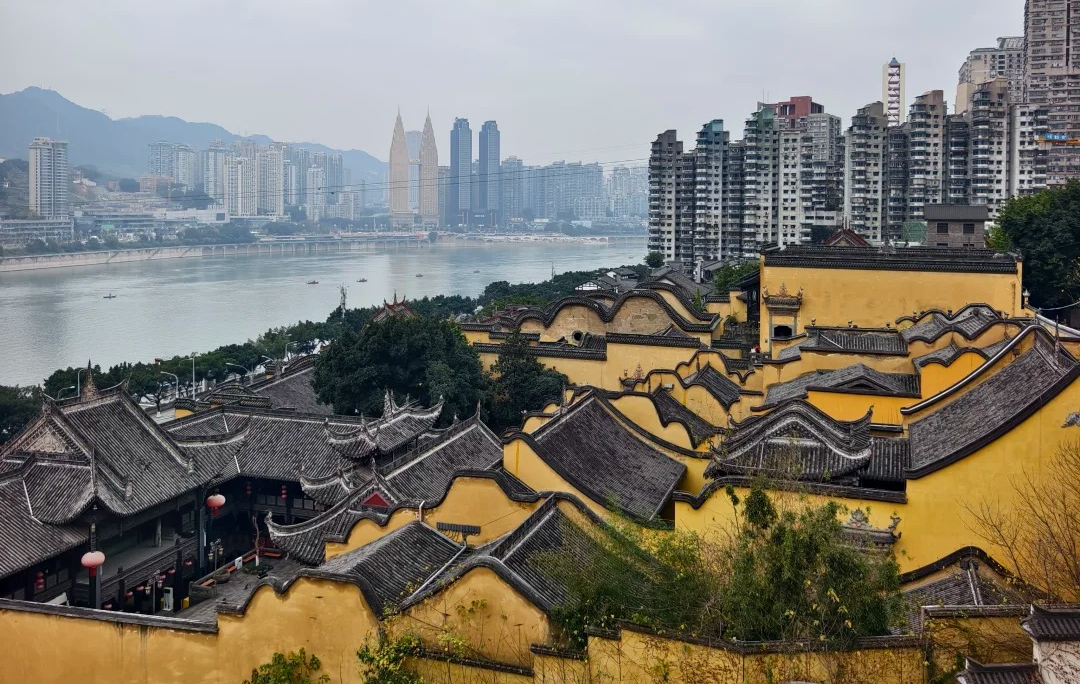
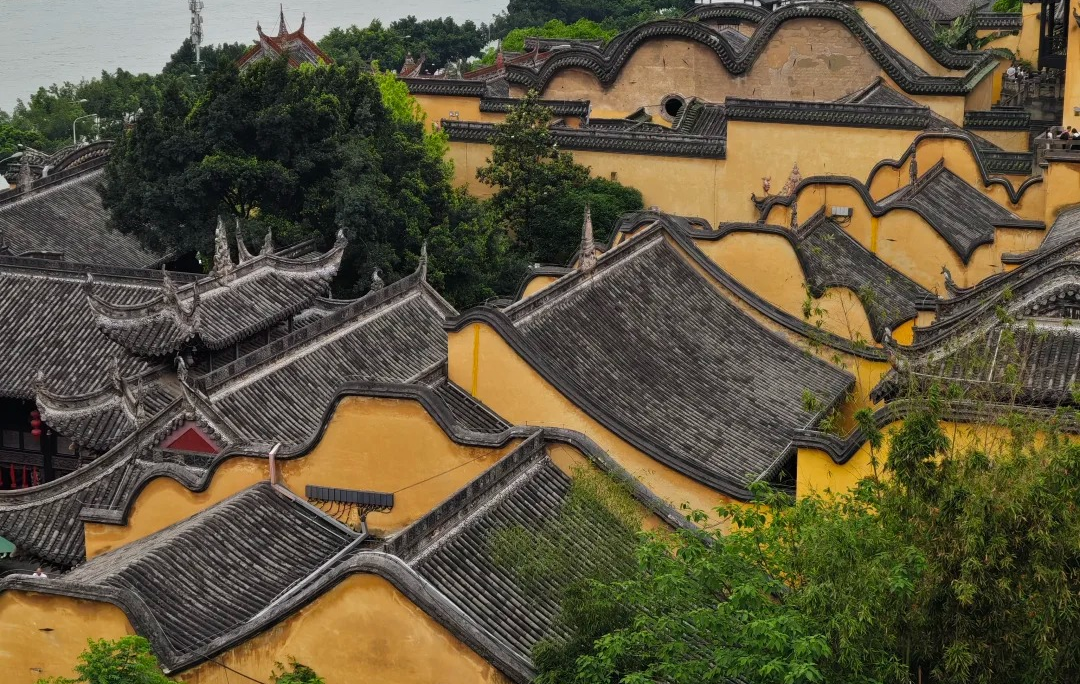
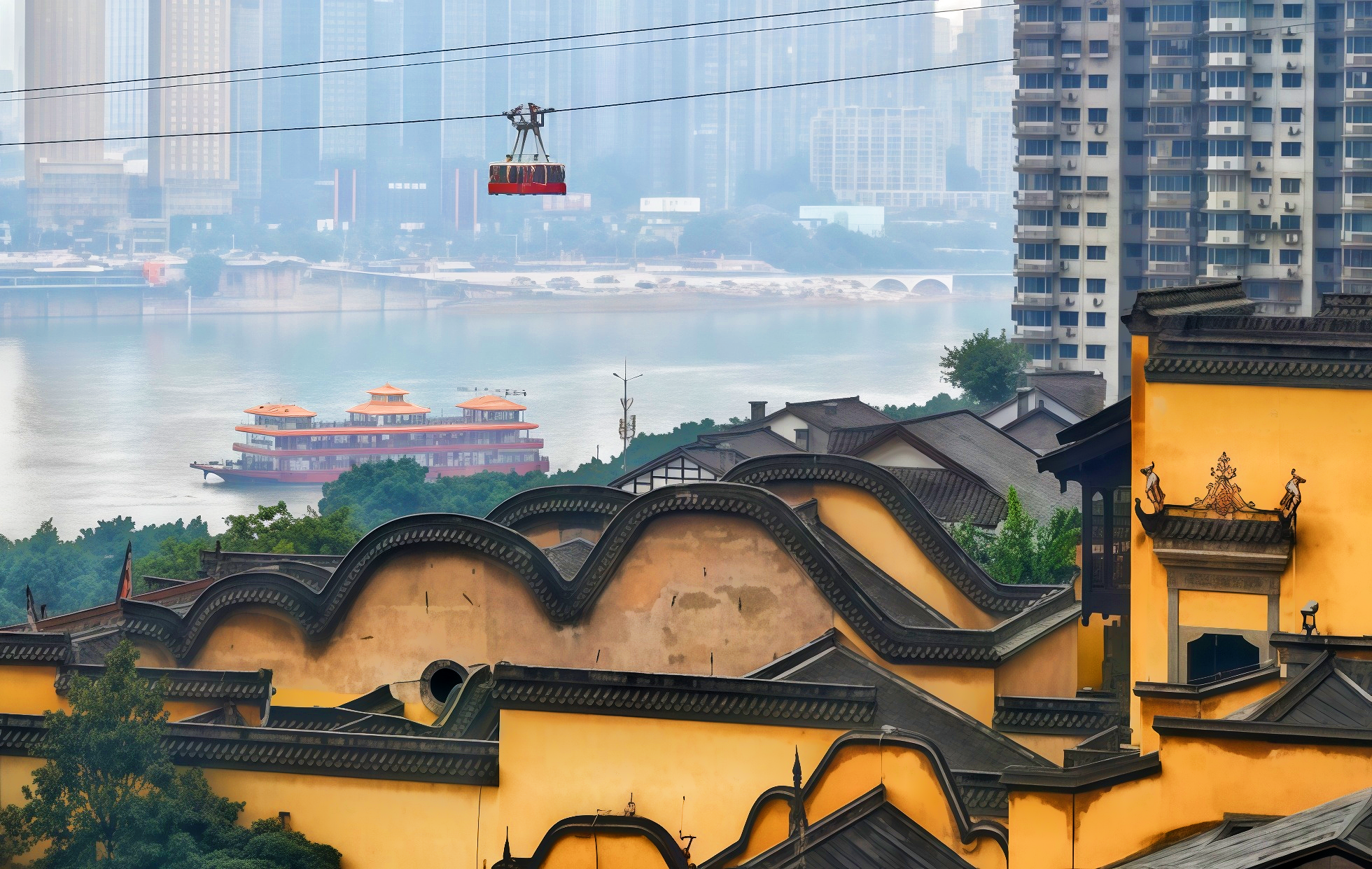
Firewalls: The Guild Hall is encircled on all four sides by towering, bright-yellow firewalls reaching heights of up to 25 meters—also known as "wharf walls." Composed of straight lines, these enclosing walls descend in a cascading, stepped pattern, sloping directly down the hillside in an unbroken continuum. These imposing walls not only shield the Guild Hall from the spread of fire but also create a highly distinctive skyline—a favorite subject for photography enthusiasts today.

> Photography Tips:

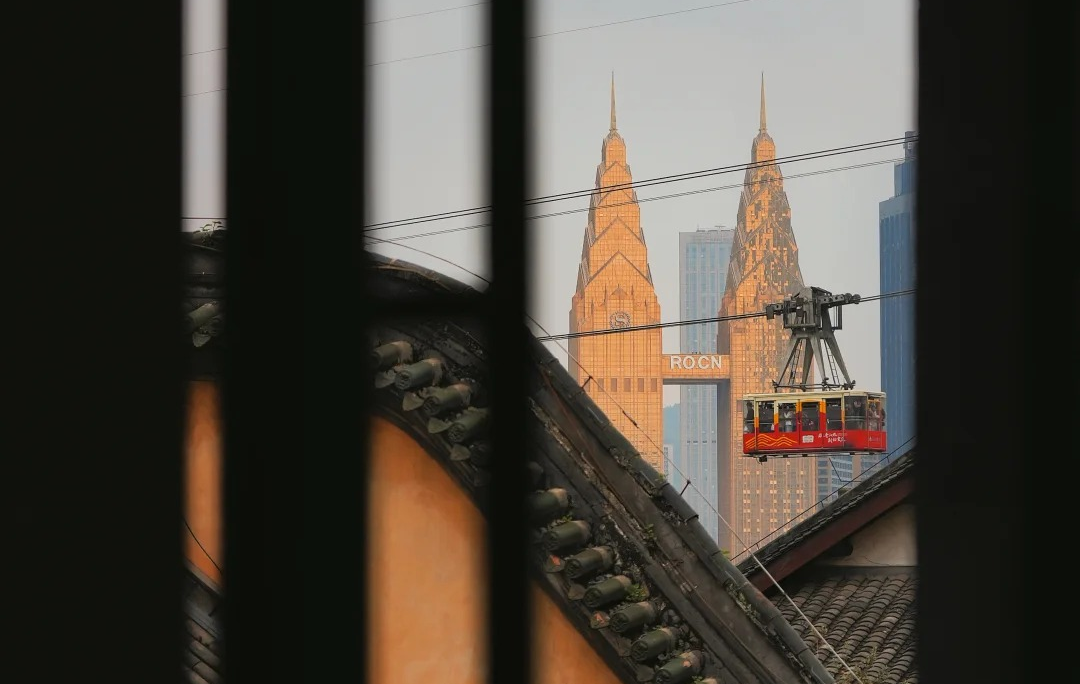
> The best vantage point for a panoramic shot is on the pedestrian walkway of the Dongshuimen Bridge, located directly opposite the Guild Hall; from here, you can simultaneously capture the entire Guild Hall complex, the Yangtze River Cableway, and the Twin Towers.

> The "Moon Silhouette" spot near the Yuwang Palace offers a perfect angle for backlit photography, allowing you to freeze the stunning silhouettes of the upturned eaves against the night sky, where red walls, dark tiles, and the soft glow of lanterns intertwine.

> The bright-yellow surfaces of the firewalls appear particularly warm and radiant at sunset, making them an ideal backdrop for capturing atmospheric, vintage-style photographs.

The Soul of Humanity—A Living Museum of Migration

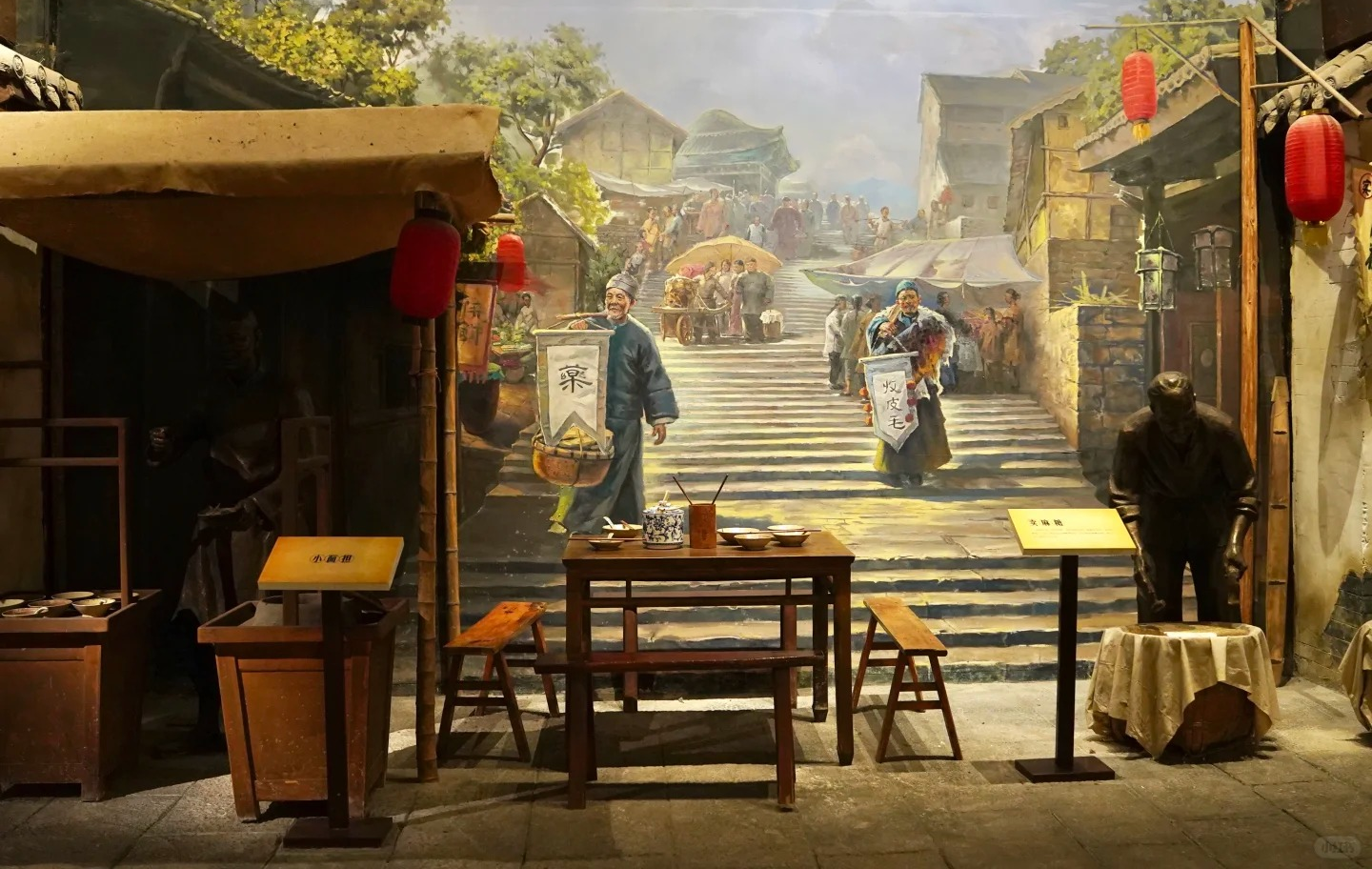
The Huguang-to-Sichuan Migration Museum: Housed within the complex is China’s first museum dedicated exclusively to the subject of migration. Set against the backdrop of the massive population movement that occurred over 300 years ago, the museum explores—from various perspectives—the political context, economic drivers, and specific routes involved in the migration into Sichuan. Through an extensive collection of historical artifacts and detailed scene reconstructions, the museum vividly recreates this epic chapter in the history of human migration. In the "Ancestral Roots" section, visitors can enter their surname into a computer terminal to instantly trace their family's historical origins—you may well discover that your own ancestors were among those very migrants who journeyed up the Yangtze River all those centuries ago.

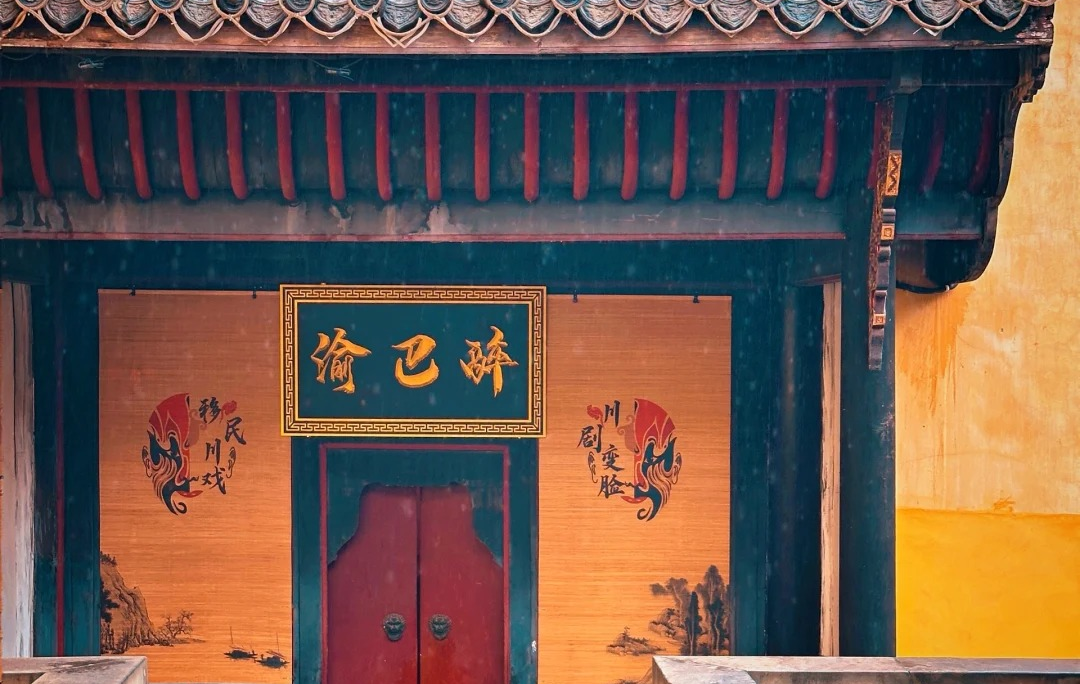
Four Centuries-Old Theatrical Stages: The Guild Hall complex currently preserves four quaint and elegant theatrical stages: two located within the Yuwang Palace, and one each in the Qi'an Guild Hall and the Guangdong Guild Hall. The carvings adorning these stages are exquisitely crafted, featuring themes ranging from mythological legends and historical narratives to auspicious beasts and symbols of good fortune. Among them, the stage at the Qi'an Guild Hall has borne witness to the performances of countless renowned actors and actresses over the past century. Records indicate that renowned masters—including the Peking Opera legend Mei Lanfang—once performed on this very stage. Today, this historic stage remains active, serving as the permanent venue for regular performances of Zui Bayu (Drunken Bayu), a show dedicated to intangible cultural heritage.

Core Experience: An Immersive Journey into Migrant Culture

Furong Ancient Town Furong Ancient Town Furong Ancient Town

Five Must-Do Activities to Unlock the Complete Guild Hall Experience

1. Catch a Heritage Performance on a Century-Old Stage

- Experience: On the century-old stage of the Qi'an Guild Hall, the Zui Bayu heritage performance is staged daily in continuous succession. The enigmatic mystery of Sichuan Opera's "Face-Changing" (Bianlian), the stirring echoes of the Sichuan River boatman chants, and the graceful elegance of the long-spouted teapot tea ceremony all come vividly to life amidst the rustic charm of carved beams and painted rafters. Since its introduction in 2017, the show has averaged approximately 1,000 performances annually, attracting an audience of over 200,000 people.

- Tip: The performance lasts about 40 minutes; we recommend purchasing the combo ticket package that includes admission, the performance, and a traditional Gaiwan (lidded bowl) tea service. With the fragrant aroma of tea wafting through the audience, the dramatic arts unfolding on stage, and the century-old architecture serving as a magnificent backdrop, this offers arguably the most culturally rich afternoon tea experience in Chongqing.

2. Shoot a "Period-Style" Photo Series Spanning 300 Years of History

- Timing: The light is softest—and therefore ideal for photographing the bright yellow firewalls and soaring eaves—during the two hours following sunrise or the one to two hours preceding sunset.

- Locations: The firewall staircase (offering the best backdrop for portraits); in front of the main hall of the Yuwang Temple (to showcase the architectural grandeur); and atop the Dongshuimen Bridge (for a panoramic "bird's-eye" view).

- Attire: We suggest wearing Hanfu (traditional Han Chinese clothing) or a simple, elegant long dress; the guild hall's bright yellow exterior walls, combined with its red walls and dark-tiled roofs, create a natural, ready-made studio for period-style photography.

3. Trace Your Roots at the Migrant Culture Museum

- Step into China's first museum dedicated exclusively to migrant culture to discover the epic saga of the "Huguang Filling Sichuan" migration—a massive historical resettlement—through historical artifacts, recreated scenes, and interactive multimedia exhibits. Enter your surname into the "Root-Seeking and Ancestral Inquiry" interactive kiosk; you may just uncover a personal lineage story spanning centuries. - Significance: This is not merely an opportunity to learn about the history of a city; it is, more importantly, a chance to understand the cultural roots of the Chongqing people—a spirit characterized by inclusivity, openness, unity, and enterprise.

4. Savor a Cup of "Old Chongqing" Covered-Bowl Tea

- Within the courtyard of a century-old historic building, choose a bamboo chair, sit back, and order a cup of covered-bowl tea accompanied by a few light snacks. Amidst the backdrop of soaring eaves and the shimmering waters of the Jialing River, immerse yourself in the Chongqing people's philosophy of "Bashì"—a laid-back, leisurely way of life. Across the river, modern skyscrapers rise in a dense skyline; history and the present moment are separated by nothing more than a single river.

5. Experience Traditional Festivals and Folk Customs

- During the Spring Festival, the Yuwang Temple Fair comes alive with extraordinary vibrancy. Lion dances, dragon dances, stilt-walking performances, and traditional storytelling and opera acts take the stage in turn, creating an electric atmosphere—particularly during the "Welcoming the God of Wealth" parade held on the fifth day of the Lunar New Year. A gathering of intangible cultural heritage crafts—such as painted lacquer fans, sugar paintings, and velvet flowers—offers visitors a captivating experience that leaves them lingering in delight.

- During the Qingming Festival, a solemn sacrificial ceremony dedicated to Yu the Great—strictly adhering to 13 traditional rituals—is held at the Yuwang Palace Plaza. Through these ancient rites, tribute is paid to the ancestors of the Chinese nation, allowing visitors to immerse themselves fully in the profound allure of traditional Chinese culture.

Suggested Itinerary

Half-Day "Cultural Highlights" Tour (Ideal for visitors with limited time):

Enter the park at 9:00 AM or 2:00 PM → First, visit the Huguang-to-Sichuan Migration Museum to gain historical context (approx. 40 minutes) → Step into the Yuwang Palace to pay respects to the bronze statue of Yu the Great and admire the architecture featuring double eaves and hip-and-gable roofs (approx. 30 minutes) → Proceed to visit the Qi'an Guild Hall and Guangdong Guild Hall in succession, paying close attention to the orientation of their gates and the stories behind their exquisite carvings (approx. 40 minutes) → Watch the Zui Bayu (Drunken Bayu) Intangible Cultural Heritage performance at the Qi'an Guild Hall (approx. 40 minutes) → Take a short break to savor a cup of covered-bowl tea in the courtyard of one of the guild halls (approx. 30 minutes) → Head to the pedestrian walkway on the Dongshuimen Bridge to capture panoramic photos of the entire guild hall complex.

IntoTravelChina Tip: This itinerary is compact and efficient. We recommend purchasing a "Ticket + Performance + Covered-Bowl Tea" combo pass in advance to save time queuing for tickets and to enjoy a more favorable price. One-Day "Deep Immersion" Tour (Highly Recommended):

Morning: Enter the complex immediately after opening → Visit the Immigration Museum → Tour the main buildings of the three major Guild Halls, taking time to appreciate the artistic details of the wood, stone, and brick carvings → Sit quietly for a moment beneath the stage at the Guangdong Guild Hall, reciting the moving couplet: "Vast are the clouds and waters" → Participate in a traditional intangible cultural heritage craft experience (such as palm weaving DIY, lacquer fan making, etc., subject to seasonal and event schedules) (Approx. 3.5 hours).

Noon: Enjoy lunch on Dongshuimen Old Street, located just outside the Guild Hall complex; savor authentic Chongqing Xiaomian (noodles), Douhua rice (tofu pudding with rice), or local "Jianghu-style" cuisine (Approx. 1 hour).

Afternoon: Return to the Guild Hall complex → Watch a performance of Zui Bayu (Drunken Bayu)—a show featuring intangible cultural heritage arts—at the Qi'an Guild Hall, accompanied by a cup of traditional lidded tea → Take photos in a "period drama" style on the steps of the firewalls, waiting for the softest light of the late afternoon → Head to the Dongshuimen Bridge to overlook the panoramic view of the Guild Hall complex and the sunset over the Yangtze River at dusk → If your visit coincides with evening opening hours (typically during the summer season), you can also admire the unique charm of the Guild Hall illuminated by night lights (Approx. 3–4 hours).

IntoTravelChina Advantage: We can book the perfect accommodation to suit your needs, seamlessly coordinate all your activities, and provide you with a detailed tour itinerary and cultural sightseeing guide.

> Professional Guides: IntoTravelChina offers fully customized itineraries, including a dedicated private guide, transportation arrangements, and activity bookings, ensuring a worry-free and deeply immersive travel experience.  >> [Consult for Customization Now]

Comprehensive Travel Guide: Transportation, Tickets, and Best Seasons to Visit

Furong Ancient Town Furong Ancient Town Furong Ancient Town

How to Get There: A Seamless Connection Guide

The Huguang Guild Hall is situated in the heart of Yuzhong District, Chongqing, offering extremely convenient access. While there are no direct routes from the airport or high-speed railway stations, the main urban area of Chongqing serves as the sole transit hub for your journey.

- Traveling from across the country: We recommend taking a high-speed train to either Chongqing North Station or Chongqing West Station. Travel Tip: Upon arrival, transfer to the Chongqing Rail Transit (Metro) Line 1 or Line 6. Exit at Xiaoshizi Station (Exit 8), then walk approximately 150 meters along Dongshuiyi Commercial Street to reach the destination. - From Chongqing Jiangbei International Airport: Taking the metro is recommended. The journey takes approximately one hour. Travel Tip: Take Metro Line 10, transfer to Line 6, and alight at Xiaoshizi Station.

- From Chongqing City Center: Taking the metro or a taxi is recommended. Travel Tip: Use navigation apps to search for "Huguang Guild Hall Visitor Center." Alternatively, you may take public bus routes 414, 440, or 480 (Express), or sightseeing bus routes T001, T002, or T480, and alight at the Huguang Guild Hall bus stop.

- From Nearby Attractions: Walking or taking a taxi is recommended. Travel Time: It takes approximately 15 minutes to walk to Jiefangbei and about 20 minutes to walk to Hongyadong. Travel Tip: It is suggested to visit Huguang Guild Hall in conjunction with other attractions located on the Yuzhong Peninsula.

Opening Hours & Tickets: Open year-round. Monday to Friday: 9:00 AM – 6:00 PM; Saturday to Sunday: 9:00 AM – 7:00 PM (Summer evening hours may be extended until 9:00 PM).0). Admission is 25 RMB; a combo ticket—which includes the Zui Bayu performance and a cup of traditional lidded tea (Gaiwan Cha)—is also available for purchase.

Best Time to Visit

The Huguang Guild Hall is open to visitors year-round; however, the best times to visit are during the spring and autumn seasons, as well as during major traditional festivals.

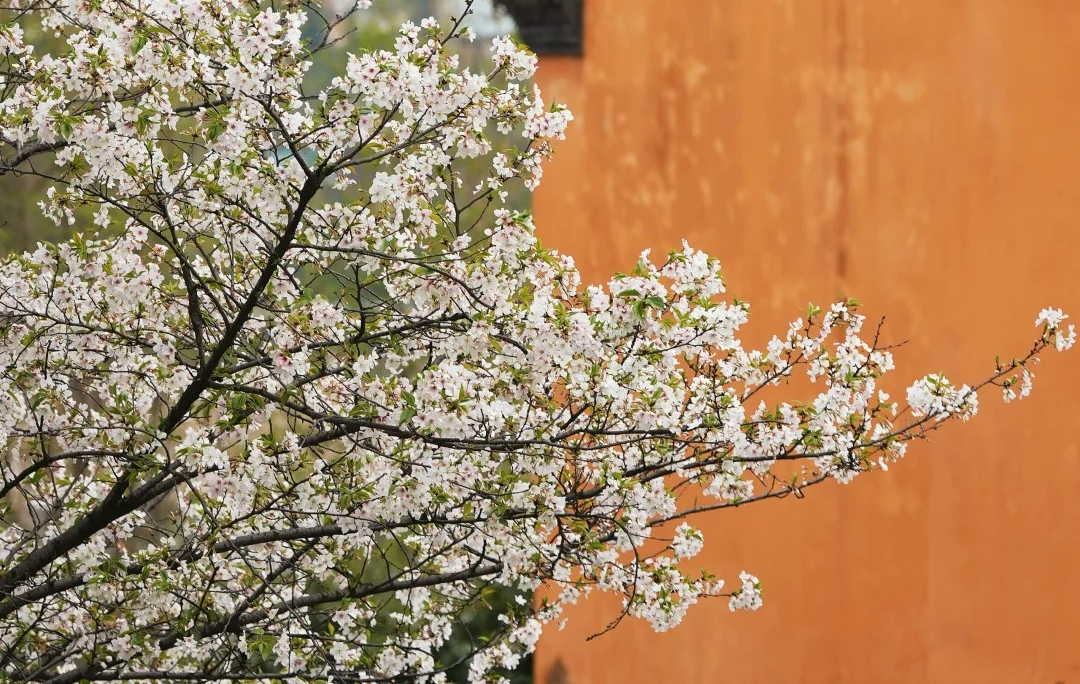
- Spring & Autumn "Golden Seasons" (March–May; September–November): The climate is pleasant, and the lighting is clear and bright. In the spring, around the Qingming Festival, visitors can witness the ceremonial rites honoring King Yu. In the autumn—when the skies are high and the clouds are light—it is the perfect time to stand on the Dongshuimen Bridge and capture panoramic photos featuring both the Guild Hall and the Yangtze River in the same frame.

- Summer "Light & Shadow Season" (June–August): Although temperatures in Chongqing can be high during the summer, the Guild Hall's firewalls and courtyard patios provide natural shade. During the summer months, evening opening hours are extended until 9:00 PM (21:00), allowing visitors to experience the tranquil beauty of the Guild Hall as its lights begin to glow at dusk. Visitors should remember to take precautions against the sun and stay hydrated.

- Festival Experience Season (During the Spring Festival): If you wish to experience the most authentic atmosphere of a Chongqing New Year, this is the ideal time to visit. During the King Yu Temple Fair, a lively lineup of traditional performances—including lion dances, dragon dances, stilt-walking, and the "Welcoming the God of Wealth" parade—takes place, creating a vibrant showcase of intangible cultural heritage.

> Special Note: The Huguang Guild Hall is a scenic area that combines both indoor and outdoor spaces; therefore, a visit on a rainy day is not an issue. In fact, after being washed by the rain, the Guild Hall's bright yellow firewalls and blue-stone pathways take on an even more rustic and charming aesthetic. Since Chongqing experiences frequent rainfall during the summer, it is advisable to carry an umbrella or rain gear with you.

Nearby Accommodation Options

- Yuzhong Peninsula (Highly Recommended):

Experience: Stay in the very heart of Chongqing—the city's historic "Mother City" district. From here, you can walk to numerous landmarks such as Jiefangbei, Hongyadong, and the Yangtze River Cableway, allowing you to fully immerse yourself in the vibrant nightlife and authentic local atmosphere of this "Mountain City."

Best For: Most travelers who wish to thoroughly explore the urban core of Chongqing.

- Nan'an District (An Excellent Choice for Night Views):

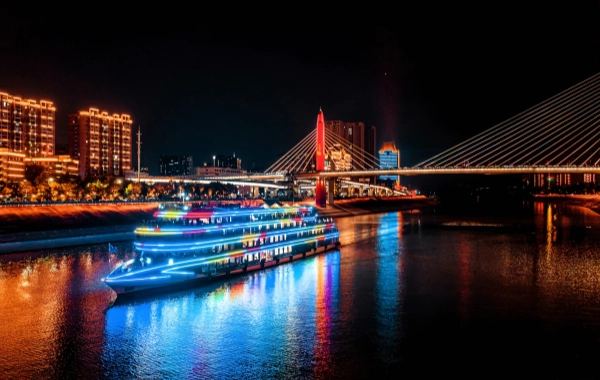
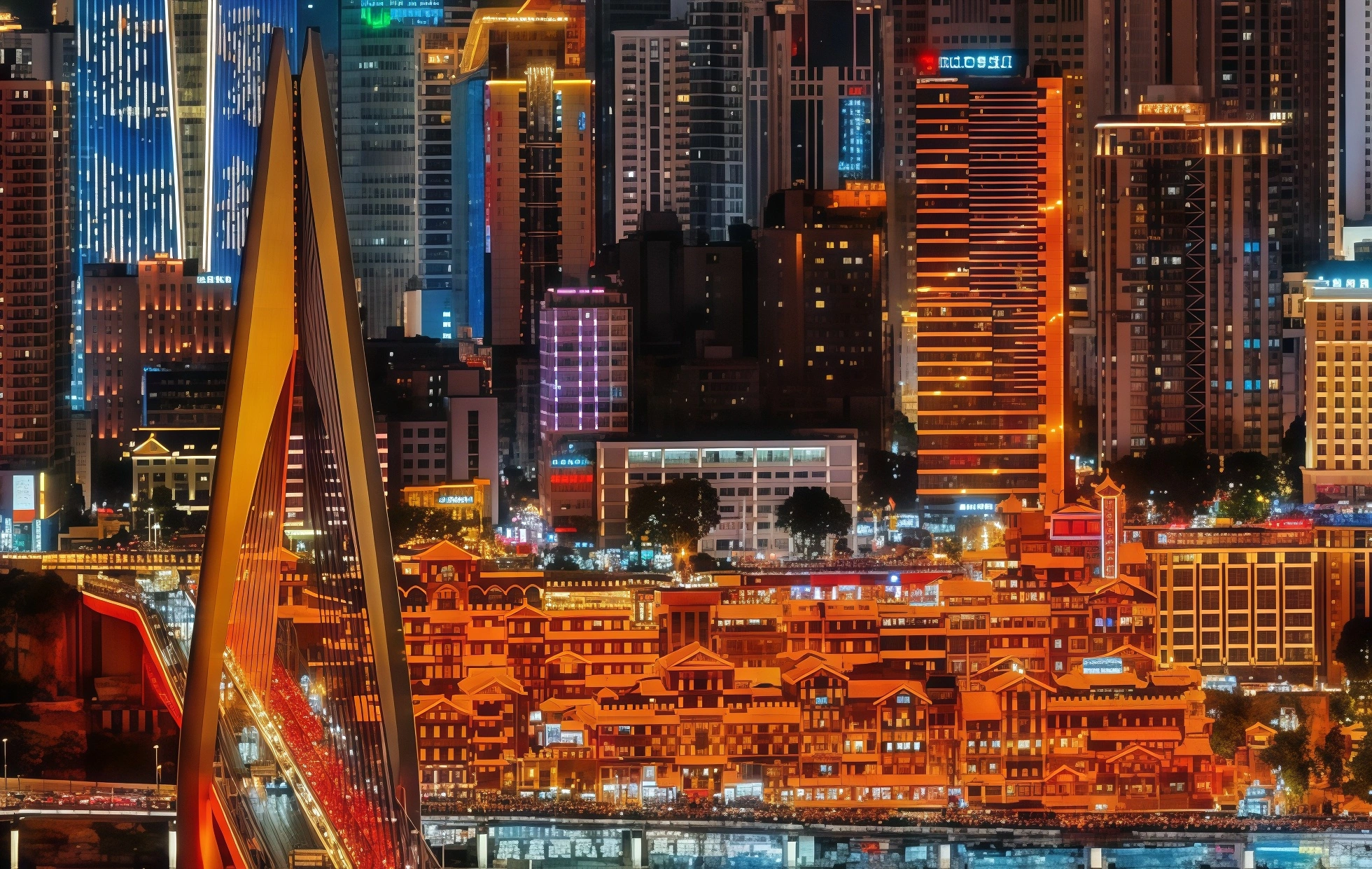
Experience: Stay across the river from the city center, where opening your window reveals a stunning panoramic view of the Yuzhong Peninsula's skyline at night—including the illuminated Huguang Guild Hall and the stream of lights from the Yangtze River Cableway.

Best For: Ideal for: Travelers seeking spectacular river views and those with a passion for night photography.

IntoTravelChina Accommodation Booking Tips:

We recommend planning your Chongqing itinerary and booking your accommodation 2–3 weeks in advance—especially during peak travel seasons such as the Spring Festival (Chinese New Year) and National Day holidays. Booking through us not only provides access to real-time room availability but also allows you to bundle accommodation, attraction tickets, and transportation into a single plan. This often results in package discounts and ensures a seamless, hassle-free travel experience. Simply tell us your budget and requirements, and we will match you with the most suitable accommodation options.  >> [Consult for Customization Now]
Extended Journeys: A Loop Connecting the Highlights of Chongqing and the Yangtze River

Furong Ancient Town

The Huguang Guild Hall is by no means the end of your journey; rather, it serves as the perfect starting point for exploring the vibrant city of Chongqing and the rich civilization of the Yangtze River.

- Classic 3-Day In-Depth Chongqing Tour: Chongqing (Huguang Guild Hall) → Hongyadong & Jiefangbei → Ciqikou Ancient Town → Yangtze River Cableway & South Bank Night Views. This route perfectly blends the history of migration, the unique "Mountain City" landscape, and the lively urban atmosphere of Chongqing. 

- Southeast Chongqing Cultural Journey: Connect the Huguang Guild Hall with sites such as the Wulong Karst (Three Natural Bridges) and the Dazu Rock Carvings. Experience the multifaceted nature of Chongqing—from its epic migration history to its status as a UNESCO World Natural and Cultural Heritage site. 

- Yangtze River Civilization Pilgrimage: Link the Huguang Guild Hall with iconic landmarks such as the Three Gorges Dam in Yichang, the Yellow Crane Tower in Wuhan, and the Confucius Temple in Nanjing. Journey downstream along the Yangtze River to traverse the historic "water corridor" of Southern Chinese civilization. 

Partner with IntoTravelChina to Embark on Your Exclusive Journey to Discover the Roots of Ba-Yu Culture

Furong Ancient Town

The story of the Huguang Guild Hall is a tale of millions of migrants—of their migration and their eventual rooting in a new land, of their steadfast preservation and passing down of ancestral beliefs, and, above all, of the inclusive spirit of a city that embraces people from all walks of life. IntoTravelChina specializes in crafting in-depth, personalized, and worry-free travel experiences throughout China. Our travel experts can assist you by:

- Tailoring Your Itinerary: Designing the perfect route—customized to your interests and schedule—that encompasses the Huguang Guild Hall, Chongqing city, and surrounding attractions.

- Providing One-Stop Service: Handling all arrangements, including tickets, unique accommodations, transportation transfers, local guides, and reservations for activities such as the Zui Bayu performance.

- Curating Exclusive Experiences: Arranging interactive "root-seeking" sessions at the Migration Museum, performances of Intangible Cultural Heritage on the century-old stage, and expert guidance on the best times and vantage points for photography.

Let your visit to the Huguang Guild Hall be more than just sightseeing—let it be an immersive journey through 300 years of migration culture.

> Start Planning Your Journey Now

> We invite you to contact our professional travel consultants; we will provide you with a personalized itinerary proposal and quotation within 24 hours.  >> [Consult for Customization Now]
What Our Clients Say?

Based on 10,000+ traveler reviews

...
Daniel Dorothea
Canada
Reviewed on April 29,2025
Shopping on Nanjing Road in Shanghai was just amazing! It's truly the "First Commercial Street of China", where tradition and modernity blend perfectly. You can find awesome souvenirs and experience the trendy vibes in cool stores. The neon lights at night are just spectacular, shining bright like Times Square in New York. The food here is incredible too. I had a feast for my taste buds. Shanghai, I'll definitely be back!
Destination(s): Shanghai
Date of Experience: May 08,2024
...
...
Elvis Eva
Canada
Reviewed on June 20,2025
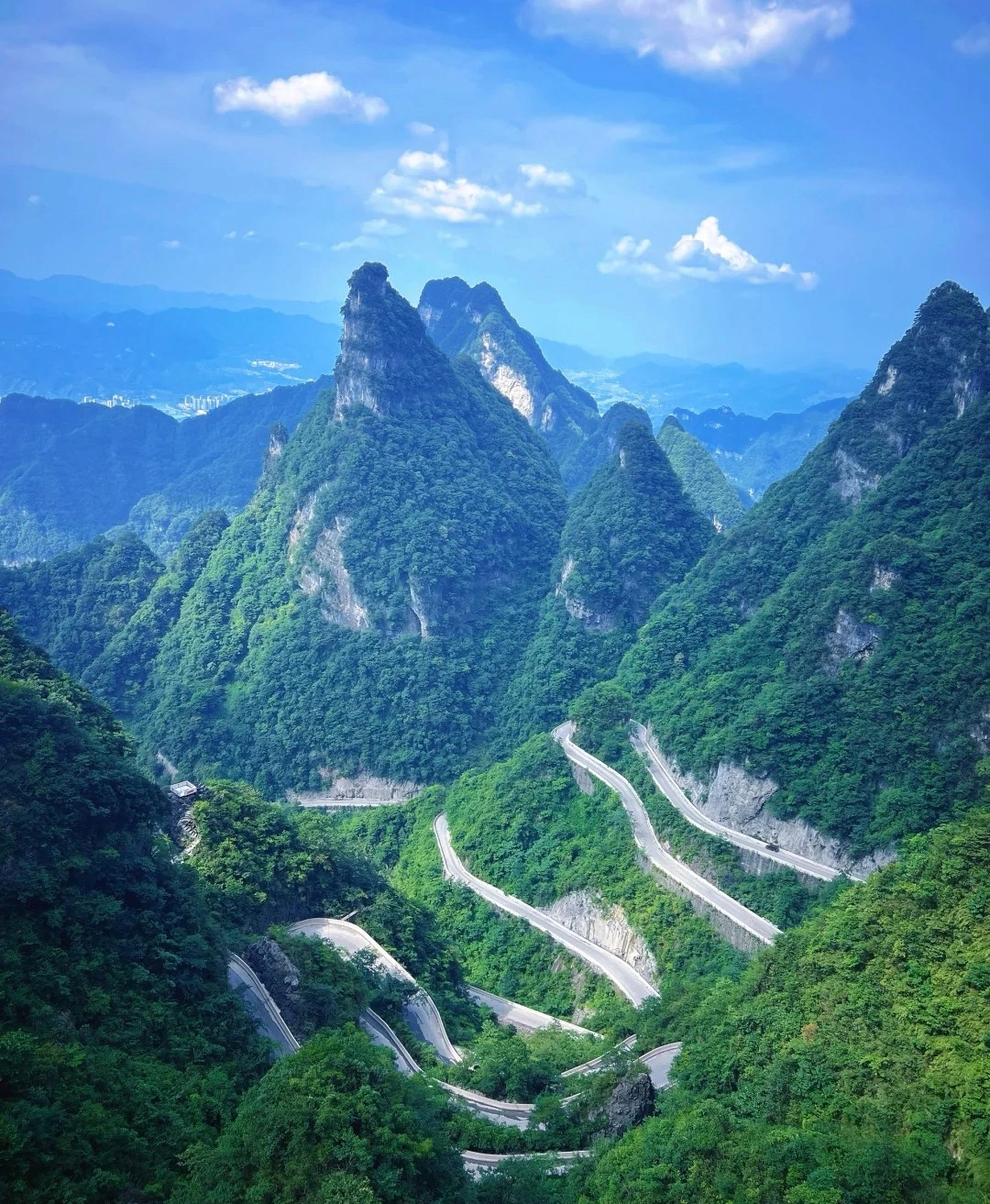
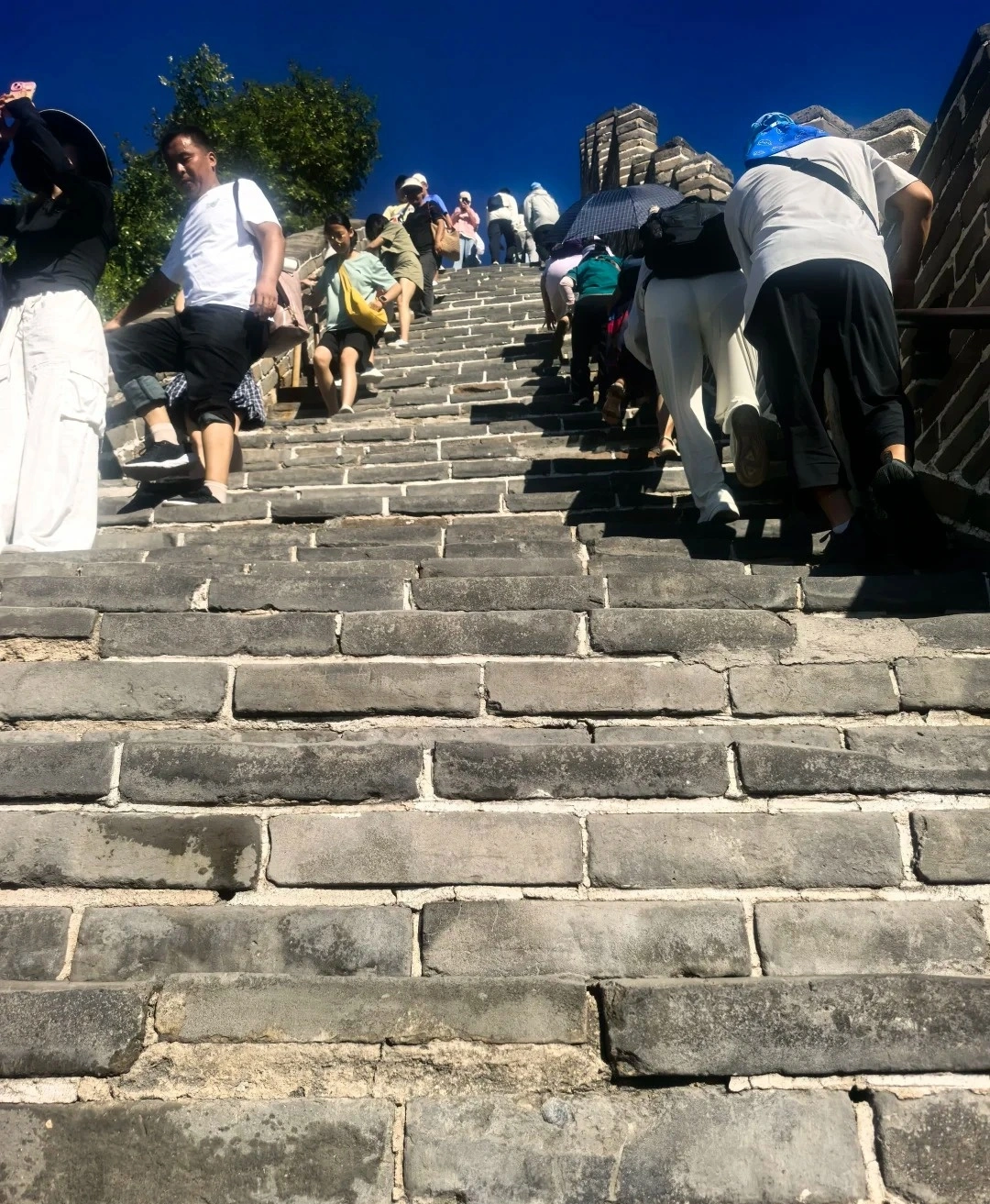
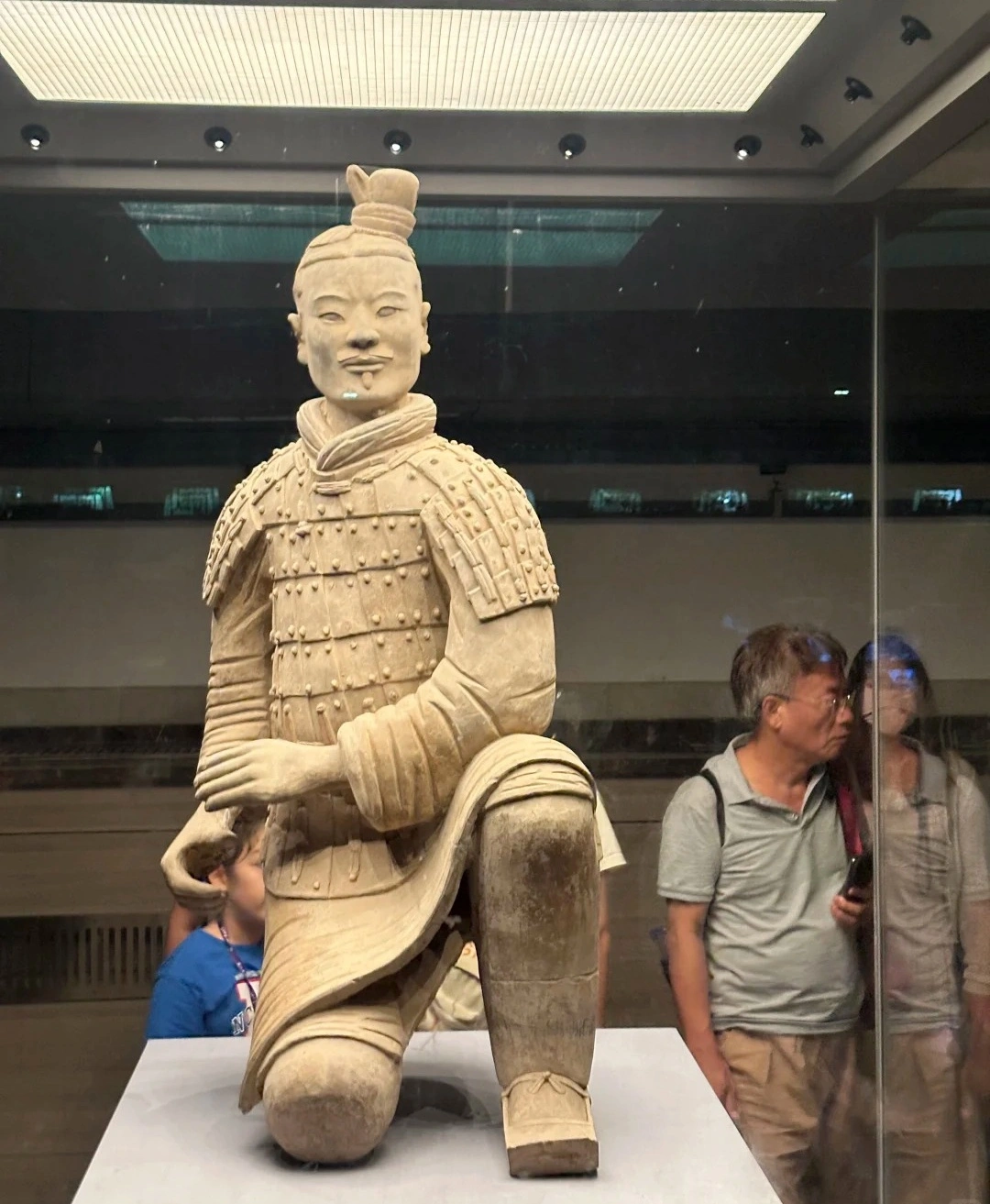
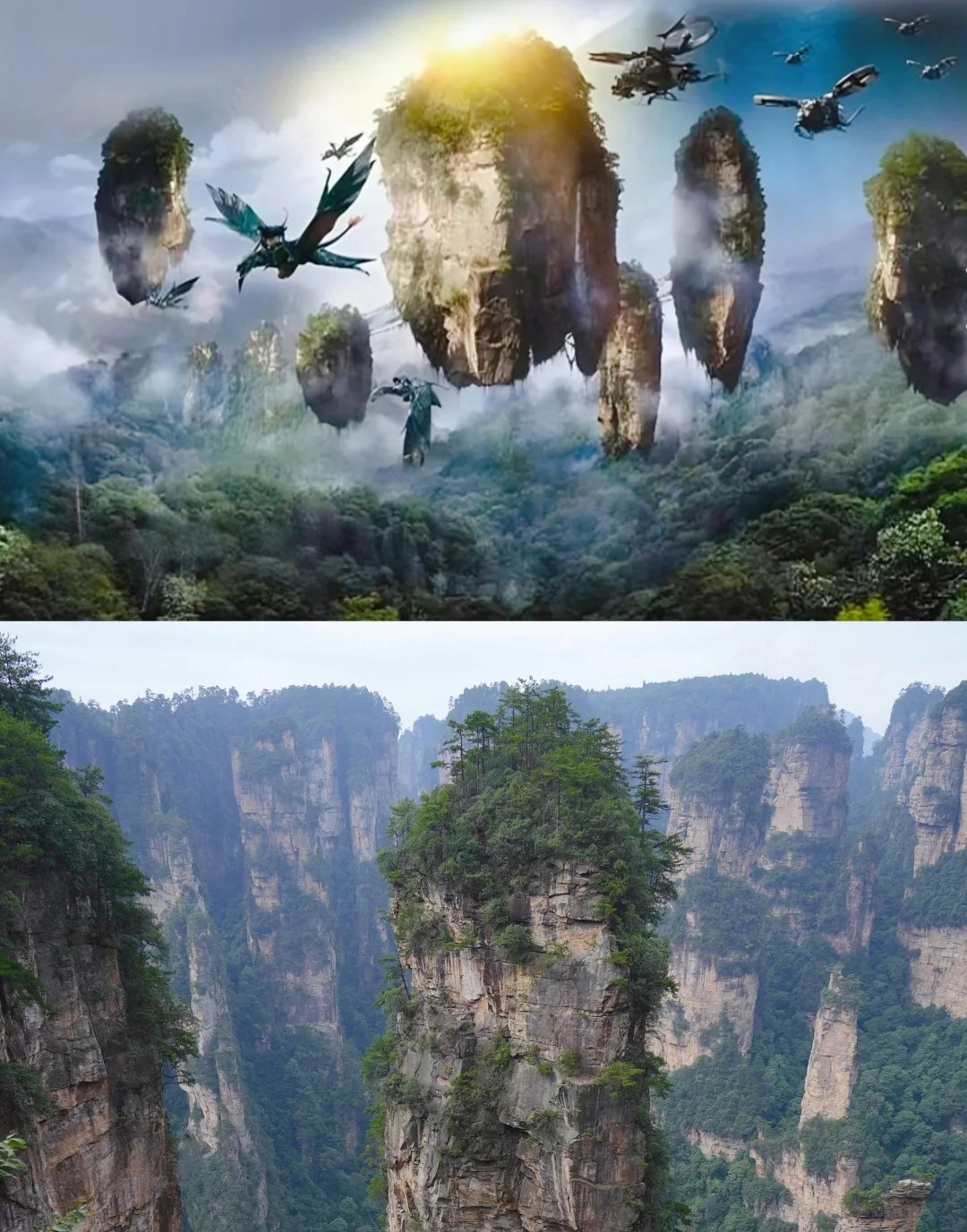
As a solo traveler from Canada, I was nervous about navigating China alone—but this 11-day tour was PERFECT! From hiking the Great Wall at sunrise (Day 3) to gasping at the Terracotta Army (Day 5), every day delivered ‘pinch-me’ moments. The real showstopper? Zhangjiajie’s Avatar Mountains (Day 7)! Our guide made the stone pillars come alive with stories. Massive thanks for handling all logistics—bullet train tickets, entry passes, car! And the 4-star hotels surprised me.
Destination(s): Beijing Xian Zhangjiajie Shanghai
Date of Experience: June 02,2025
... ... ...
...
Simon
America
Reviewed on May 29,2025
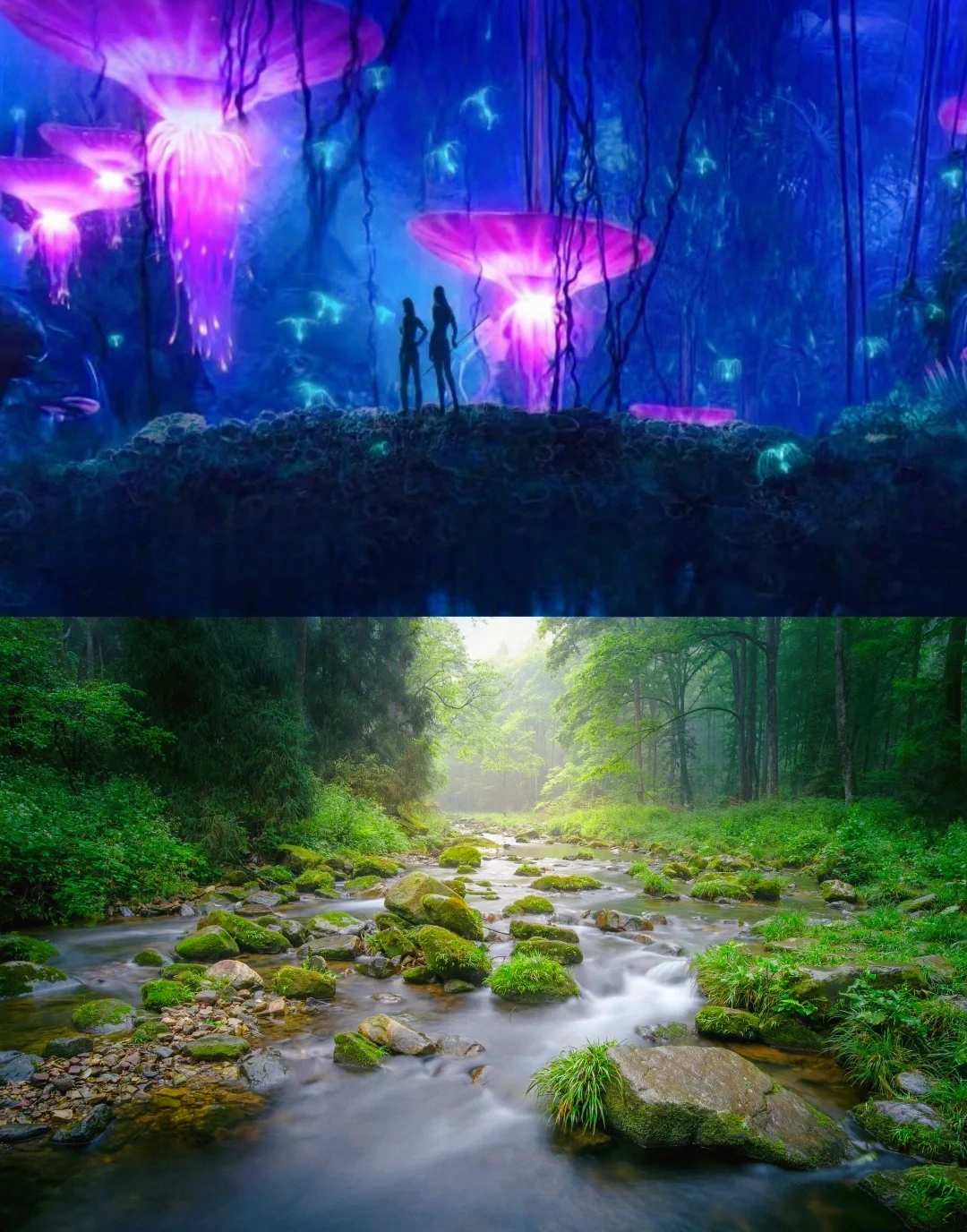
Our 2-day Zhangjiajie tour was beyond spectacular! As someone who’s visited Beijing and Shanghai for work, this trip revealed China’s wild, magical heart. Day 1 in Zhangjiajie National Forest Park felt like stepping onto Pandora—I’m a huge Avatar fan, and Yuanjiajie’s floating peaks left me breathless. The misty pillars and lush valleys like pure movie magic! Then came Fenghuang Ancient Town, we eat dinner beside the thundering waterfall. It seems Unreal! The night views of stilt houses glowing over the river were straight from a fairy tale. For fellow Avatar lovers and adventure seekers: Don’t miss this bucket-list experience! 10/10 would return. A Well-Traveled Film Buff, May 2025
Destination(s): Zhangjiajie
Date of Experience: May 08,2025
... ...

Ask a Question

Question Summary (100 characters)
Details (optional) (2,000 characters)
Name
Country
Phone
Email